Your Tire Inflator Stopped Halfway: Heat, Battery, or Just the Gauge?
The tire is still soft and the pump has gone quiet. Several of the seven portable inflators we track have a report or a published limit that stops them short, for three different reasons, plus a fourth that is not a stop at all. Here is how to tell which one you have from what the pump is doing, and how to finish the tire today.
The short answer
Look at what the pump does after it stops. If it is hot and will run again after resting, it has hit its heat limit: let it cool and finish in shorter runs. If the screen dims or dies, the battery is empty: charge it or use a 12V cord if it has one. If it stopped at your preset but the tire reads differently, check the gauge.
Disclosure · As an Amazon Associate, BlackBox Supplies earns from qualifying purchases — at no extra cost to you. See our full disclosure.
First: which kind of stop is it?
A portable inflator that goes quiet mid-fill looks like one failure from the driveway, but it can come down to any of a few causes with different fixes. Heat and an empty battery are the tool protecting itself or simply running out, and are fixed by waiting or charging. A pump that sat for months may not start at all. And sometimes the pump did exactly what you told it, and the number on its screen is the problem.
If the display shows an error code instead, look that code up in your manual before trying again — codes differ by maker, and guessing does not help.
| What you see | Likely cause | First move |
|---|---|---|
| Motor stops, body is hot, it runs again after a rest | It hit its heat limit or duty cycle | Let it cool fully, then finish the tire in shorter runs |
| Screen dims or goes dark, it will not restart | The battery is empty | Charge it, or plug in a 12V cord or adapter if the pump has one |
| It will not turn on at all after months in the trunk | The battery drained while it sat | Charge it fully on its own charger before relying on it |
| An error code on the display | A fault the maker has a code for | Look the code up in the manual before trying again |
| It stopped at your preset, but a separate gauge disagrees | Gauge offset — the auto-stop worked | Check with a standalone gauge and adjust your preset |
Cause #1: it got too hot and cut out
Small compressors make heat. Many are built to run only for a limited stretch before resting (their duty cycle), and many have a heat protector that shuts the motor off before it damages itself. It is protection, not a defect — and two of the pumps we track publish exactly where that limit sits.
The corded EPAuto 12V has a 10-minute recommended duty cycle, and AutoGuide reports its overheat protector activates if the unit exceeds 167°F. AutoGuide also says it lacks the capacity for bigger tires, both in air flow and in duty cycle. The Milwaukee M12 inflator has a 50 percent duty cycle, which means rest breaks on big tires; Pro Tool Reviews' write-up puts light-truck top-ups at 30 to 45 psi in under 4 minutes.
What to actually do: stop, let it cool completely, and finish the job in shorter runs rather than one long one. Do not keep restarting a hot pump the moment it will run. If it cuts out on every tire you own, that is a sign the pump is undersized for your tires, which is covered at the bottom of this page.
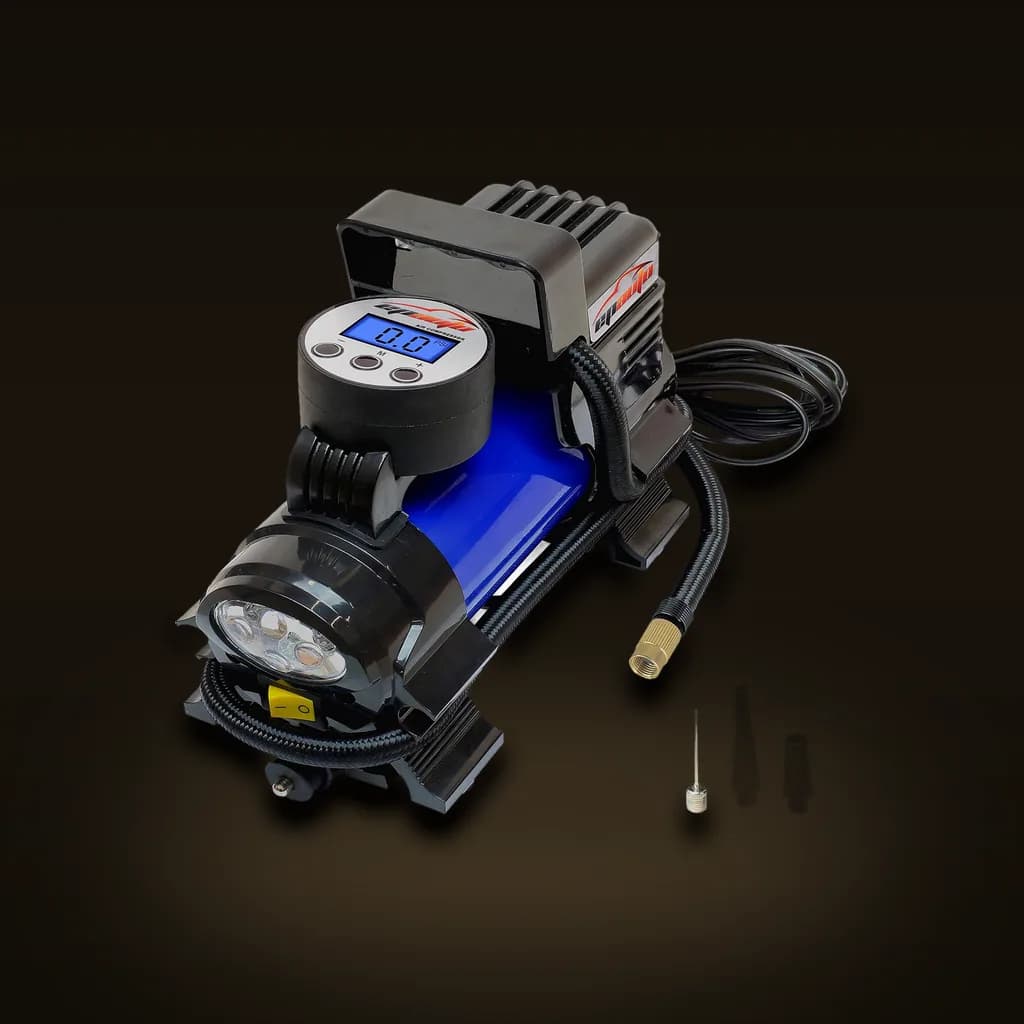
EPAuto 12V DC Portable Air Compressor Pump (Corded Value Pick)
Cheapest reliable pick and always ready off the car's battery (never needs charging).
Affiliate link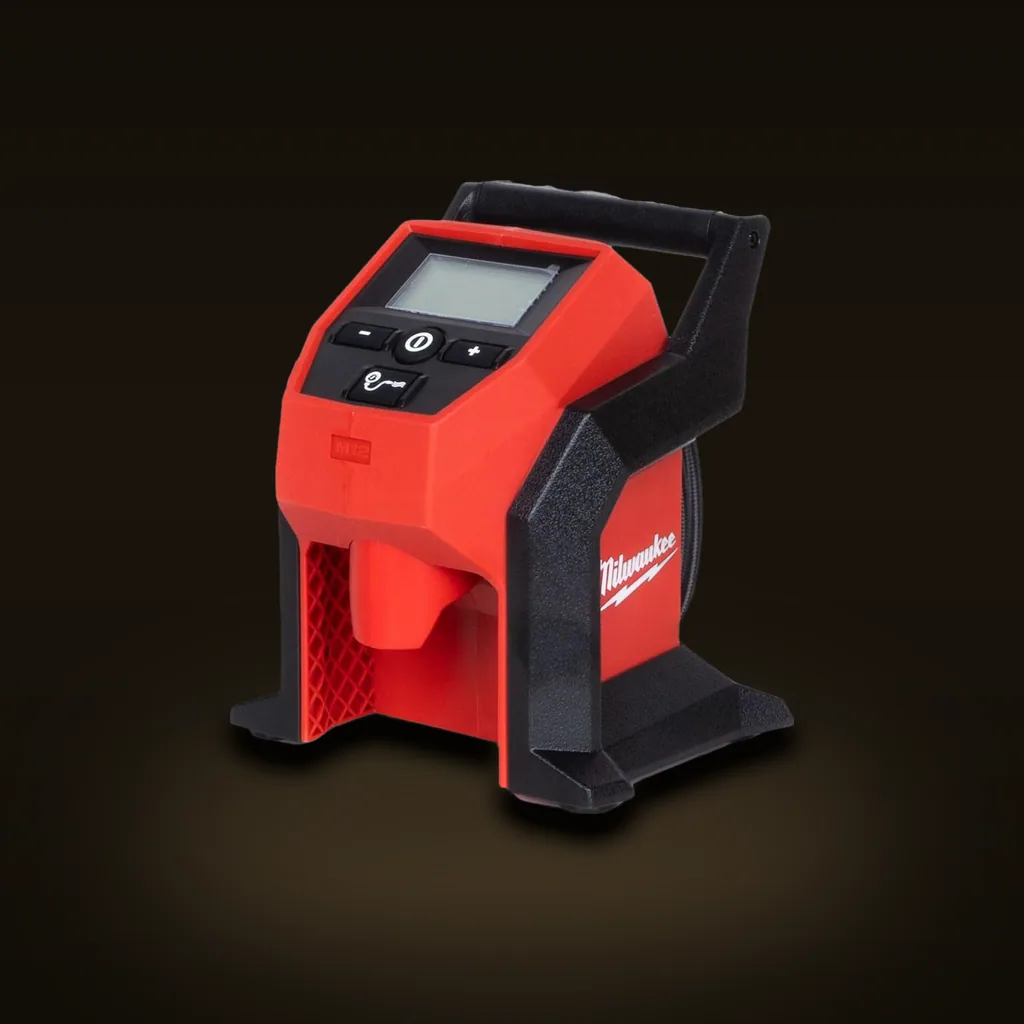
Milwaukee M12 Compact Inflator 2475-20 (Bare Tool)
Milwaukee's 'fastest cordless' reputation and jobsite durability — the obvious pick if you already own M12 batteries.
Affiliate linkCause #2: the battery ran out before the tire was full
Cordless pumps are sold on a tires-per-charge number, and how far that goes depends on how low the tires are. Topping four tires up a few psi is a very different job from filling one from flat.
The AstroAI L7 shows the spread. CarXplorer says that on a full charge it can top off four standard car tires by 5-7 psi with battery to spare, or fill a single car tire from 0 to 35 psi at least once, and its tester topped all four tires on a mid-size sedan from 30 to 35 psi with over half the battery left. At the other end, one Amazon owner reported the battery nearly dead after a single tire. Both can be true: the job decides.
What to actually do: if the pump has a 12V cord or adapter — the AstroAI 160 ships with a 12V DC adapter, and the DeWalt DCC020IB has a 12V cord — plug it into the car's socket and keep going. Otherwise, charge it before trying again, and do not plan a four-tire fill from flat on one small pack.
| Pump | Figure | Whose figure |
|---|---|---|
| Fanttik X8 APEX | Up to 4 average-sized car tires or 17 bike tires per charge | Fanttik (maker), as quoted by Automoblog; no owner count in our evidence |
| AstroAI L7Check price on Amazon → | Four car tires topped up 30 to 35 psi, over half the battery left | CarXplorer's tester |
| AstroAI L7Check price on Amazon → | Battery nearly dead after a single tire | One Amazon owner |
| DeWalt DCC020IB | Goes through batteries a bit, similar to DeWalt's leaf blower | ToolGuyd's reviewer |
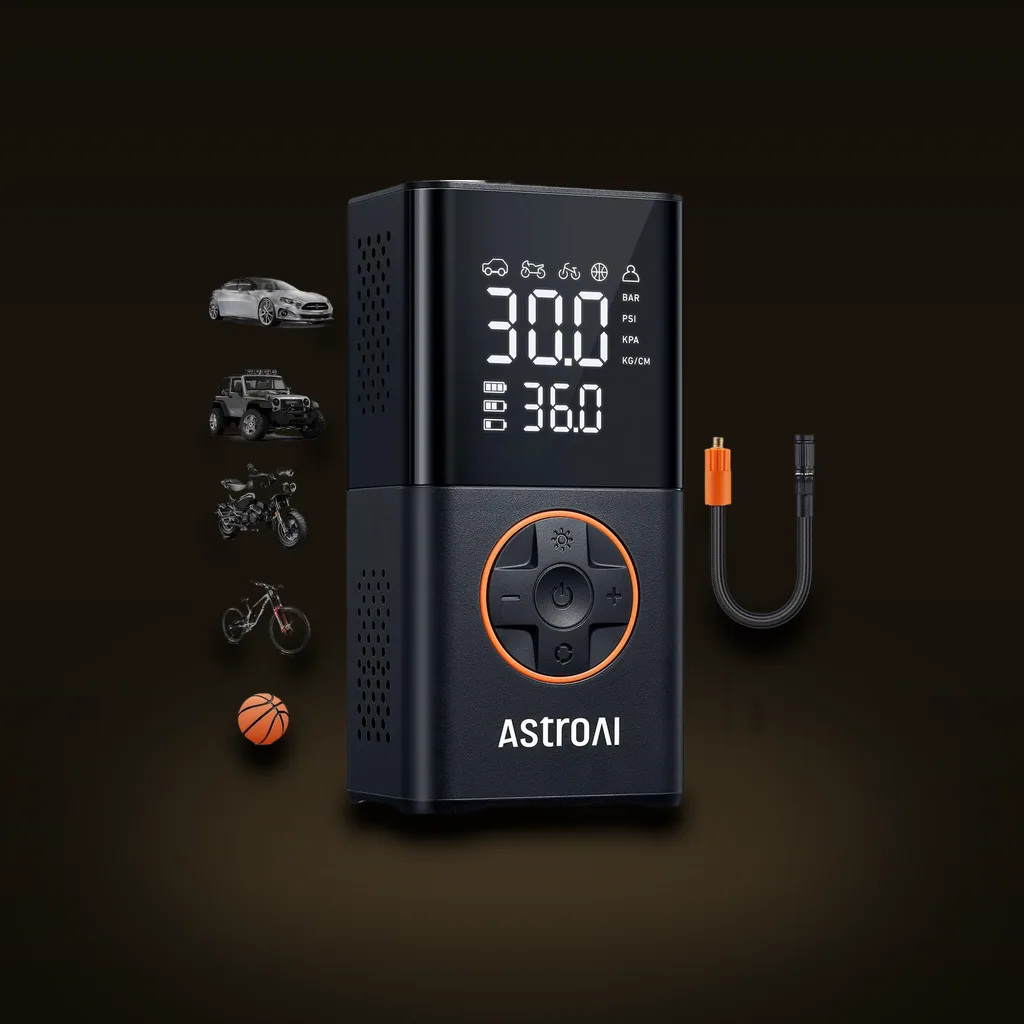
AstroAI L7 Compact Cordless Tire Inflator (150 PSI, under 1 lb)
Best budget/compact pick — fits a glovebox, genuinely one-handed, cheap enough to keep permanently in every vehicle.
Affiliate linkCause #3: it drained while it sat in the trunk
Lithium batteries lose charge slowly while they sit, and the day you need the pump can be months after you last charged it. This version of the failure is not a pump that stops halfway so much as one that never starts.
On the Fanttik X8 APEX, Automoblog warns that letting it sit unused can drain the battery, and advises charging it periodically so it is ready when you need it.
What to actually do: charge it now, before the colder months, and put a recurring reminder in your calendar. If a pump that has sat empty for a long time will not take a charge on its own charger, check the warranty rather than improvising a fix. The same storage problem hits jump starters, and our guide to that is linked below.
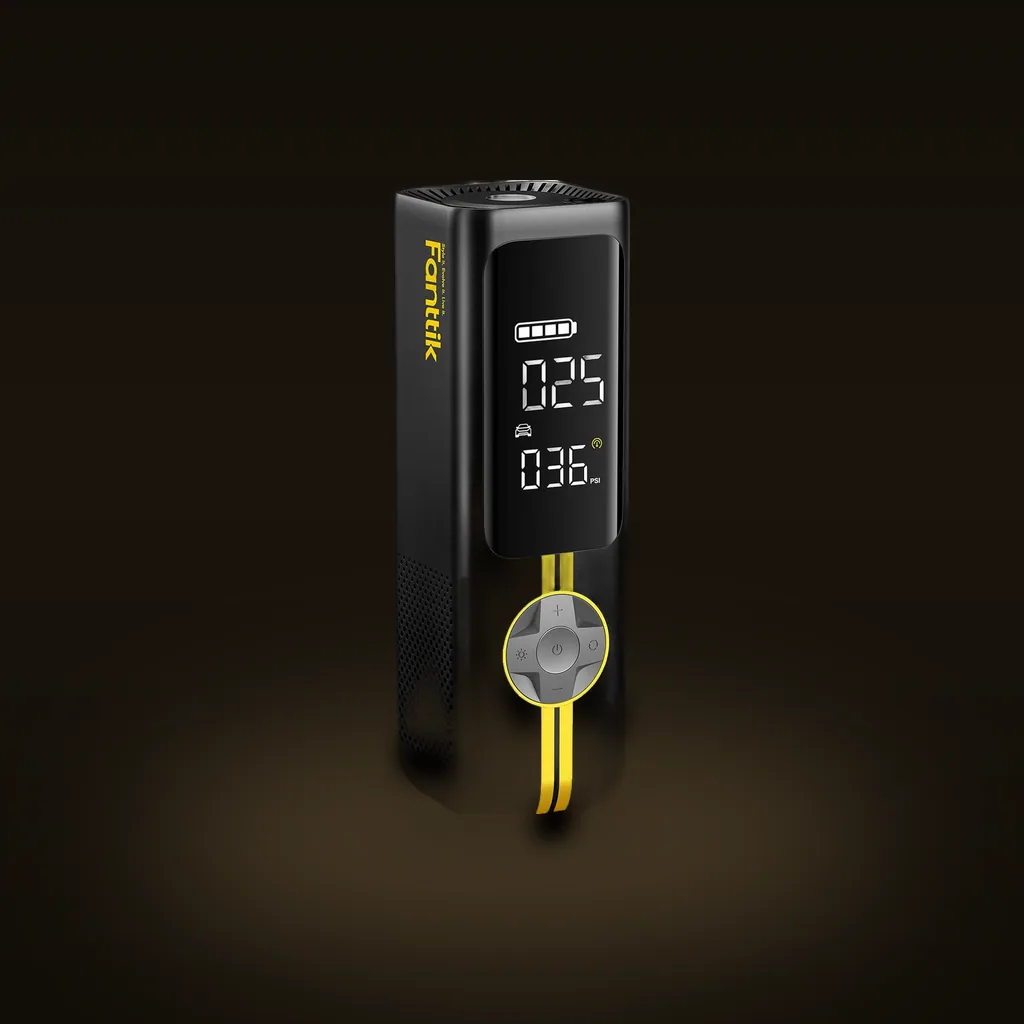
Fanttik X8 APEX Portable Tire Inflator (150 PSI Cordless)
Reviewers repeatedly name it the best overall cordless — fastest inflation, longest runtime, best build in the pocket-inflator class, ~±1 PSI accuracy.
Affiliate linkIt stopped where you told it — but is that number right?
Sometimes the pump did not fail at all. A pump with a preset stops automatically at the pressure you set, and a separate gauge then says the tire is a little lower or higher than you asked for. Portable inflator gauges are convenient, not laboratory instruments, and the margin varies from pump to pump.
What to actually do: the first time you use any new inflator, check the finished pressure with a cheap standalone gauge so you learn its offset, then set your preset to allow for it, and recheck now and then.
| Pump | Reported accuracy | Figure comes from |
|---|---|---|
| Fanttik X8 APEX | Within ±2 psi | Automoblog |
| AstroAI L7Check price on Amazon → | Consistently within 0.5 psi of a dedicated gauge | CarXplorer's tester |
| DeWalt DCC020IB | Spot-on 9 of 10 fills; sets in 0.5 psi steps | ToolGuyd's reviewer (one reviewer) |
| Milwaukee M12Check price on Amazon → | About ±3% | Maker spec |
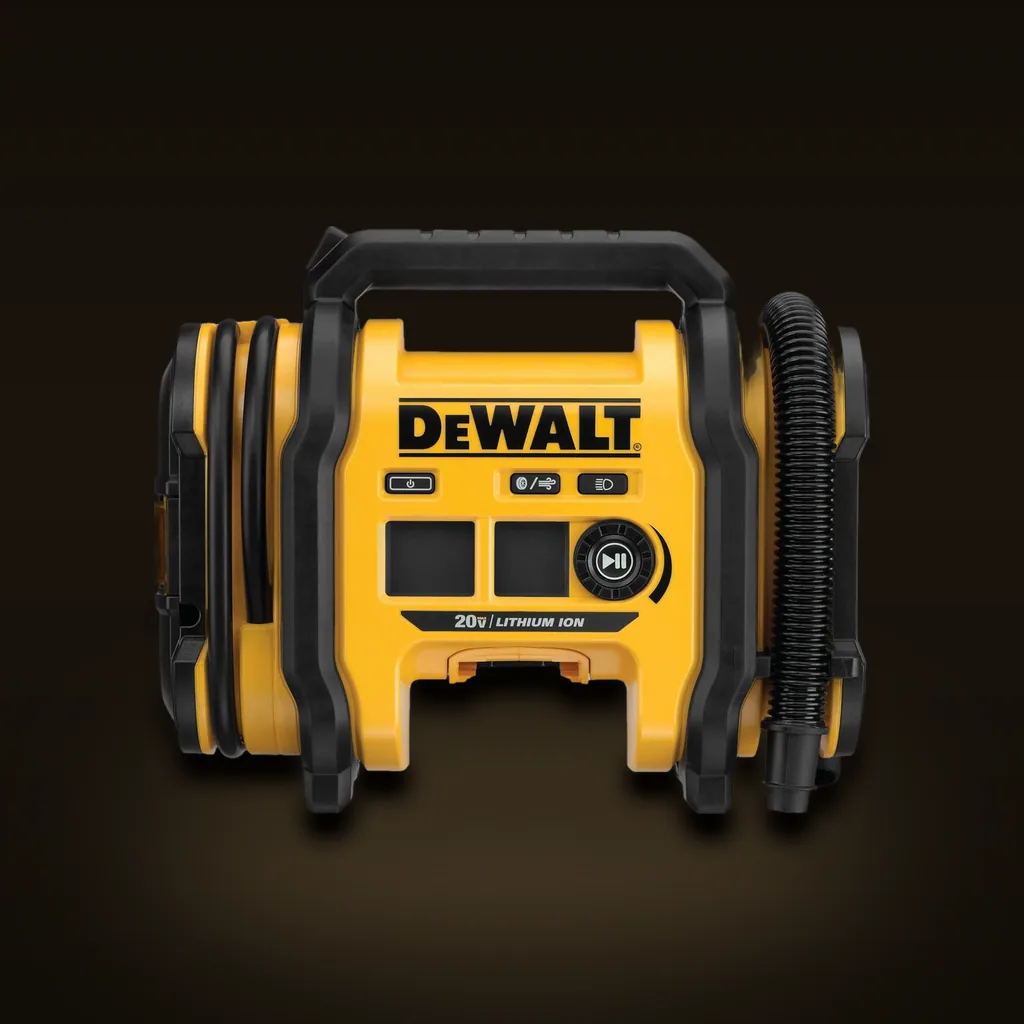
DeWalt 20V MAX Corded/Cordless Inflator DCC020IB (Bare Tool)
Unmatched versatility — three power sources mean it never leaves you stranded, in DeWalt build quality for garage and roadside.
Affiliate linkIf it keeps happening, the job may be bigger than the pump
A pump that cuts out once on a long fill is doing its job. A pump that cuts out on every fill is telling you it is the wrong size for your tires or your habits.
A corded 12V pump removes the battery from the list of things that can stop you, because it runs off the car. It does not remove heat: the EPAuto still has a 10-minute recommended duty cycle, and AutoGuide says it lacks the capacity for bigger tires. A bare-tool inflator on a battery platform you already own can swap in a fresh pack, but a fresh pack does not change the Milwaukee's 50 percent duty cycle — more battery is not more continuous running. The DeWalt runs on its 20V packs or its 12V cord, and 110V needs an optional adapter (N557514).
We cover that choice in its own guides, linked below — which kind of pump belongs in the trunk, and which one to use on a truck or SUV tire.
How we put this together (and what we did not do)
We did not test these pumps. Every product figure on this page comes from a named source — a hands-on review, a maker figure quoted in one, or a single owner report — and says which. Where a figure is the maker's, we say so.
One limitation worth stating plainly: a report of a failure is not a failure rate. People whose pump filled the tire and went back in the trunk rarely write about it. Treat this page as a guide to why these pumps stop and what to do about it, not as a measure of how often any one model does.
Common questions
Why does my portable tire inflator keep shutting off?
Two likely causes are heat and battery. Small compressors are built to run for a limited stretch and shut off when they get too hot — the EPAuto 12V has a 10-minute recommended duty cycle and an overheat protector that activates above 167°F, according to AutoGuide, and the Milwaukee M12 has a 50 percent duty cycle. If the pump is hot and runs again after resting, let it cool and finish in shorter runs. If the screen dims or dies instead, the battery is empty.
Why won't my cordless inflator fill all four tires on one charge?
It depends how low the tires are. CarXplorer's tester topped all four tires on a sedan from 30 to 35 psi with an AstroAI L7 and had over half the battery left, while one Amazon owner reported the same pump nearly dead after a single tire. Fanttik's own figure for the X8 APEX is up to four average-sized car tires per charge. Filling from flat uses far more battery than a top-up.
My inflator stopped at the right number but the tire reads low. Which is right?
Trust a separate gauge over the pump's screen until you know its offset. Automoblog puts the Fanttik X8 APEX within ±2 psi, CarXplorer found the AstroAI L7 within 0.5 psi of a dedicated gauge, and ToolGuyd's reviewer found the DeWalt DCC020IB spot-on 9 times out of 10. Check once with a standalone gauge, then adjust your preset.
My cordless inflator won't turn on after sitting in the car. Is it dead?
It may simply have drained. Lithium batteries lose charge while they sit, and Automoblog warns that letting the Fanttik X8 APEX sit unused can drain the battery, advising periodic charging. Charge it fully on its own charger. If it will not take a charge, check the warranty.
Sources & further reading
- Automoblog — Fanttik X8 APEX review
- ToolGuyd — DeWalt cordless inflator (DCC020IB) review
- Pro Tool Reviews — Milwaukee M12 inflator
- CarXplorer — AstroAI L7 review
- Amazon — AstroAI L7 product page and owner reviews
- AutoGuide — EPAuto 12V DC portable air compressor review
Research-driven — our picks come from verified manufacturer specs and long-term owner feedback. How we work: our methodology.
Keep reading
12V vs Cordless Tire Inflator: Which One Actually Belongs in Your Trunk
12V corded compressors run forever off the socket and won't die mid-fill on a dead-flat SUV tire; cordless inflators are grab-and-go but can overheat or run out of battery on a big flat. Here's how to decide which to keep in your car — and when the answer is neither.
Read moreTire InflatorsCordless vs 12V Tire Inflator for Truck & SUV Tires: The Honest Tradeoff
Cordless vs 12V tire inflator for truck and SUV tires: cordless wins for convenience and top-ups, but a 12V or corded unit is the one that reliably fills a big truck or SUV tire from flat. How to size an inflator to large tires — PSI ceilings, cord reach, battery drain, and duty cycle, without invented fill-time numbers.
Read moreTire InflatorsMilwaukee M12 vs DeWalt 20V Inflator: Which Bare-Tool Inflator to Buy
Milwaukee M12 vs DeWalt 20V inflator, and which bare tool to buy — the ecosystem-specific answer most listicles skip: for platform owners, the right pick is almost always the brand you already own.
Read moreJump StartersYour Jump Starter Is Dead Too: Why Packs Fail After Months in the Trunk
The car won't start, you reach for the jump starter you bought for exactly this moment, and it won't turn on either. That is not bad luck. Storage failure shows up in the owner evidence for five of the six popular lithium packs we track, and it has four distinct causes, only one of which is always the end of the pack. Here is how to tell which one you have, and the two habits that prevent most of it.
Read moreThe gear actually worth buying — one email a week.
The car, power, cooling, and work-utility gear worth owning — with the honest catch on each. One genuinely useful email a week. No spam, no fake reviews, unsubscribe anytime.
- No spam
- One email a week
- Unsubscribe anytime