
Tire Inflators
Fanttik X8 APEX Portable Tire Inflator (150 PSI Cordless)
$70-90
The flagship do-it-all cordless air compressor: dial in a target PSI, walk away, it auto-stops.
Affiliate linkCordless vs 12V tire inflator for truck and SUV tires: cordless wins for convenience and top-ups, but a 12V or corded unit is the one that reliably fills a big truck or SUV tire from flat. How to size an inflator to large tires — PSI ceilings, cord reach, battery drain, and duty cycle, without invented fill-time numbers.
For truck and SUV tires, the honest split is convenience vs certainty. A good cordless inflator is faster to grab and works even when the car battery is dead — perfect for top-ups. But cheap cordless units run out of battery or hit a thermal cutoff halfway through a big tire. If you routinely fill large tires from flat, a 12V or corded unit that runs off the vehicle never runs out — at the cost of routing a cable and keeping the engine on.
Disclosure · As an Amazon Associate, BlackBox Supplies earns from qualifying purchases — at no extra cost to you. See our full disclosure.
Both types are the same machine at heart — a small compressor pushing air through a hose. The only real difference is where the power comes from, and on large tires that difference decides whether the job finishes.
Cordless carries its own battery: grab it, clip it on, done, and it doesn't care whether the vehicle has power. That last part matters more than people expect — a flat and a weak battery on the same cold morning is a real scenario, and a cordless unit ignores it. The catch is runtime and heat. A big light-truck tire holds far more air than a compact car tire, so a pocket cordless unit that tops off a sedan in about a minute can drain a meaningful chunk of its charge — or trip a heat cutoff and force a cool-down — before a 33-inch tire reaches pressure from flat.
A 12V (cigarette-socket) or fully corded unit flips the tradeoff. It has power for as long as the vehicle does, so it never taps out mid-tire — but you have to dig out the cable, route it to the tire, and keep the engine running so the compressor doesn't flatten your starter battery. The bottom line for large tires: cordless for convenience and top-ups, 12V/corded for reliably filling a big tire from flat.
The number every listing shouts is max PSI, and for cars it's almost irrelevant — every unit here clears the 32–36 PSI a passenger tire wants. The Fanttik X8 APEX and AstroAI L7 top out at 150 PSI; the AstroAI 160 and DeWalt DCC020IB reach 160 PSI; the Milwaukee M12 2475-20 caps at 120 PSI. Every one of those ceilings is far above what a truck or SUV tire needs. So pressure is not what separates them on big tires.
Air volume is. A light-truck tire is a much bigger balloon than a car tire, and filling it from flat is about how much air the pump moves per minute (its CFM, or liters-per-minute), not how high its PSI number goes. This is the spec that cheap cordless listings quietly omit — they advertise the impressive PSI ceiling and stay silent on volume, which is exactly why a bargain unit feels fine on a bicycle and then crawls on a 285-section truck tire.
Two failure modes follow from that on large tires. First, the battery dies halfway: a small 4000mAh pack (the AstroAI L7's cell) rated for up to eight car tires per charge is doing far more work per truck tire, so 'eight tires' is a car-tire figure, not a truck-tire promise. Second, the thermal cutoff: small compressors get hot filling a large volume, and many shut themselves off to cool before the tire is done. The AstroAI 160 PSI unit is honest about this — roughly a 20-minute continuous-run limit before it needs to cool down. On a single big tire from flat that ceiling can arrive before you're finished, and you wait out the cool-down.
The 12V answer isn't free either, and its catch is physical: reach. A cigarette-socket inflator is tethered to the front of the cabin, and the cords are short — a typical corded 12V unit like the EPAuto ships with about a 10-foot cord. On a compact car that reaches all four corners. On a full-size crew-cab long-bed truck, a 10-foot cord routed from the dash socket can fall short of the rear tires — and on a dually, the inner rear tire is the worst-positioned valve on the vehicle. You end up repositioning the truck to bring a tire to the cord, which is its own kind of miserable at night in the rain.
There's a second string attached to the 12V route: you generally have to run the engine. A long fill session pulls real current, and with the engine off it draws from the same battery that starts the vehicle — so the corded unit is the worse choice on the exact bad night when your battery is already weak. Run the engine and it's a non-issue; forget to, and you can talk yourself into a second problem.
| Cordless (own battery) | 12V / corded (runs off vehicle) | |
|---|---|---|
| Fills a big tire from flat | Limited by battery + heat cutoff | Unlimited runtime — the reliable choice |
| Reach to a rear dually tire | No cord — go anywhere | ~10 ft cord may not reach; reposition truck |
| Works when the vehicle battery is dead | Yes | No — needs vehicle power |
| Engine must run | No | Yes, for anything sustained |
| Duty cycle on volume | Cool-down after a big fill (e.g. ~20 min limit) | Steady, but still a small compressor — mind heat |
| Maintenance | Recharge every few months | None — nothing to keep charged |
| Inflator | Max PSI | Power source | The catch for big tires |
|---|---|---|---|
| Fanttik X8 APEXCheck price on Amazon → | 150 PSI | Cordless (Li-ion, USB-C) | 150 PSI is plenty, but it's a pocket unit — not aimed at high-volume commercial truck tires |
| AstroAI Cordless 160 PSICheck price on Amazon → | 160 PSI | 20V battery + 12V adapter (both included) | ~20-min continuous-run limit before cool-down; bulkier than pocket units |
| DeWalt DCC020IBCheck price on Amazon → | 160 PSI | 3-way: 20V battery, 12V socket, or 110V wall | Bare tool — battery/charger/AC adapter sold separately; ~77 dBA under load |
| Milwaukee M12 2475-20 | 120 PSI | Cordless (M12 battery, separate) | Lowest ceiling here; only makes sense if you already own M12 batteries |
| AstroAI L7 compact | 150 PSI | Cordless (4000mAh, under 1 lb) | Small motor = slow on large tires; built for cars/bikes, explicitly not trucks |
Most SUV owners are fine with a strong cordless unit — a 30-series SUV tire is bigger than a car tire but not in a different league, and top-ups are the common case. The people who should not rely on a pocket cordless unit are specific:
Specs below are verified against the manufacturer's own ratings; long-term owner feedback weighed. We research and cite — we don't run a lab or claim personal fill-time tests, and we don't invent numbers a listing didn't publish. Prices are approximate and move with the market. Full side-by-side context lives in our tire inflator comparison guide.
Fanttik X8 APEX (150 PSI, ~$70–90) — the best all-round cordless for cars and SUVs: fast, well-built, auto-stop you set and walk away from. The catch: it's a premium pocket unit, and 150 PSI is plenty of pressure but it isn't built for high-volume commercial truck tires. Great top-up tool, not your air-down-and-back-up rig.
AstroAI Cordless 160 PSI (~$50–65) — the value pick that hedges the whole debate: it ships with a 20V battery and a 12V car adapter, so you get cordless grab-and-go plus a vehicle-power fallback for long jobs. The catch: it's bulkier than a pocket unit and carries a ~20-minute continuous-run limit before it needs to cool down — plan for that on a big tire from flat.
DeWalt DCC020IB (160 PSI, ~$99 tool only) — the one that refuses to choose: it runs off a DeWalt 20V battery, the 12V socket, or a 110V wall outlet. That three-way power is exactly what a truck owner wants — cordless when you can, vehicle or wall power when the job is big. The catch: it's a bare tool (battery, charger, AC adapter sold separately) and it's loud at ~77 dBA under load.
Milwaukee M12 2475-20 (120 PSI, ~$99 tool only) — the obvious pick if you already live in the M12 ecosystem, with Milwaukee's fast-fill reputation and jobsite durability. The catch: it's the lowest PSI ceiling here and a bare tool — a first-time buyer pays well past the $99 sticker to add a battery and charger.
AstroAI L7 compact (150 PSI, under 1 lb, ~$24–45) — the cheap glovebox insurance to keep in every vehicle. The catch, stated plainly by the maker: the small motor is slow on larger tires and it's built for cars, bikes, and motorcycles, not trucks. Buy it as a backup top-up tool, never as your truck's primary.
$70-90
The flagship do-it-all cordless air compressor: dial in a target PSI, walk away, it auto-stops.
Affiliate link
$50-65
A complete cordless kit that ships with its own 20V battery plus a 12V DC car adapter for backup power.
Affiliate link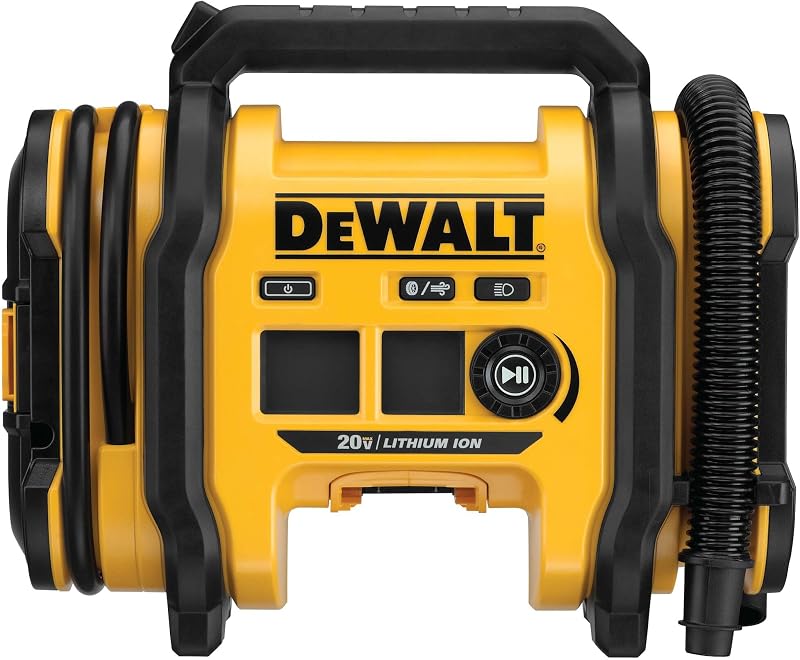
$99 (tool only)
A three-way inflator that runs off a DeWalt 20V MAX battery, a 12V car socket, or a 110V wall outlet.
Affiliate link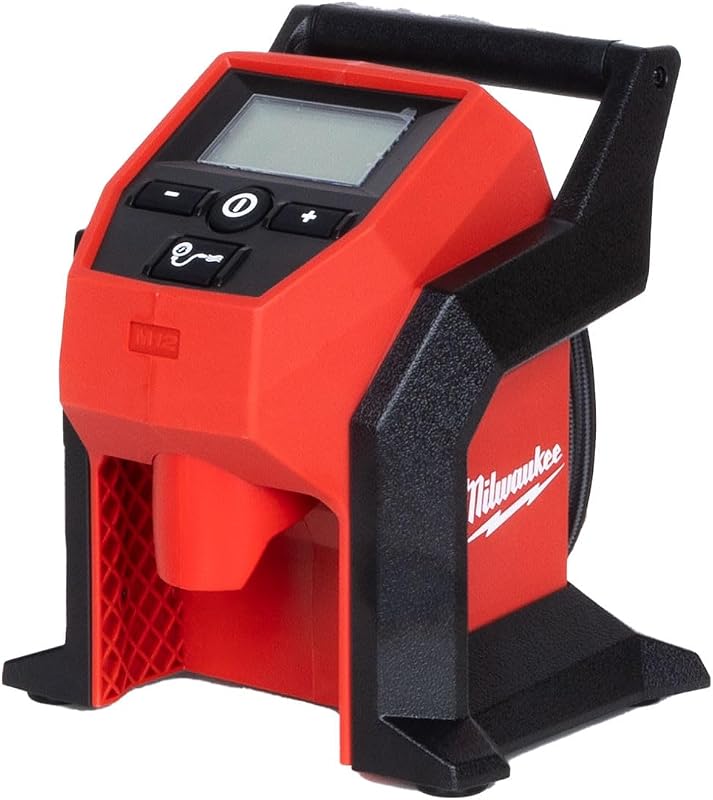
$99 (tool only)
Milwaukee's 'fastest cordless' reputation and jobsite durability.
Affiliate link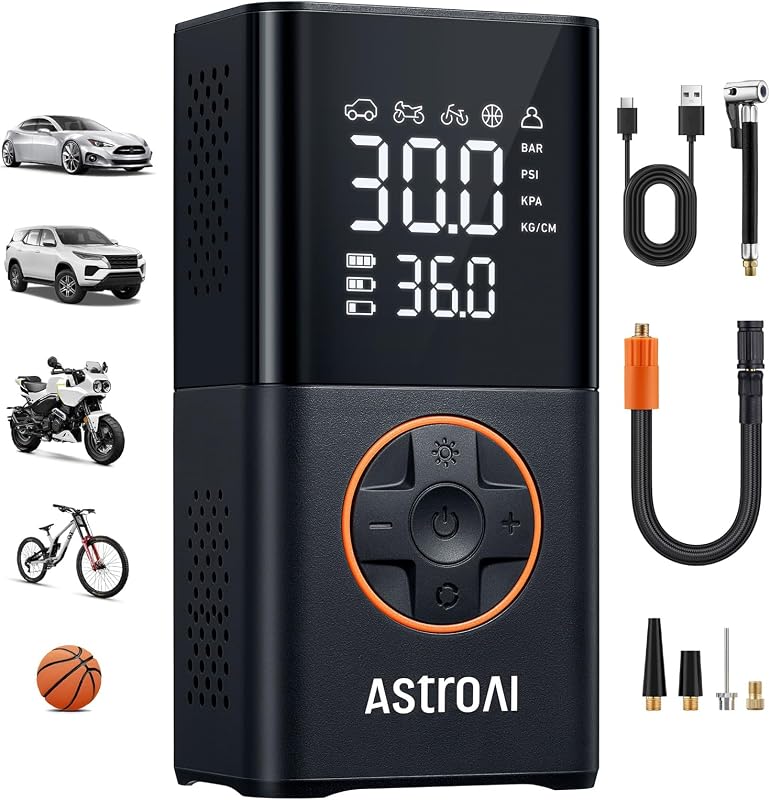
$24-45
A sub-one-pound pocket cordless inflator with digital PSI preset, auto shut-off, LED light and a 4000mAh battery good for up to 8 tires per charge.
Affiliate linkFor SUV tires and top-ups, a strong cordless unit is usually enough and far more convenient. For full-size truck tires — especially filling from flat, airing back up off-road, or a dually — a 12V or corded unit that runs off the vehicle is more reliable because it never runs out of battery mid-tire. The tradeoff is you must route a cable and keep the engine running.
Some can, but expect it to use a large share of one charge and possibly hit a heat cutoff before it's done. A big light-truck tire holds far more air than a car tire, and per-charge 'tires' ratings are measured on car tires. A unit with a 12V mode (like the AstroAI 160 PSI or DeWalt DCC020IB) removes the battery limit for that job.
Barely. Every quality inflator here reaches 120–160 PSI, far above the 32–65 PSI most truck and SUV tires call for. What actually limits filling a big tire is air volume (CFM) and duty cycle, not the headline PSI number — which is why two units with the same PSI can feel completely different on a large tire.
Not always. A typical cigarette-socket unit ships with roughly a 10-foot cord, which can fall short of the rear tires on a long-bed or crew-cab truck, and the inner tire on a dually is especially awkward. If you go corded, plan to reposition the truck or choose a unit with a longer cord or a cordless mode.
For anything sustained, yes. A 12V inflator draws real current, and with the engine off it pulls from the same battery that starts your vehicle — a long fill can leave you with a no-start. Running the engine makes it a non-issue, which is also why the corded route is the weaker choice when your battery is already weak.
Research-driven: our picks come from verified manufacturer specs and long-term owner feedback. How we work: our methodology.
The car, power, cooling, and work-utility gear worth owning — with the honest catch on each. One genuinely useful email a week. No spam, no fake reviews, unsubscribe anytime.