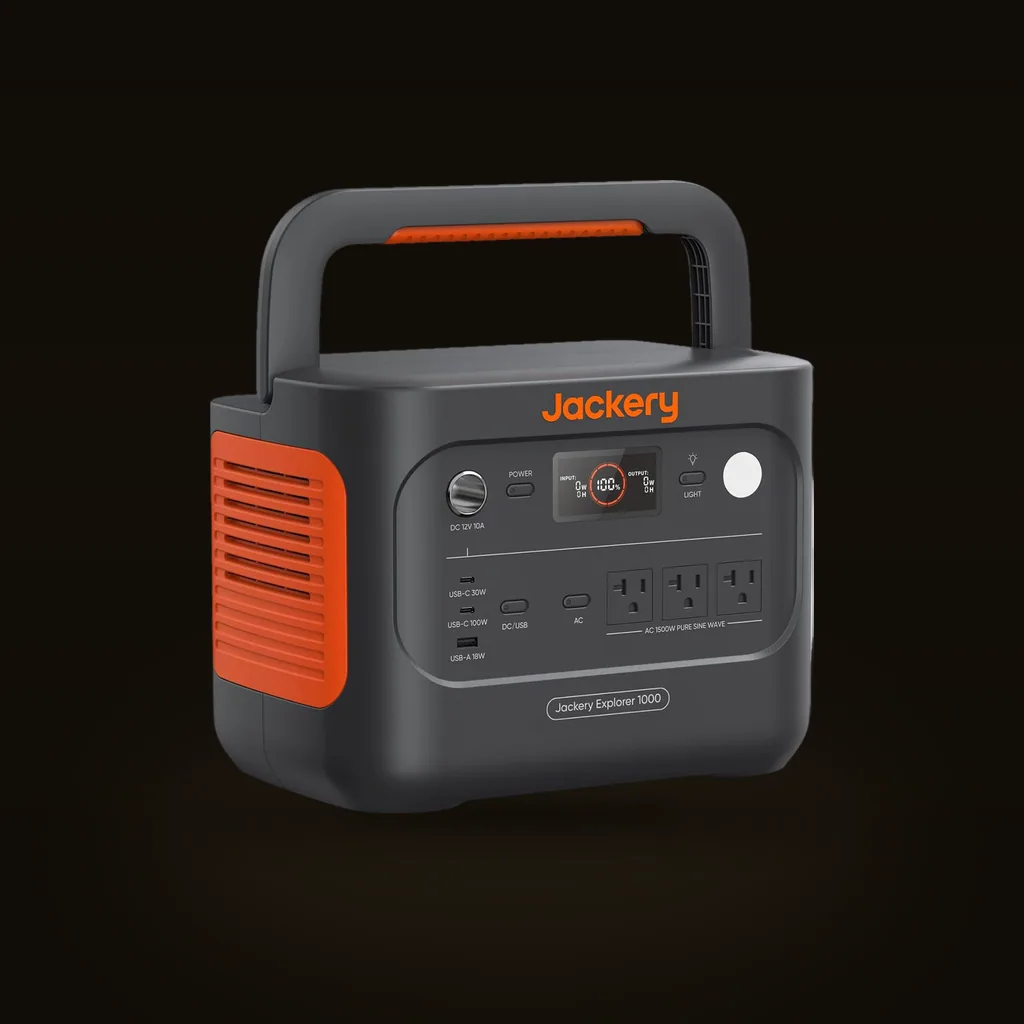
Best 1kWh all-rounder
Jackery Explorer 1000 v2 Portable Power Station
1,070WhBattery capacity
1,500WAC output
Battery capacity1,070 Wh
$449–$799Check price on Amazon
The two numbers that matter are watt-hours (how long it runs) and watts (what it can run at once) — and a cheap battery quietly oversells both. Here's every station compared by the specs that actually decide it, side by side.

Buy on two numbers: watt-hours (how long it runs) and watts (what it can run at once). For most people a ~1kWh LiFePO4 station like the BLUETTI AC180 (1,152Wh, 1,800W) powers a fridge, laptops, and phones through an outage or a weekend off-grid. Want the same class ~11 lb lighter and charged in an hour? The Jackery 1000 v2. Just need to keep phones and a CPAP alive camping? The Anker C300 does it for a third of the price. And skip anything that isn't LiFePO4 if you plan to keep it for years.
Sort by top pick, most capacity, or most power — the winner rises to the top. Every number is real, and each pick links straight to its exact Amazon page.
The buttons below are Amazon affiliate links. As an Amazon Associate, BlackBox Supplies earns from qualifying purchases — at no extra cost to you, and it never changes which product wins. Full disclosure.
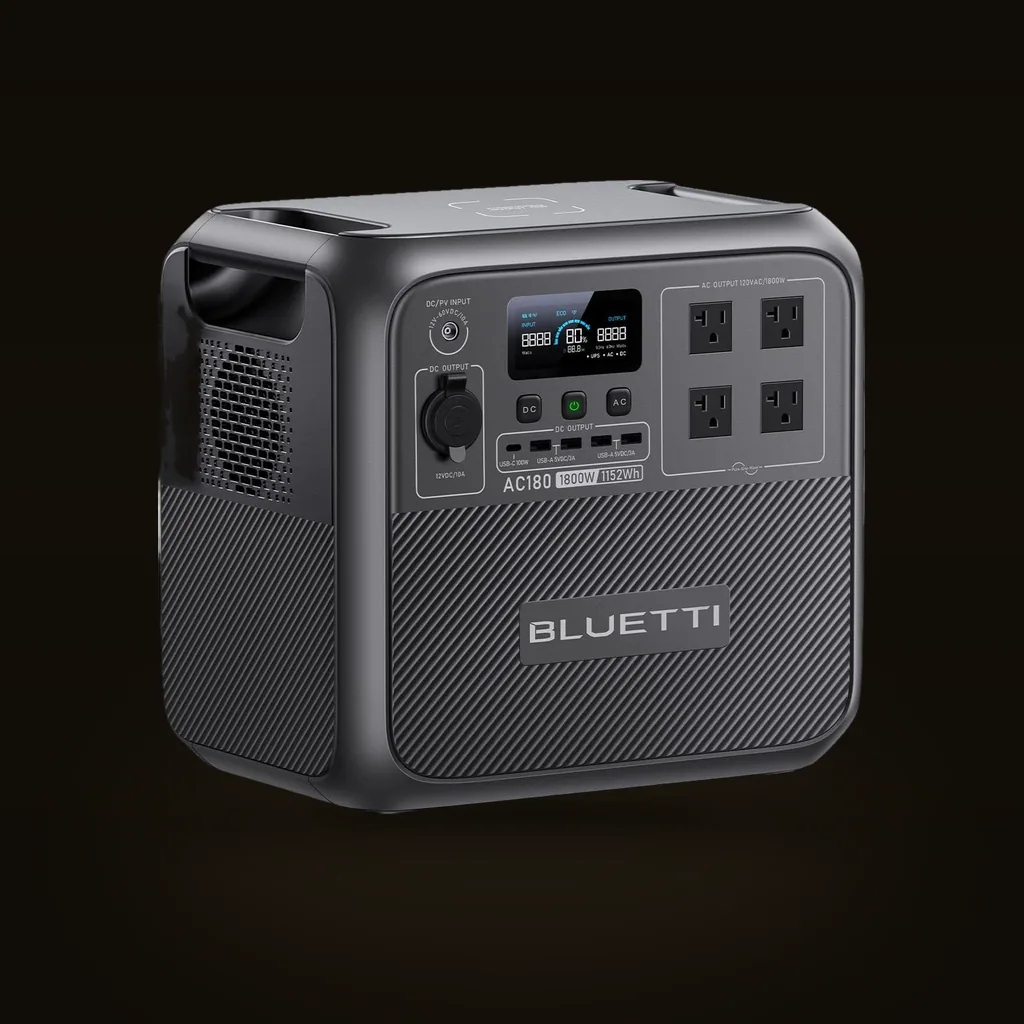
Home backup or a weekend off-grid where you want to run real appliances, not just charge gadgets.
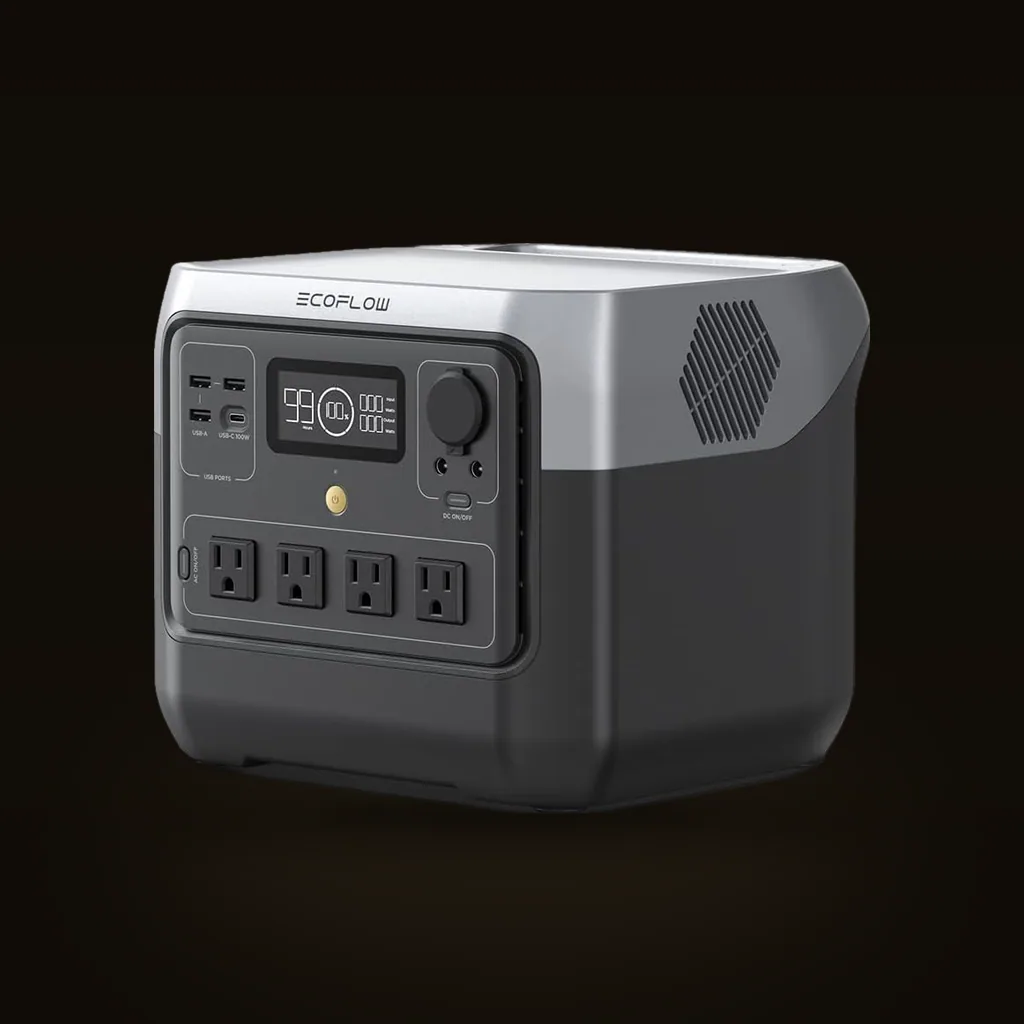
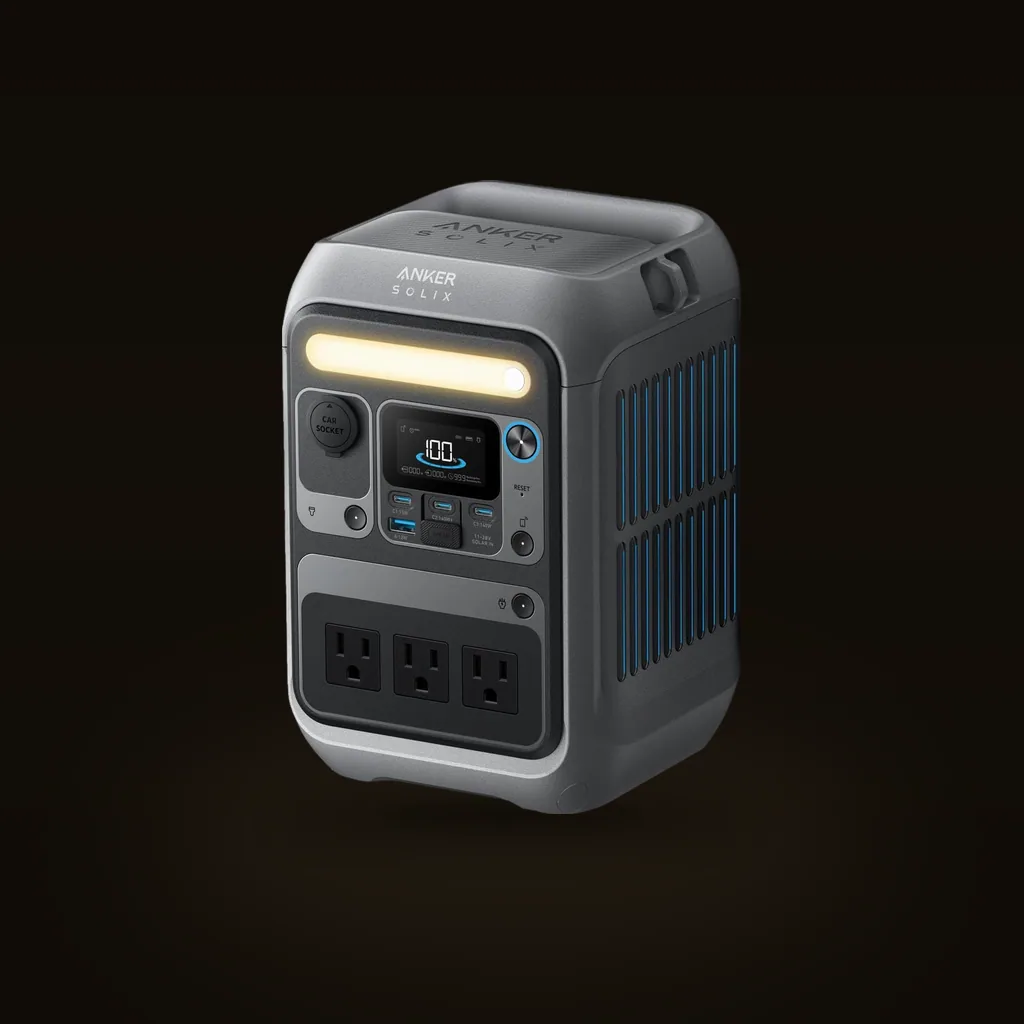
Ranked from manufacturer specs, standardized test ratings where they exist, and independent reviews. A “~” marks an estimated or unpublished figure — we never invent one. As an Amazon Associate, BlackBox earns from qualifying purchases, at no extra cost to you.
Even the BLUETTI AC180 Portable Power Stationisn’t perfect. Here’s what we know before you buy — and we still ranked it #1 anyway.
When we’re the wrong tool for the job, we’d rather you knew now.
Every category has one or two specs that decide whether you’re happy in a year — and a louder number the box leads with that barely predicts anything. Here’s how to read past the headline.
Real models we looked at and left off — and the single honest reason each one lost. No strawmen: if it’s here, it’s a unit people actually cross-shop.
A strong 1,024Wh/1,800W LiFePO4 rival to the AC180, but its cooling fans spin up above ~120W and cycle on and off even at light loads — reviewers flag it as poor for a quiet bedroom or overnight CPAP — and it usually lists above the AC180 for the same output.
Uses older NMC lithium rated for roughly 1,000 charge cycles rather than LiFePO4's 3,000–4,000, so its usable life is far shorter — Jackery has since discontinued it in favor of LFP models like the 1000 v2 that made this guide.
The sub-$300 LFP alternative to the Anker C300, but owners and reviewers widely report its fan cycles on loudly even at low loads and in 'silent' mode — undercutting the near-silent tent-and-CPAP use the C300 is chosen for.
Goal Zero charges a steep brand premium — around a full 1kWh LFP rival's price for only ~500Wh — and its AC and solar recharge are slower than the Jackery and Bluetti here, so you pay more for less capacity and a slower refill.
A genuinely excellent 1,056Wh/1,800W LiFePO4 unit — it loses to the AC180 only on price-per-watt-hour and a slightly smaller battery, not on quality; a close call worth a look if it's discounted below the AC180.
A qualitative synthesis of patterns that recur across verified-buyer reviews — not our own lab testing, and no invented numbers. Just what owners consistently praise, and the long-term gripes worth knowing before you buy.
Across the full stations here, owners consistently frame the LiFePO4 cells as the reason to buy — the recurring sentiment is confidence that a unit will still hold up years of weekend and outage use later, rather than fading like older lithium packs.
For the Jackery and Bluetti especially, owners repeatedly single out the roughly one-hour recharge as the feature that justified the price — being able to top off fast before a storm or right after an outage comes up again and again as a genuine relief, not a spec-sheet number.
Owners of the smaller Anker unit consistently describe forgetting it is even running, and CPAP users in particular praise the quiet overnight operation — a real contrast to the fan complaints that dog the bigger stations.
The most common long-term gripe on the Bluetti AC180 and EcoFlow RIVER 2 Pro is the same: the cooling fan spins up and pulses even when powering something small like a laptop or mini-fridge, and reviewers repeatedly call it distracting at a desk or next to a bed. It is quiet-by-spec, not silent-in-practice.
A recurring owner complaint on the ~1kWh units is that high-draw appliances drain them far faster than the capacity number suggests — a small space heater or kettle can empty a 1,000Wh station in roughly an hour. Owners consistently learn to size for the load, not the sticker capacity.
Owners are repeatedly caught out that the panel is never included, and Jackery buyers in particular flag being locked to Jackery panels and an unusual solar connector — plus a rated solar input owners say is hard to actually reach with the recommended kit. Budget for the panel, and expect ecosystem lock-in.
Start with watt-hours (capacity) and continuous watts (output) — the two numbers that decide everything. Add up the running watts of what you'll plug in at once; the station's AC output must clear that, and its surge rating must cover the startup spike of anything with a motor. Then size watt-hours to how long you need it to last. After that, insist on LiFePO4 chemistry for cycle life, and let solar input, USB-C speed, and weight break the tie.
Two numbers people constantly confuse. Watt-hours (Wh) is the size of the tank — how long it runs. Watts (W) is the size of the pipe — how much it can power at once. A big battery with a small inverter still can't start a microwave; a big inverter on a small battery runs it for only minutes. Match both to your job.
Anything with a motor or compressor — fridges, pumps, power tools, some coffee makers — briefly pulls 2–3× its running watts the instant it switches on. If the station's surge/peak rating can't cover that spike it trips and shuts off, even though the running watts looked fine. Read the surge column, not just AC output.
Look for LiFePO4 (LFP) cells. They last roughly 3,000+ charge cycles versus ~500–800 for older NMC lithium, run cooler, and are safer. Every full station here is LFP — a USB power bank isn't, which is fine for a pocket backup you'll replace sooner, but not what you want in a station you keep for a decade.
How fast it refills matters as much as capacity. Fast AC charging (the Jackery and Bluetti hit ~80% in under an hour) lets you top off before a storm. Solar input sets your off-grid ceiling — higher watts means you can pair a bigger panel for faster sun charging. The panel is almost always sold separately.
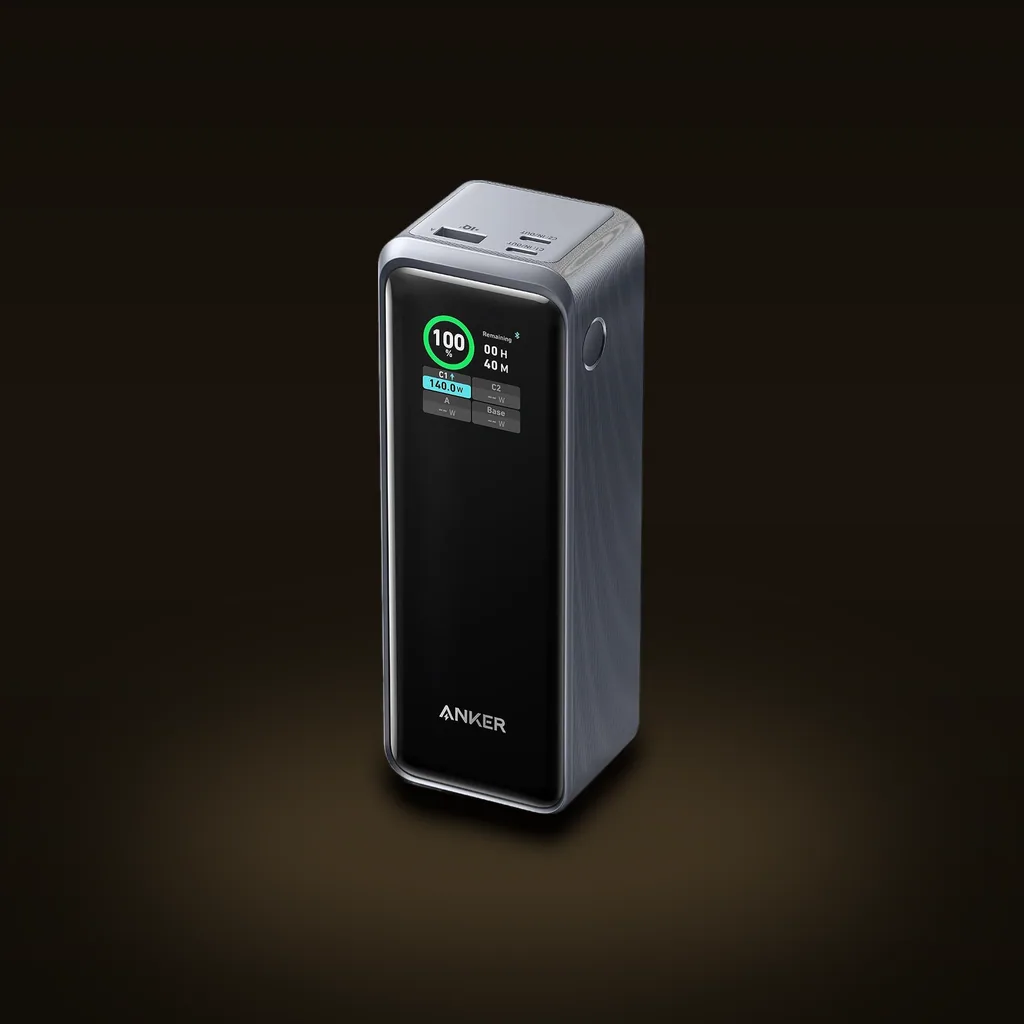
Capacity, output, weight, and price all pull against each other, and chemistry sets the price floor. The 1kWh LiFePO4 stations (Bluetti AC180, Jackery 1000 v2) run real appliances and last for years, but they're 24–35 lb and cost the most. Step down to the EcoFlow RIVER 2 Pro and you trade capacity and outright watts for a genuinely luggable 17 lb. The Anker C300 is the budget-and-backpack pick — enough for phones, a CPAP, and a laptop, not a fridge. And the Anker Prime is a different animal: a pocket power bank for devices, with no AC at all. Match the class to the load, not to the biggest watt-hour number.
Watt-hours (Wh) is the size of the tank — how long the station runs. Watts (W) is the size of the pipe — how much it can power at once. People constantly confuse them: a big battery with a small inverter still can't start a microwave, and a big inverter on a small battery runs it for only minutes. Match both to your job.
Aggregated from real verified-buyer reviews and long-term owner reports — not our own hands-on test. Basis: Independent lab tests (StorageReview, OutdoorGearLab), the Bluetti owner community forum, and Amazon verified reviews..
LiFePO4 chemistry rated 3,500+ cycles (years of use); fan-noise behavior has been partly addressed via firmware updates.
How every recommendation is built. We research, compare, and cite — we don’t take payment for placement, and we don’t claim to personally lab-test.
Lee· Founder & Editor
BlackBox Supplies is founded, researched, and written by Lee, its founder. The focus is deliberately narrow — the gear that matters the moment something goes wrong: a dead battery at 6am, a blackout, a heatwave with no AC, a breakdown on a dark shoulder. Every pick is cross-checked against manufacturer specs, published independent test data, and original analysis of hundreds of long-term verified-buyer reviews — an honest, research-based standard, not a paid lab, and never a hands-on test the site didn't do.
Every number above traces back to a real, reachable page — check any of them yourself.
Picks change and we get things wrong. When we do, we date the change here — nothing gets quietly rewritten, and a date never moves without a reason.
Outbound links are Amazon affiliate links: as an Amazon Associate, BlackBox Supplies earns from qualifying purchases, at no extra cost to you. Full disclosure.
The car, power, cooling, and work-utility gear worth owning — with the honest catch on each. One genuinely useful email a week. No spam, no fake reviews, unsubscribe anytime.