A fan-driven tower and an oil-filled radiator for a bedroom or living room, a propane radiant for a garage or workshop. Sourced specs, the honest catch on each, and the safety rules that matter more than the model.
For a bedroom or living room, a 1,500W electric heater is the whole answer: the Dreo Solaris Slim H3 if you want a thermostat, timer and oscillation, or the De'Longhi oil-filled radiator if you want silent, fan-free heat. For a garage or workshop the Mr. Heater Portable Buddy is the propane radiant the maker lists for it, but it burns fuel indoors, so ventilation and a carbon monoxide alarm are not optional.
Disclosure · As an Amazon Associate, BlackBox Supplies earns from qualifying purchases — at no extra cost to you. See our full disclosure.
Our picks
Best for a bedroom or officeDreo
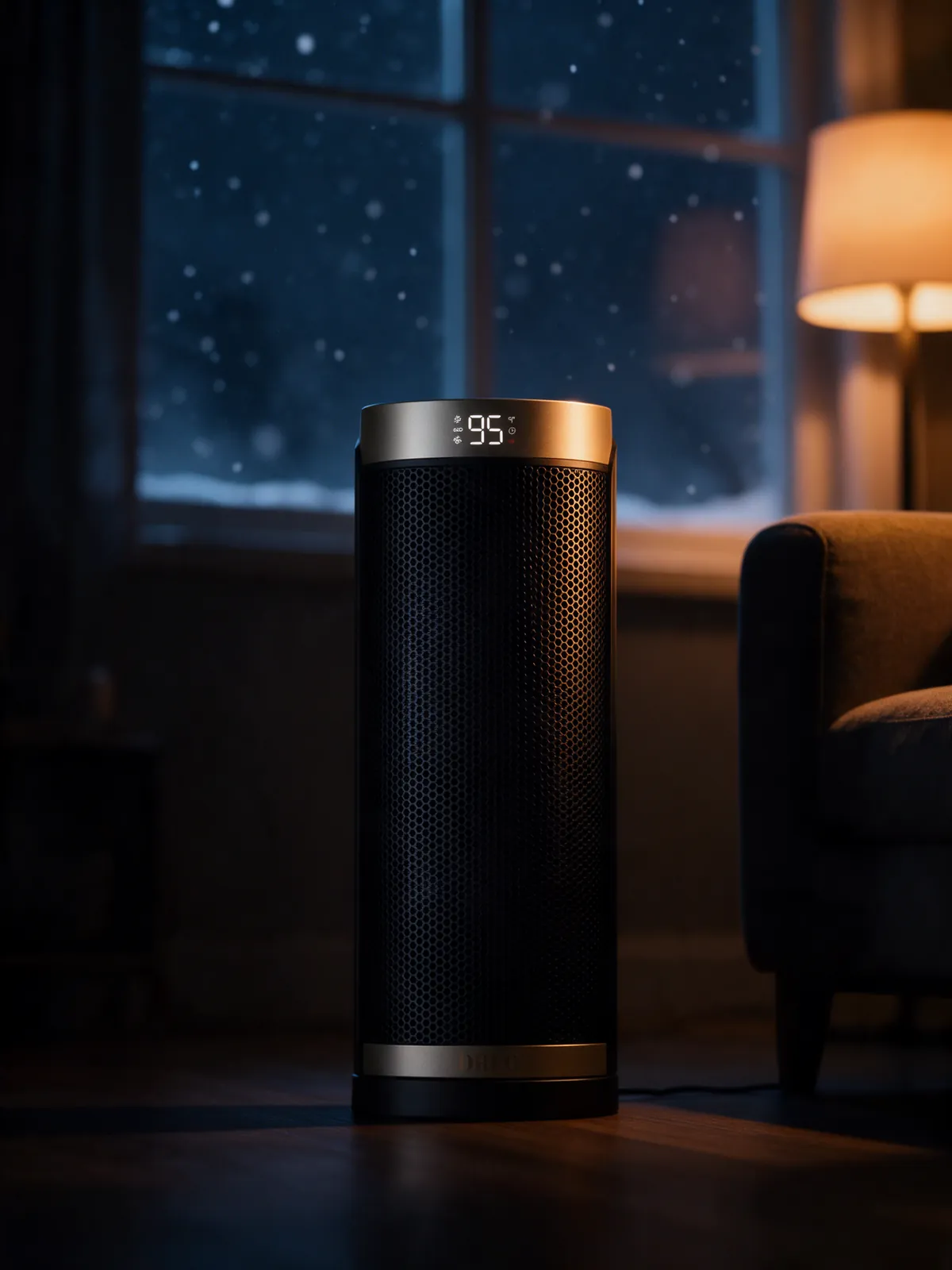
Dreo Solaris Slim H3
A slim tower with a thermostat, a timer and oscillation. The most controllable of the three and the one you can leave to hold a room at a set temperature.
1,000 to 1,500W, with a 41 to 95°F adjustable thermostat and a 1 to 12 hour timer.Dreo's spec table
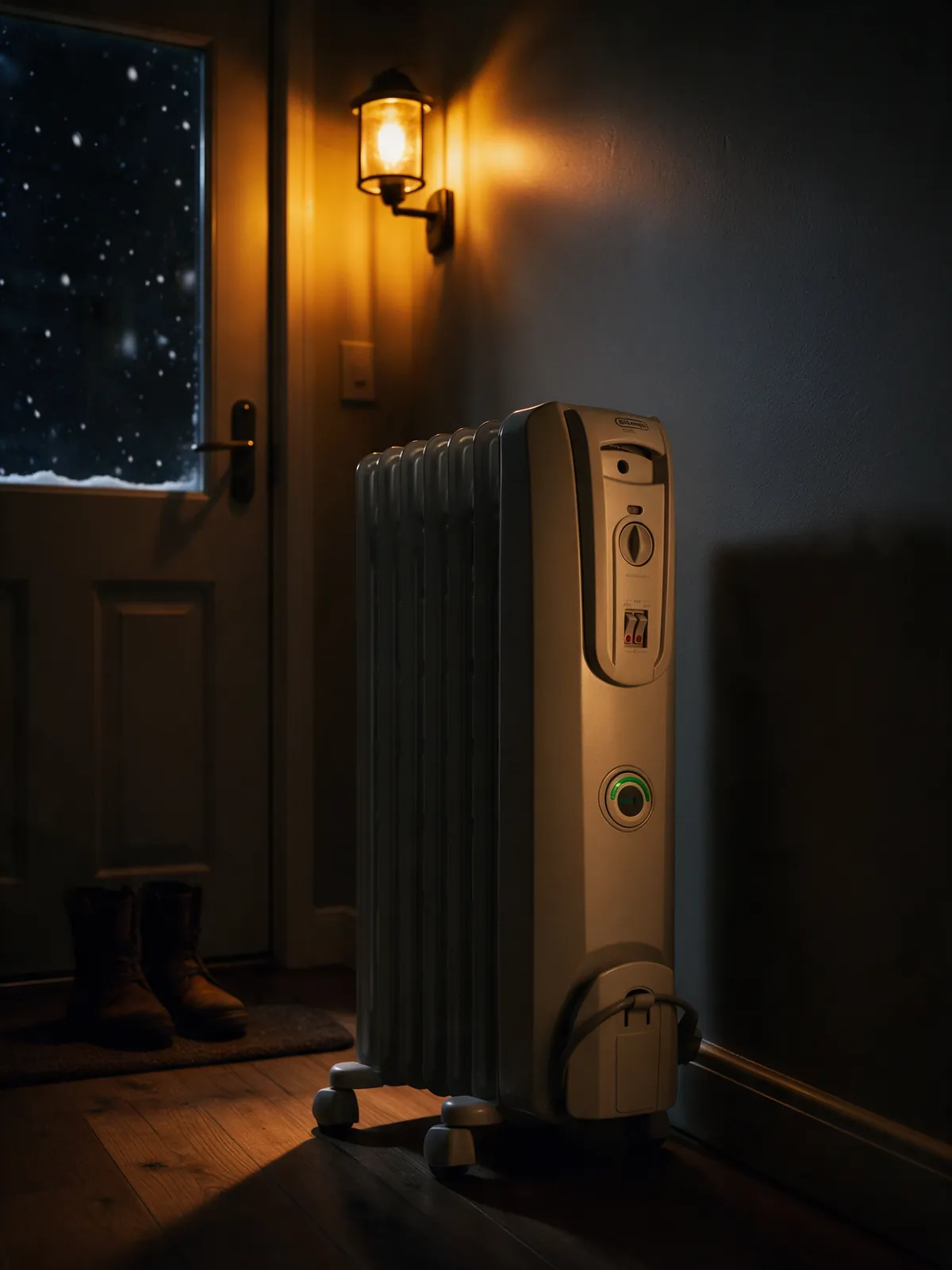
An oil-filled radiator: no fan, no airflow noise, heat that keeps coming after the thermostat cycles. It sits on castors, so one heater can serve a few rooms.
1,500W, seven fins, three power settings, with a room thermostat and a safety thermostat.De'Longhi's page
23.37 lb on castors; its page says the sealed oil reservoir never needs refilling.De'Longhi's page
The catch De'Longhi's own page says: "This product is only suitable for well insulated spaces or occasional use." It heats slowly because it warms oil first, and it is heavy.
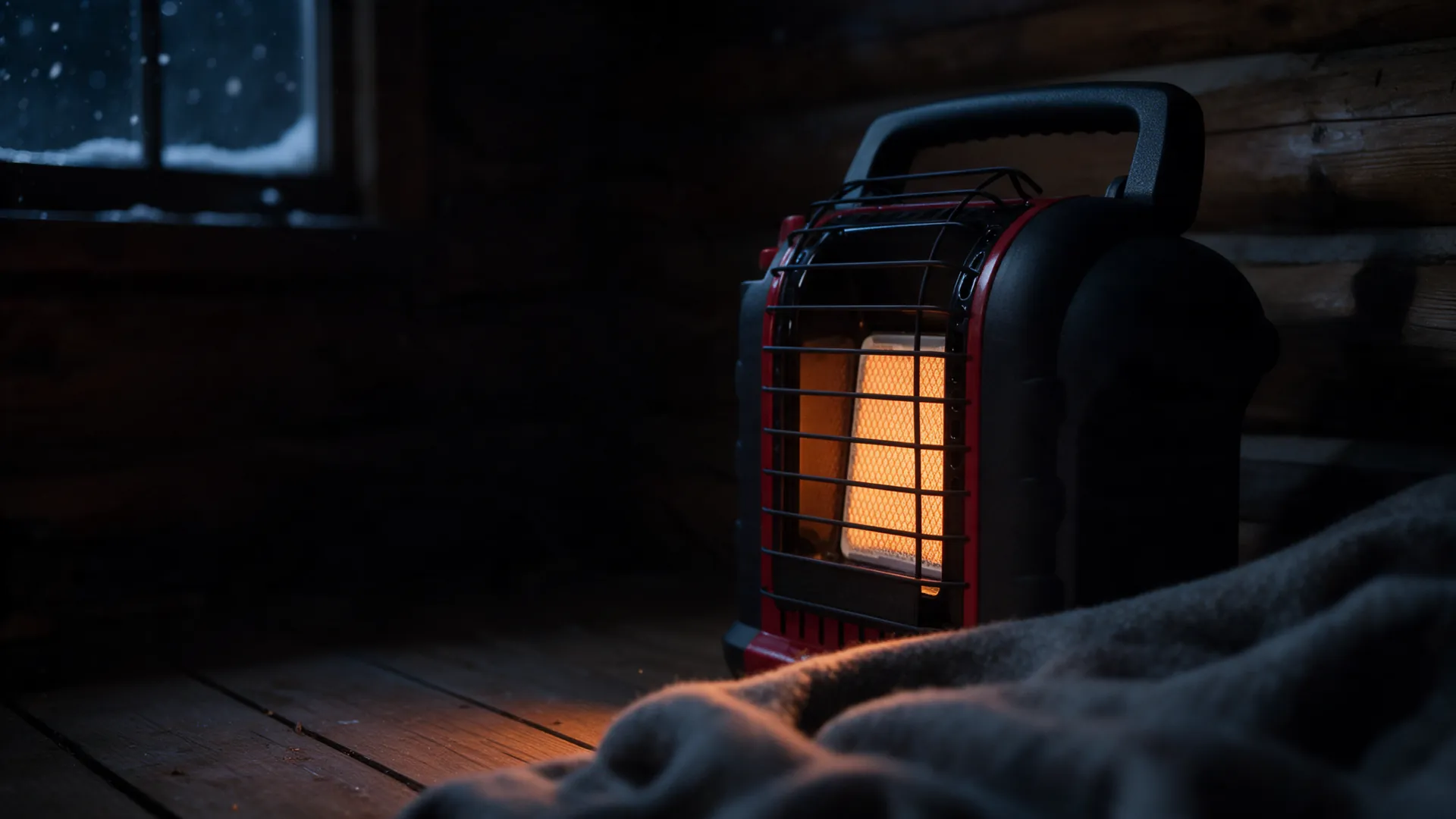
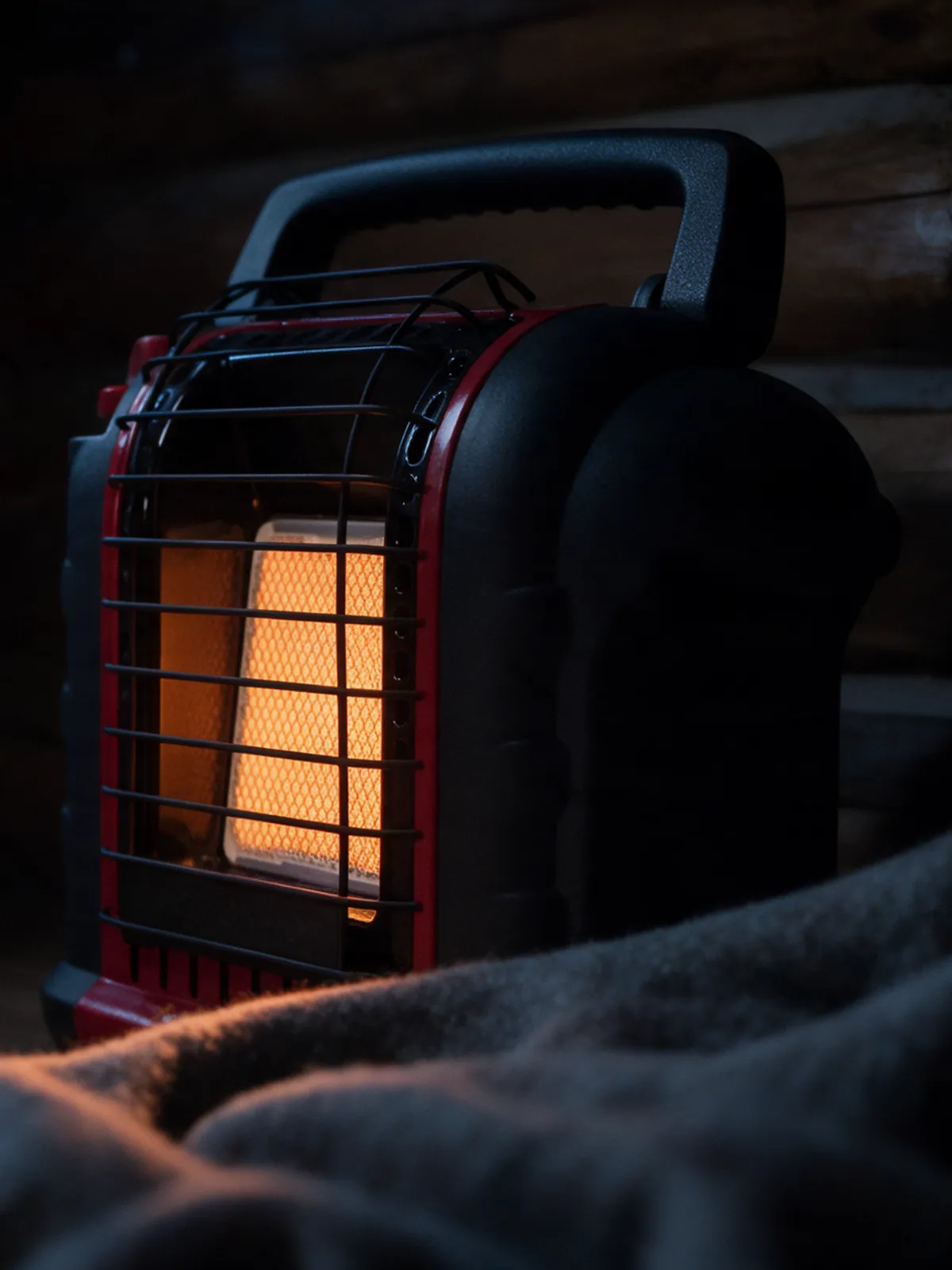
A propane radiant that runs off a 1 lb cylinder with no outlet needed. It is the only one of the three that works in a garage with no power, and the only one that burns fuel.
4,000 or 9,000 BTU per hour; heats up to 225 sq ft; connects to a 1 lb cylinder (or a 20 lb with an optional hose and filter).Mr. Heater's page
Has an oxygen depletion sensor and an accidental tip-over shut-off. The page calls it "indoor safe".Mr. Heater's page
Its spec table lists 3 hours of run time on high and 6 on low, and names garages and workshops among its uses.Mr. Heater's page
The catch Any fuel-burning heater makes carbon monoxide. Mr. Heater's product page does not discuss ventilation or carbon monoxide; the owner's manual does, so read it before the first light.
As an Amazon Associate, BlackBox earns from qualifying purchases, at no extra cost to you. Full disclosure.
01 / 05
Match the heater to the space first
The model matters less than the match. A 1,500W electric heater and a propane radiant solve different problems, and picking the wrong kind for the space is the commonest way to be cold and unhappy with a good product.
Both electric heaters here top out at 1,500W (Dreo: 1,000 to 1,500W; De'Longhi: 1,500W). In BTU terms, which is how propane heaters are rated, 1,500W is about 5,100 BTU an hour: a unit conversion, not a spec from either maker. The Mr. Heater Portable Buddy's high setting is 9,000 BTU an hour. That gap is the reason people reach for propane in a garage and for electric in a bedroom.
We deliberately give no watts-per-square-foot rule. The makers' pages do not, and an invented rule is how people end up with the wrong heater. De'Longhi says its radiator suits well-insulated spaces or occasional use; Mr. Heater rates the Buddy at up to 225 square feet, which is a 15 by 15 foot space. Measure your room or garage against those two statements.
The three heaters side by side, from the makers' own pages
Heater
Type and power
What the maker rates or lists
Best for
Dreo Solaris Slim H3
Electric fan tower, 1,000 to 1,500W
Thermostat 41 to 95°F, 1 to 12 h timer, 70° oscillation, overheat and tip-over protection
A bedroom, office or living room
De'Longhi oil-filled radiator (EW7707CM)
Electric oil-filled radiator, 1,500W
Seven fins, three power settings, room thermostat and safety thermostat, castors
Silent heat in a well-insulated room
Mr. Heater Portable Buddy (MH9BX)
Propane radiant, 4,000 or 9,000 BTU/h
Heats up to 225 sq ft; oxygen depletion sensor and tip-over shut-off; 1 lb cylinder
A garage, workshop or no-power space
02 / 05
For a bedroom or living room: the Dreo tower or the De'Longhi radiator
If you want to set a temperature and forget it, the Dreo is the better tool: a thermostat that goes from 41 to 95°F, a timer up to 12 hours, and a tower shape that takes little floor. Dreo's spec table gives its sound level as 37.5 dB, and a fan heater will always be louder than a radiator.
If sound and dryness bother you more than speed, the De'Longhi is the quieter choice: no fan, so no airflow noise, and its page says the thermal slot design heats the room without drying the air or stirring up dust. The honest cost is time and weight. An oil-filled radiator takes a while to bring a cold room up, and at 23.37 lb it is a heater you roll rather than carry.
Neither of these is a whole-house heater. Both are plug-in heaters limited to 1,500W, and De'Longhi itself limits its radiator to well-insulated spaces or occasional use. If a room is drafty or very cold, expect to supplement with a draft stopper, closed doors, and a smaller target (one room, not the floor).
03 / 05
For a garage or workshop: the Mr. Heater Portable Buddy, with real caveats
The Buddy earns its place in a garage for the plainest reason: it needs no outlet. It heats by propane from a 1 lb cylinder, and Mr. Heater's page lists garages and workshops among its uses. That makes it the realistic choice for a space with no spare circuit, or in a power outage.
It is also the one heater in this guide that makes carbon monoxide. The Consumer Product Safety Commission's 2026 winter advice is blunt about the alarm: "CO alarms should be placed on every level of the home and outside sleeping areas." A garage is not the place to skip that.
On what we could verify: Mr. Heater's product page states the oxygen depletion sensor and the tip-over shut-off, and the 225 square foot rating. It does not mention ventilation or carbon monoxide at all, and the manual links on Mr. Heater's site returned errors when we tried them on October 9, 2026. So we are not going to paraphrase ventilation rules we could not read. Get the MH9BX owner's manual from Mr. Heater before you use it, and follow it, not us.
One more fact from the page: its maximum elevation is listed as 7,000 feet, which matters if you heat a cabin or garage in the mountains.
04 / 05
The safety rules that matter more than the model
These come straight from the Consumer Product Safety Commission's January 2026 winter safety advisory, quoted so you can check them.
Plug it into the wall — "Plug electric space heaters directly into a wall outlet—never into an extension cord or power strip."
Turn it off to sleep — "Turn off heaters when sleeping." That includes the thermostat-controlled ones; a timer is a better answer than leaving it on.
Refuel only when cold — "For fuel-burning portable heaters, never refuel when in use." Turn the Buddy off and let it cool before you swap a cylinder.
Keep clear of anything that burns — CPSC advises keeping portable heaters at least three feet from drapes, furniture, bedding and other combustible material.
Alarms before heaters — "CO alarms should be placed on every level of the home and outside sleeping areas." Install them before the first cold night, not after.
05 / 05
What we would buy, by situation
One bedroom, a light sleeper, a room you want held at a set temperature: the Dreo Solaris Slim H3. One quiet well-insulated room, or a room that needs steady background heat: the De'Longhi radiator. A garage, workshop or any space without power: the Mr. Heater Portable Buddy, with the manual read and a CO alarm in place.
If the power goes out, an electric heater only runs from a battery station that can supply it. We worked through that arithmetic in a separate guide on whether a portable power station can run a space heater, and the short version is that a 1,500W heater is a heavy load for a battery.
FAQ
Common questions
Can I leave a space heater on overnight?
The CPSC's winter advice is "Turn off heaters when sleeping." If you want warmth through the night, warm the room before bed and use the timer (the Dreo's runs 1 to 12 hours) rather than leaving a heater running unattended.
Can a space heater run on an extension cord?
The CPSC says to plug electric space heaters directly into a wall outlet, never into an extension cord or power strip.
Is a propane heater safe to use indoors?
Mr. Heater sells the Portable Buddy as an indoor-safe radiant propane heater with an oxygen depletion sensor and a tip-over shut-off. Any fuel-burning heater still produces carbon monoxide, so follow the owner's manual and keep working CO alarms outside sleeping areas. Do not use it as a heater for the room you sleep in.
What size heater do I need for my room?
There is no honest one-number answer. Both electric heaters here are limited to 1,500W, De'Longhi says its radiator suits well-insulated spaces or occasional use, and Mr. Heater rates the Buddy by area (up to 225 sq ft). Match those statements to your room and treat a very cold or drafty one as a job for more than one measure.
Is the oil-filled radiator or the fan tower better?
The radiator is quieter and has no fan, but it is slower and heavy. The tower heats a room faster and has a thermostat and timer, but it is a fan heater and makes some noise. Pick on whether you value silence or speed and control.
The gear actually worth buying — one email a week.
The car, power, cooling, and work-utility gear worth owning — with the honest catch on each. One genuinely useful email a week. No spam, no fake reviews, unsubscribe anytime.