Winter Car Emergency Kit: What to Pack, and the One Pick Per Job (2026)
Winter does three things to a car: it kills a weak battery, it turns light snow into a stuck car, and it makes waiting for help cold. One pick per job, with the maker's own numbers, and what not to waste space on.
A winter car emergency kit needs five jobs covered: start the car (a self-contained jump starter like the NOCO Boost Plus GB40), get unstuck (traction mats), keep moving on snow (snow socks like the AutoSock HP697), stay warm (mylar blankets), and be seen and see (LED flares and a work light). Skip salt, sand and a full-size shovel. Keep the heavy items where you can reach them.
Disclosure · As an Amazon Associate, BlackBox Supplies earns from qualifying purchases — at no extra cost to you. See our full disclosure.
Our picks
Keep moving on snowAutoSock
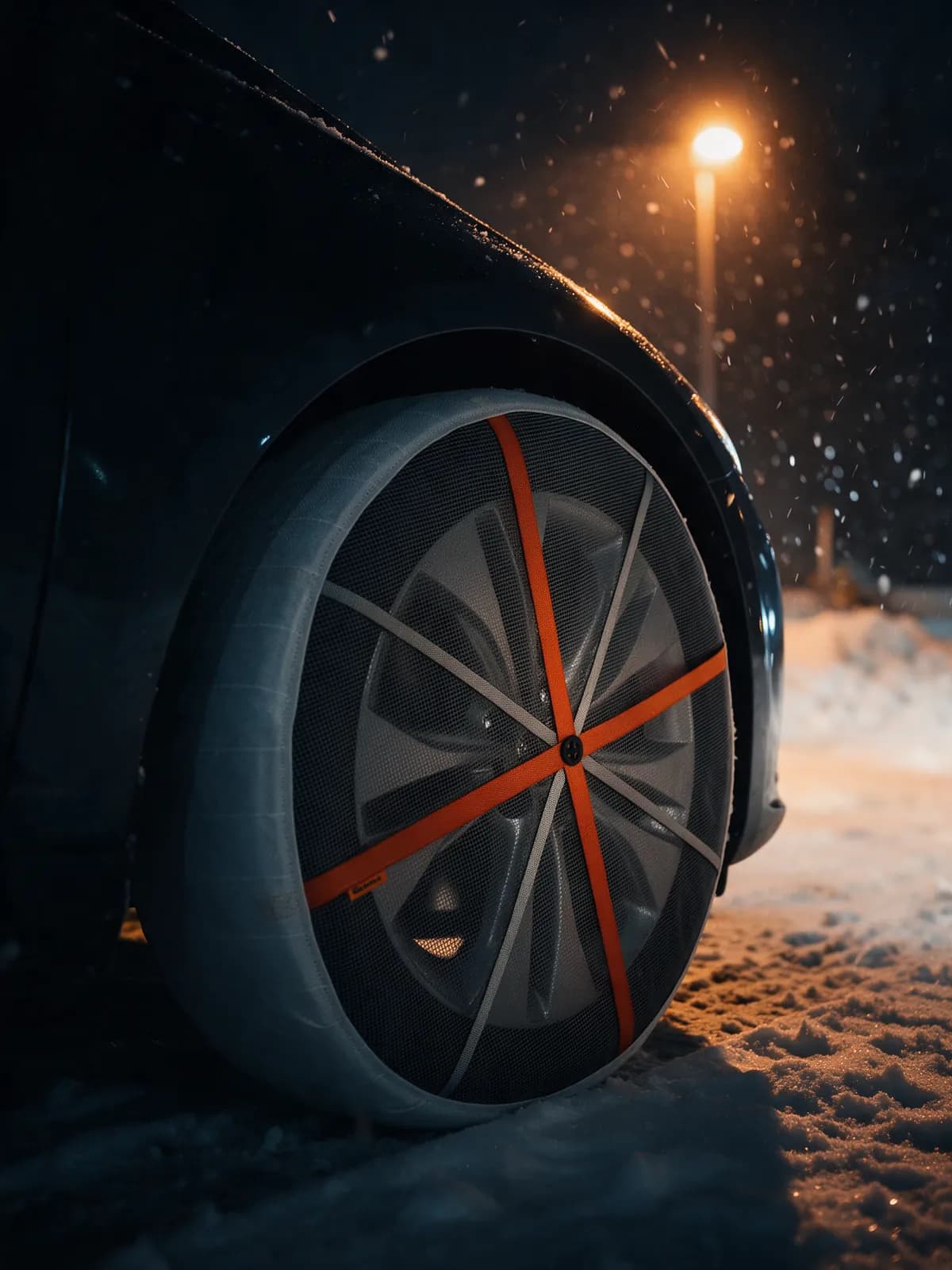
AutoSock HP697 Snow Socks
A textile snow sock that fits over a drive wheel. The maker calls it self-centering, quick to install and easy to remove, and says it works on alloy wheels and with ABS and ESP.
Certified to the European standard EN 16662-1:2020, and accepted in the Alps where snow chains must be used (France, Germany, Italy, Switzerland; not Austria).AutoSock's page
Each set is two socks and gloves; under 3.4 lb. Ten sizes cover more than 500 tire dimensions, so you must pick your size.AutoSock's page
Do not exceed 30 mph (50 km/h). Fit them to the driving wheels, keep anti-slip programs on, and take them off when the road clears.AutoSock's page
The catch The European approval does not tell you your state's rules. Where chains are required, check your state transport department before you rely on socks. The 30 mph limit is the maker's.
As an Amazon Associate, BlackBox earns from qualifying purchases, at no extra cost to you. Full disclosure.
01 / 05
What winter does to a car
Three things: it finishes off a battery that was already marginal, it turns a dusting of snow into a stuck car on a slope, and it makes the wait for help cold. Everything else on a kit list, the first-aid box, the blanket, the flashlight, is there to make one of those three survivable. That is why this page is organised by job, with one pick for each, and not as a checklist of everything.
We also have a checklist written for a first-time driver, and the two pages agree on the core. This one is the buy list: it names the product for each job and gives the maker's numbers.
The kit, one pick per job
Job
Pick
What we can source
Start the car
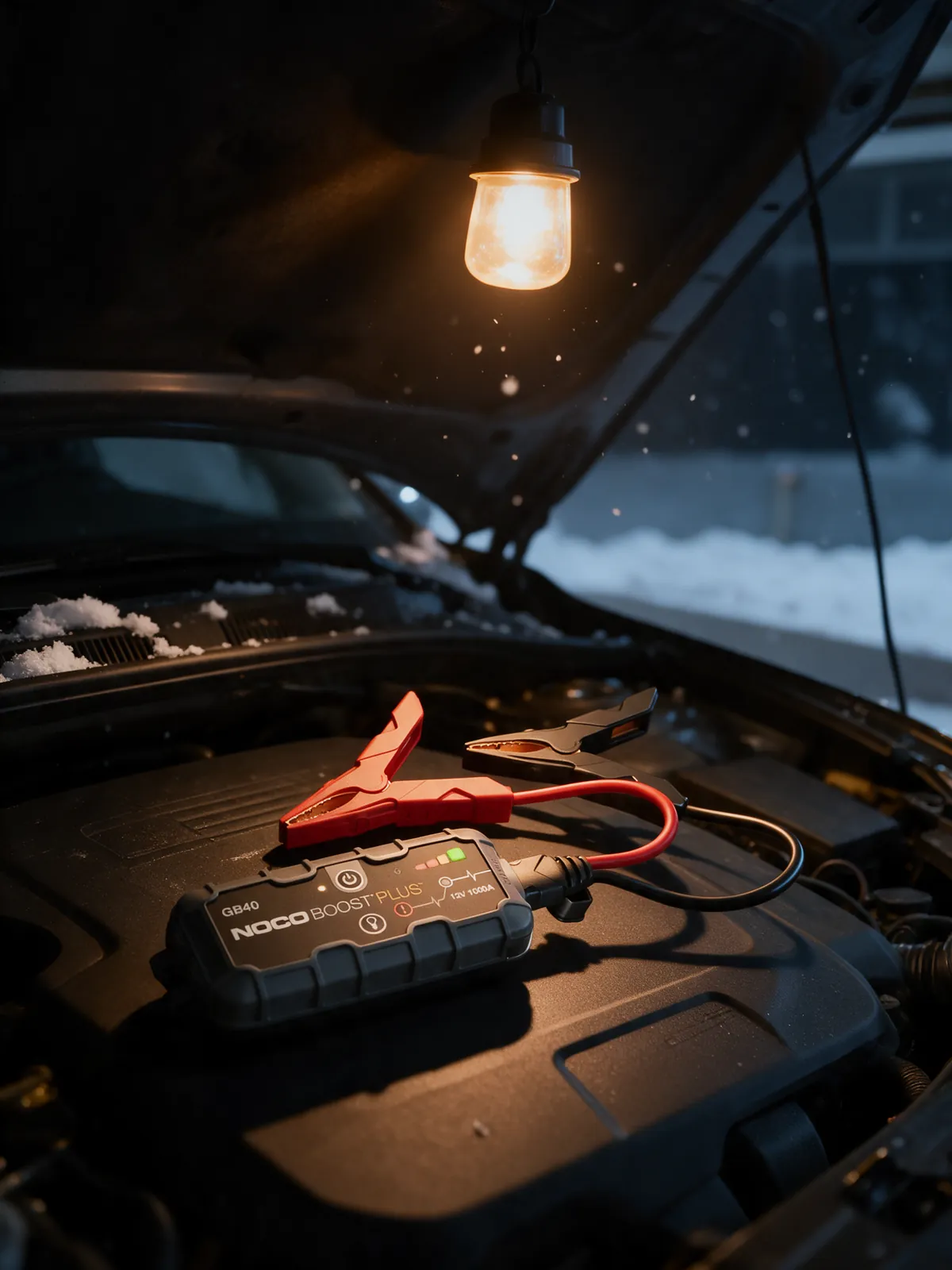
NOCO Boost Plus GB40 jump starter
1,000A; gas engines to 6.0L, diesel to 3.0L; up to 20 jump starts; 2.4 lb; IP65 (NOCO's page)
Get unstuck
MAXSA Escaper Buddy traction mats (2-pack)
Two bendable high-grip mats rated for heavy-vehicle self-recovery (our catalogue spec)
Keep moving on snow
AutoSock HP697 snow socks
EN 16662-1:2020; under 3.4 lb; do not exceed 30 mph (AutoSock's page)
Stay warm
Swiss Safe mylar blankets (4-pack)
Four heat-reflective blankets that pack flat in a glovebox (our catalogue spec)
See what you are doing
NEBO OMNI 2K work light
Up to 2,000 lumens (dual COB), USB-C rechargeable, rotating magnetic handles (NEBO's page and the Amazon listing)
Be seen
Wagan FRED LED flares (3-pack)
Three reusable LED discs with flash modes, magnetic and hook mounts (our catalogue spec)
02 / 05
Start the car: the NOCO Boost Plus GB40
A dead battery is the likeliest winter failure, and cables need a second car and a second driver. A self-contained lithium jump starter needs neither. NOCO's page rates the GB40 at 1,000 amps for gas engines up to 6.0L and diesels up to 3.0L, with up to 20 jump starts per charge, a rugged IP65 enclosure, spark-proof and reverse-polarity protection, and a 100-lumen flashlight with SOS and strobe modes. It weighs 2.4 lb and recharges from a USB port in about three hours at 2.1 amps.
NOCO says it uses high-discharge lithium technology for safe operation in any climate. That is the maker's claim; we have not tested it, and we have separate guides on how lithium behaves in deep cold and which jump starter to buy for a diesel truck in winter. The practical rule that does hold: keep it charged, because a flat jump starter is a paperweight.
These two solve different moments. Traction mats get you out of a spot you are already stuck in: you wedge them under a spinning drive wheel and ease off. Snow socks go over the drive wheels before you set off, so you can keep driving on snow or ice. A kit can carry both, and in a small trunk the mats are the first to buy.
The MAXSA Escaper Buddy mats are a two-pack of bendable, high-grip mats rated for heavy-vehicle self-recovery in our catalogue. For socks, the AutoSock HP697 is certified to EN 16662-1:2020 and comes in ten sizes covering more than 500 tire dimensions, so you have to look up your tire size before you buy; a sock that is the wrong size is the wrong sock.
The honest catch on the socks is speed and law. AutoSock says not to exceed 30 mph. Its page says they are accepted where chains are required in much of the Alps, which says nothing about a US state with chain-control rules. Check yours.
If the engine will not run, heat is the real emergency, and a mylar blanket is the cheapest, lightest answer. The Swiss Safe four-pack packs flat in a glovebox. A rechargeable magnetic work light lets you work under the hood or change a tire in the dark: the NEBO OMNI 2K is up to 2,000 lumens, USB-C and magnetic. And LED flares such as the Wagan FRED three-pack make the car visible without matches or fuel.
Rock salt or sand — Mats do the job, do not corrode the trunk and do not scatter grit.
A full-size snow shovel — A compact folding shovel is enough to free a tire, and the cordless one in our snow-shovel guide is for your driveway, not your trunk.
The biggest jump starter — The GB40 handles a small gas car. The 2,000A class is for diesels and big engines in deep cold.
Chemical hand-warmers as your heat plan — A mylar blanket holds body heat for the space it takes.
A boxed "winter survival kit" — Half of it is packaging. Buy the six things above.
FAQ
Common questions
How many times can a jump starter start a car on one charge?
NOCO's page says the GB40 delivers up to 20 jump starts per charge. That is a best-case figure; engine size and temperature change it.
Do I need chains if I carry snow socks?
That depends on where you drive. AutoSock's page says its socks are accepted where chains are required in much of the Alps; US states set their own rules, so check your state's transport department.
Where should the kit live in the car?
Within reach of the driver's seat. Items buried under luggage do not help when you need them. Our new-driver checklist covers the layout.
Should the jump starter stay in the car all winter?
Keep it charged and check it each month. Our winter kit guide also advises bringing it inside overnight before a big trip, because lithium loses capacity when it is very cold.
The gear actually worth buying — one email a week.
The car, power, cooling, and work-utility gear worth owning — with the honest catch on each. One genuinely useful email a week. No spam, no fake reviews, unsubscribe anytime.