
Roadside Safety
Swiss Safe Emergency Mylar Thermal Blanket (4-Pack)
$10-15
A four-pack of compact aluminized Mylar emergency blankets that reflect body heat, plus a bonus space blanket.
Affiliate linkA function-by-function winter car emergency kit checklist for a new driver — warmth, signal, power, traction, light, first aid — plus the honest call on whether to buy a pre-made kit or assemble your own.
A winter car emergency kit for a new driver should cover six jobs: warmth (a blanket or reflective bivvy, hat and gloves), signal (reflective triangles or LED flares set ~100 ft behind the car), power (a self-contained jump starter — a solo new driver can't flag down a second car), traction (a folding shovel plus sand or cat litter), light, and first aid with water and snacks. Store it in the back seat, not the trunk, and refresh water and batteries every fall.
Disclosure · As an Amazon Associate, BlackBox Supplies earns from qualifying purchases — at no extra cost to you. See our full disclosure.
Most winter-kit checklists are written for a driver who has options: a spouse to call, a second car in the driveway to jump from, years of muscle memory for what a slick road feels like before it bites. A new driver has none of that yet. The kit has to do the work the experience hasn't taught them to do — which changes a few of the picks in ways the generic lists miss.
The biggest change is power. Nearly every winter checklist still lists jumper cables. Cables assume a second car and a second, willing driver will appear — on the shoulder, in the cold, at night. For a solo new driver that assumption fails exactly when it matters most. A self-contained lithium jump starter needs no second car and no bystander, which is why it's the one upgrade we'd make to any list handed to a teenager.
The second change is calm. A new driver is more likely to panic, drive on a flat, or leave the car when they shouldn't. Half of a good winter kit is really about buying time and reducing decisions: stay warm, get visible, wait it out. Red Cross, NHTSA, and Ready.gov all converge on the same advice — in a winter breakdown, staying with the vehicle is usually the safest choice, and the kit exists to make staying survivable.
Organized by the job each item does, not by product category — because in an actual breakdown you think in problems ("I'm cold," "nobody can see me"), not aisles. This is the core loadout the major published lists agree on, adapted for a solo new driver.
| Job | Carry | Why it earns the space |
|---|---|---|
| Warmth | Wool or fleece blanket + reflective mylar blankets, hat, gloves, spare socks | A stalled car loses heat fast. You can only run the engine in short bursts (exhaust/CO risk), so insulation, not the heater, keeps you safe. |
| Signal | Reflective warning triangles OR LED flares, placed ~100 ft behind the car | Being seen prevents the second, worse accident. New drivers under-do this most. |
| Power | Self-contained lithium jump starter (not just cables) | Restarts a dead battery with no second car and no bystander — the solo-driver upgrade. |
| Traction | Folding shovel + a bag of sand or non-clumping cat litter; traction mats if budget allows | Digging out and getting grip under a tire solves the most common winter stuck. |
| Light | A bright rechargeable work light or headlamp + spare batteries | You cannot fix, signal, or dig in the dark. Hands-free or magnetic beats a phone flashlight. |
| First aid + fuel | First aid kit, water, high-calorie snacks, any personal meds | Turns a multi-hour wait from an emergency into an inconvenience. |
In a stalled car in the cold, the heater is not your friend for long. You can only run the engine in short, spaced bursts — and only after checking the tailpipe is clear of snow — because a blocked exhaust pushes carbon monoxide into the cabin. That means your real warmth comes from insulation, not the vents.
The honest hierarchy: a real wool or fleece blanket is your primary layer, and a pack of reflective mylar blankets is the cheap, weightless backup that reflects body heat and takes up almost no space. Add a hat, gloves, and a spare pair of socks — extremities go first, and wet socks are a quiet emergency of their own. This is the least glamorous part of the kit and the part a breakdown will make you most grateful for.
$10-15
A four-pack of compact aluminized Mylar emergency blankets that reflect body heat, plus a bonus space blanket.
Affiliate linkThe second collision is the one that hurts you — a stopped car on a snowy shoulder is nearly invisible until headlights are on top of it. Getting visible is the first thing to do after you're safely stopped, before you pop the hood or start digging.
The old standard is reflective warning triangles, and they're excellent: no battery, no failure mode, deploy one roughly 100 feet behind the car — the spacing U.S. rules set for a stopped truck, a sensible benchmark for a car — and further back on a divided highway, or before a hill or blind curve that hides you. The modern alternative is LED road flares — think of them as reusable, battery-powered pucks you can toss out in a line, with no open flame, which matters when there may be spilled fuel or dry brush. For a new driver, LED flares are easier to deploy in a hurry and can't be forgotten lit.

$30-45
A three-pack of FRED LED flares — bright flashing discs with a magnetic base and hook, in a zip bag.
Affiliate linkThis is the single most important swap on a new driver's list. Cold does two cruel things at once: it saps the battery's output and thickens the oil so the engine is physically harder to turn — so the mornings you're most likely to need a jump are the coldest ones. And a dead battery in a parking lot at night is precisely the situation where a new driver has no second car to borrow amps from.
A self-contained lithium jump starter removes the bystander from the equation entirely. Clamp it to your own battery, start the car, done — no flagging down strangers, no hoping someone knows which clamp is positive. It's the difference between a solvable problem and a stranded night.
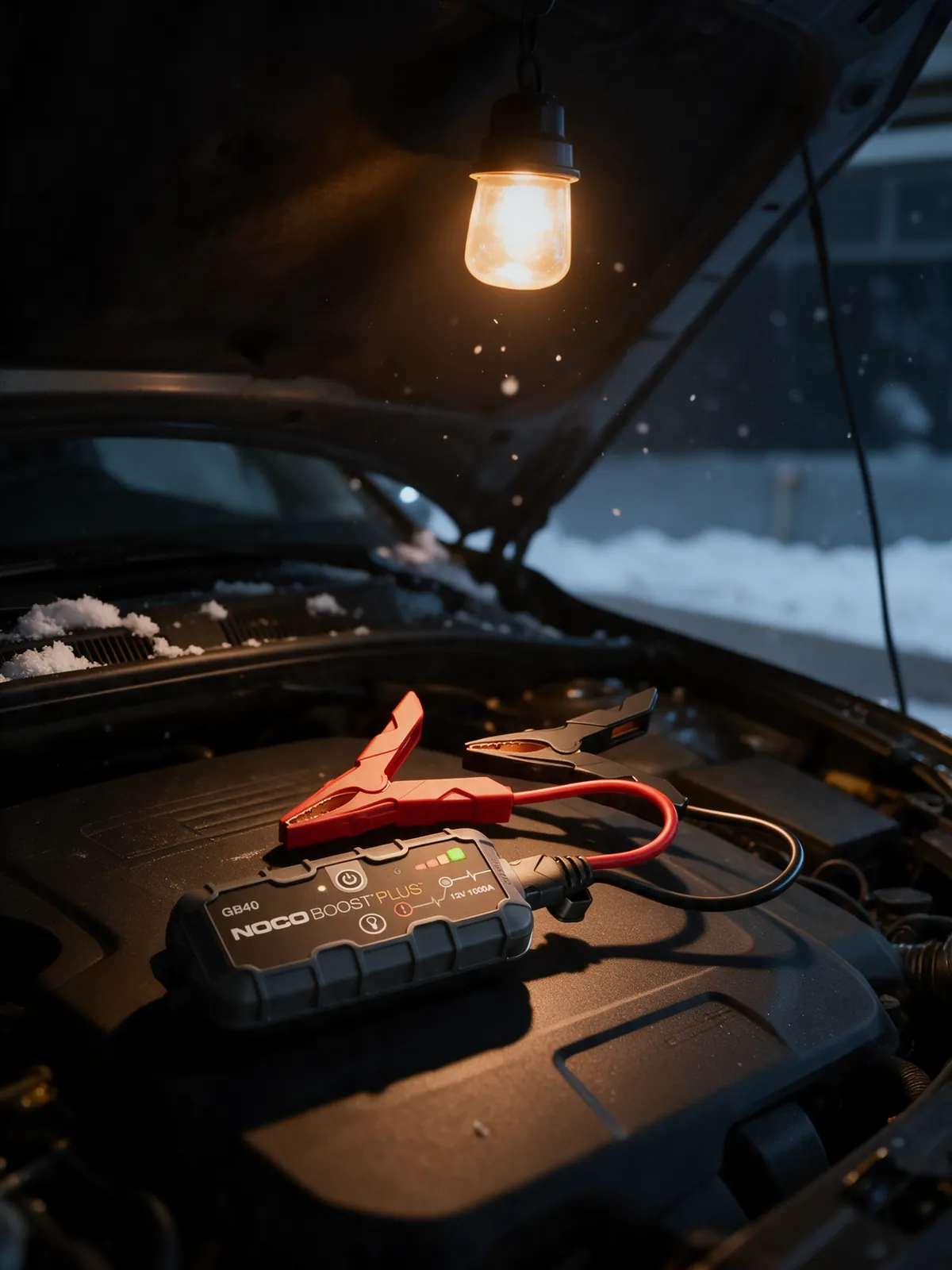
On sizing: NOCO rates the GB40 at 1000 amps peak, good for gasoline engines up to about 6.0L (and diesels up to 3.0L) by the manufacturer's own rating — which covers essentially every car a new driver is likely to own. Its clamps are spark-proof and reverse-polarity protected, so the classic beginner mistake of touching the clamps together or reversing them is designed to be a non-event. That safety margin is exactly why it suits an inexperienced driver.
$80-100
Compact 1000A 12V lithium jump starter that lets a driver jump their own dead battery with no second car.
Affiliate linkThe rest of the kit rounds out the failure modes cold weather actually produces. None of these are exotic; the mistake is owning none of them and improvising at 10°F.
Traction: a folding shovel plus a bag of sand or non-clumping cat litter is the classic, cheap way to dig out and get grip under a spinning tire. Traction mats (rigid boards you wedge under the drive wheels) do the same job faster and without the mess if the budget stretches. Light: you cannot dig, signal, or find the battery terminal in the dark, and holding a phone in your teeth is not a plan — a bright rechargeable work light with a magnetic base or a headlamp keeps both hands free. First aid: a pre-assembled kit plus any personal medication turns a cut or a cold wait into a non-event. Fire: a compact, car-rated extinguisher is the rare item you'll almost never use and will be extremely glad to have the one time you do.

$35-60
Hands-free light for work on the car after dark.
Affiliate link
$13-22
A soft-sided, organized first-aid kit of ~298 pieces.
Affiliate link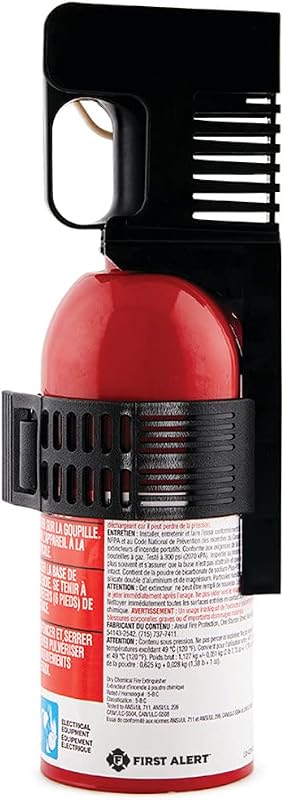
$20-30
One of the few trunk items that protects both the car and the people in it.
Affiliate link
$10-15
Made in USA, originally issued to first responders.
Affiliate link
$40-65
A pair of heavy-duty bendable traction mats you wedge under a stuck tire for grip in snow, mud or sand.
Affiliate linkTwo habits matter more than any single product, and almost nobody mentions them.
You have two real paths, and the right one depends on how much you'll actually maintain the kit.
A pre-built roadside kit — like the Lifeline 4388AAA, a 76-piece kit with jumper cables, basic first aid, gloves, ties, and a case — gets you an organized baseline in one purchase for around the price of a couple of the individual items. That's a genuinely good starting point, and for a parent buying something today for a teen, it beats buying nothing while you research. The honest catch: pre-built kits are built to a price. The jumper cables are usually thin, the first aid is minimal, and — critically — none of them include the two things a new driver most needs in winter: a self-contained jump starter (they give you cables, which need a second car) and real warmth.
Building your own costs more and takes an afternoon, but every item is one you chose for a reason, and you can front-load the two upgrades that matter: the jump starter over cables, and a proper blanket over a foil sheet. The best answer for most families is a hybrid — start with a pre-built kit as the container and the small-parts baseline, then add the jump starter, a real blanket, LED flares, and a good light on top. You get organization plus the pieces the budget kit skimped on.
| Pre-built kit | Build your own | |
|---|---|---|
| Cost | Lower up front | Higher, but no wasted items |
| Time | One click, ready today | An afternoon to assemble |
| Jump capability | Usually cables only (needs a 2nd car) | Add a self-contained jump starter |
| Warmth | Minimal or none | A real blanket + mylar backup |
| Best for | A fast baseline / gift today | A driver who'll maintain and upgrade it |
| Our take | Great container + starting point | The two winter upgrades go on top |

$50-75
One soft case bundling the core breakdown basics.
Affiliate linkEvery pick here is researched from published manufacturer specifications and long-term owner reviews, cross-checked against the winter-kit component lists from Red Cross, NHTSA, Ready.gov, and Consumer Reports. We have not personally lab-tested these products, and we don't pretend to — where a number matters, we attribute it to the manufacturer's own rating. We never publish invented test results or star ratings. If a claim isn't verifiable, we leave it out. Full reasoning on how a new-driver kit differs from a generic one is above; the related roadside-kit guide goes deeper on the year-round loadout.
Cover six jobs: warmth (a real blanket plus mylar blankets, hat and gloves), signal (reflective triangles or LED flares placed about 100 feet behind the car), power (a self-contained jump starter rather than just cables), traction (a folding shovel plus sand or cat litter), light (a rechargeable work light or headlamp), and first aid with water and snacks. Store the cabin-critical items in the back seat, not the trunk.
For most families a hybrid is best. A pre-built roadside kit like the Lifeline 4388AAA gives you an organized baseline and small parts in one purchase, but they're built to a price and skimp on the two things a new winter driver most needs: a self-contained jump starter (they include cables, which need a second car) and real warmth. Buy the kit as your container, then add a jump starter, a proper blanket, LED flares, and a good light on top.
Cables assume a second car and a willing driver will appear on the shoulder in the cold — an assumption that fails exactly when a solo new driver needs it most. A self-contained lithium jump starter like the NOCO GB40 needs no second vehicle: clamp it to your own battery and start the car. Its spark-proof, reverse-polarity-protected clamps also make the classic beginner clamp mistakes a non-event.
Keep the cabin-critical items — warmth, light, an escape tool, water — in the back seat within reach. A trunk can jam or freeze shut, or be unreachable if you're pinned by a snowbank. Bulky spares like a shovel can live in the trunk, but the things you'd need in an actual emergency should not.
Every fall. Water bottles split after freezing and thawing, snacks go stale, and every rechargeable item — jump starter, work light, LED flares — self-discharges over a year. Set one early-autumn reminder to top up all batteries and swap the water, so the kit is actually ready on the cold night you need it.
Yes — being seen prevents the second, worse collision, and new drivers under-do this most. Reflective triangles need no battery and never fail; LED flares like the Wagan FRED set are reusable, flameless, and faster to toss out. Place either roughly 100 feet behind the car (further back on a divided highway, or before a hill or blind curve). Ideally carry both.
Research-driven: our picks come from verified manufacturer specs and long-term owner feedback. How we work: our methodology.
The car, power, cooling, and work-utility gear worth owning — with the honest catch on each. One genuinely useful email a week. No spam, no fake reviews, unsubscribe anytime.