A blackout and someone needs a CPAP — here's exactly what to do
The grid just dropped and the CPAP has to run tonight. Before you panic or grab the first battery you see, know this: the machine itself sips power — it's the heated humidifier and heated hose that drain a battery — and with those off, even a modest power station carries you through the night. Work these steps in order.
By Lee · Researched & cited · Updated Oct 2026
Before you buy anything
- 1
Turn off the heated humidifier and hose
This is the single biggest battery saver — the heated humidifier and heated tubing can add 50-70% to what the machine draws. On a ResMed AirSense, set Climate Control to Manual and turn Humidity and Tube temperature OFF; on most machines it's one setting in the menu. The pressurized air is the actual therapy and it's unchanged — the heat is only comfort, so skipping it for a night or two costs you nothing but a slightly drier nose.
- 2
Do the watt-hours math on what you have
With the heater off, most CPAPs pull only about 30-60W, so a full night runs roughly 240-480 watt-hours (higher pressures sit at the top of that range). That means a phone-sized power bank won't cut it, but a compact ~300Wh station covers a typical night and a 1kWh unit covers two to three. Check the label on your machine's power brick — it lists volts and amps, or watts — so you're sizing off your real number instead of guessing.
- 3
Plug in the most efficient way
If your machine came with a matching 12V DC cord, running it from a station's car/DC port skips the AC-to-DC conversion and saves roughly 10-25% of the battery versus the wall brick. No DC cable? A pure sine-wave AC outlet — which every LiFePO4 power station here has — runs a CPAP safely, just a little less efficiently. If your station has a UPS/pass-through mode, leave the CPAP plugged into it so it never even pauses when grid power flickers.
- 4
If a generator is your backup, keep it outside
A battery power station is safe indoors and by the bed — a fuel generator is not. Carbon monoxide is silent and deadly, so any gas generator must run well away from windows and doors, never in a garage, shed, or on a porch. Meanwhile keep a phone charged so you can check your utility's restoration estimate and reach your equipment supplier (DME) if the outage runs long.
The one thing that solves it today
The fix tonight is a LiFePO4 power station with a pure sine-wave inverter — safe to run indoors, silent beside the bed, and sized to carry a CPAP through the dark. With the humidifier off, a 1kWh unit like the Jackery Explorer 1000 v2 (1070Wh) runs most machines for two to three nights; the lighter, lower-cost EcoFlow RIVER 2 Pro (768Wh) still clears a full night if you want less to haul. Keep it topped off and it's ready the moment the lights go.
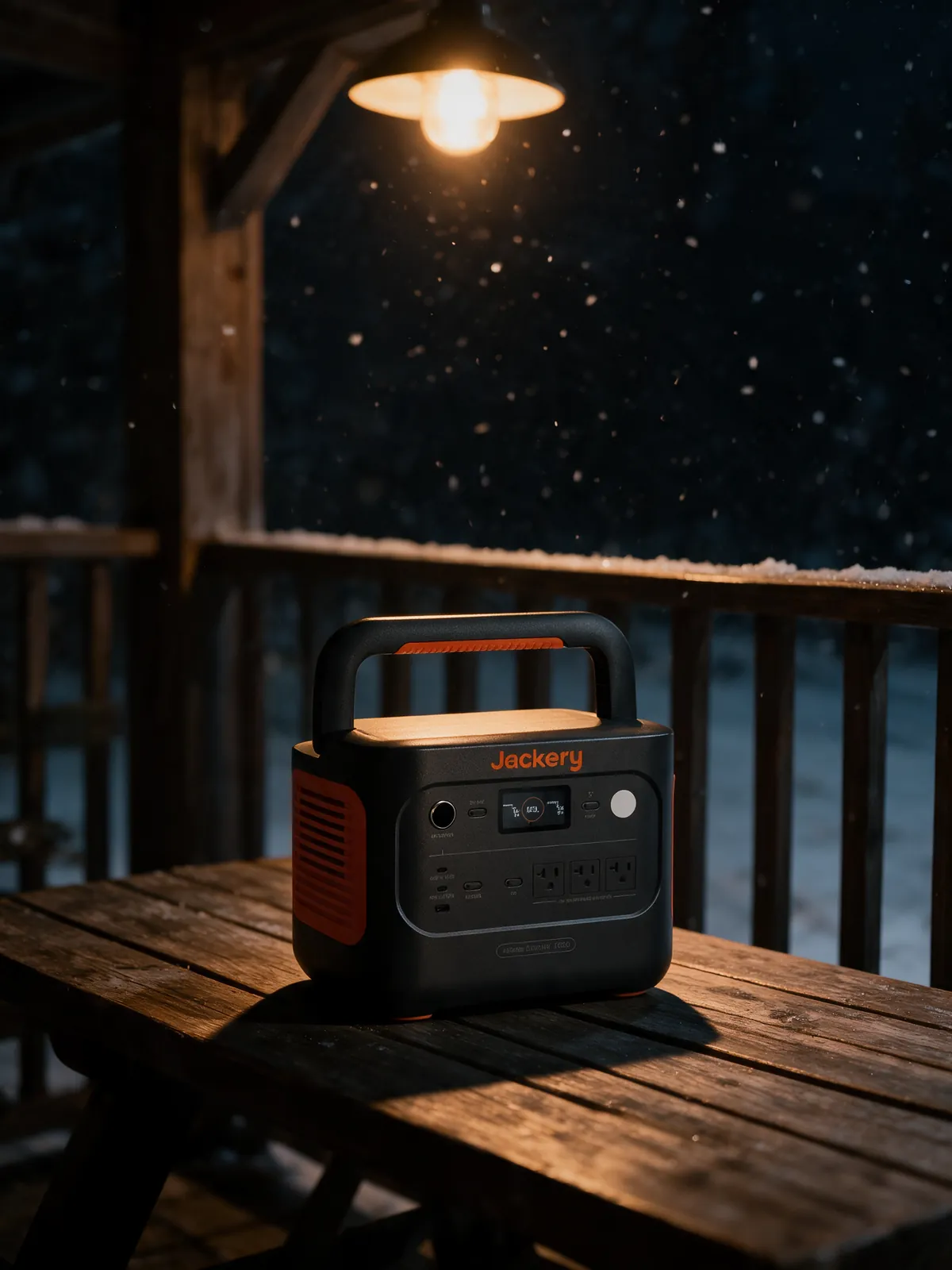
Jackery Explorer 1000 v2 Portable Power Station
The definitive road-trip/outage hero: 1kWh+, a real 1500W AC inverter that runs most car-camp gear, ~1-hour recharge, and Jackery is the brand people actually search. LiFePO4 rated for 4,000 cycles.

EcoFlow RIVER 2 Pro Portable Power Station
The road-trip sweet spot: 768Wh in a 17 lb body that recharges 0-100% in about 70 minutes. Enough to run a mini-fridge or CPAP overnight without hauling a 30 lb brick.
Never get caught here twice
So a blackout never interrupts a breath again, own a station with UPS pass-through and leave the CPAP plugged into it full-time. The BLUETTI AC180 carries a 1152Wh battery and switches from wall power to that battery in about 20 milliseconds — faster than the machine can register — so an outage at 3 a.m. doesn't even wake you. Top it off every few weeks and the next blackout becomes a non-event.

BLUETTI AC180 Portable Power Station
More capacity and a stouter 1800W (2700W peak) inverter than most 1kWh rivals, plus a wireless charging pad and 20ms UPS switchover. 0-80% in 45 minutes is class-leading.
Questions people ask
Can I really run a CPAP off a portable power station?
Yes. With the heater off a CPAP draws only about 30-60W, so any pure sine-wave LiFePO4 station handles it comfortably — the motor and electronics don't care that the power came from a battery. What matters is capacity: a ~300Wh unit covers a typical night, and a 1kWh unit covers two to three. Avoid cheap 'modified sine-wave' inverters, which can make sensitive medical electronics buzz or misbehave.
How long will a power station run my CPAP overnight?
It comes down to watt-hours and whether the heater is on. Heat off (roughly 30-40W average), a 1070Wh station like the Jackery Explorer 1000 v2 runs about 20+ hours — two to three full nights. Turn the humidifier and heated hose back on and that same battery might not finish a single night, which is why turning off the heat is the biggest lever you have.
Is it safe to use my CPAP without the humidifier?
For a night or two, yes — the humidifier adds comfort, not therapy. The pressurized air that actually treats your apnea is identical with the heater off; you may just wake with a drier nose or throat. The one thing never to do is skip the machine itself to save battery — cut the heat, not the therapy. For anything specific to your condition, follow your own provider's guidance.
What size power station do I need for a CPAP in a blackout?
For one night with the heater off, roughly 300Wh is enough for most machines — run it from the DC port if you can to keep the margin comfortable. For a full weekend, or to keep the humidifier running, step up to 1kWh or more. And if you want the same battery to also cover phones, a router, and a few lights through the outage, a 1000Wh+ station with a 1000W+ pure sine-wave inverter is the practical sweet spot.