AC Died in a Heatwave? A Frozen Coil Can Kill the Compressor
The house is climbing past 85 and still rising, the vents are blowing warm air, and the forecast says three more days of this. Before you panic-buy or wait days for an HVAC tech, run the fast checks below — a surprising number of "dead" ACs are a tripped breaker, a dead thermostat battery, or a filter so clogged the airflow starved and the system shut itself down. The rest is about keeping one room and your own body safe until cool air returns.
By Lee · Researched & cited · Updated Oct 2026
Before you buy anything
- 1
Reset the breaker, thermostat, and filter
Set the thermostat to COOL and a few degrees below room temp; if the screen is blank or unresponsive, swap the batteries. Find the HVAC breaker and, if it's tripped, reset it once. If it trips again immediately, stop — that's an electrical fault for a pro, not a retry. Then pull the air filter: if it's gray with dust, a clogged filter alone can choke airflow and trigger a safety shutdown, so slide in a clean one before you write off the whole system.
- 2
Check the outdoor unit — and never run a frozen system
Walk to the outdoor condenser and clear any leaves, grass, or debris crowding it; it needs open airflow to dump heat. Then look at the copper refrigerant lines and the indoor coil: if you see ice or frost, shut the system OFF and leave it off. Running a frozen AC can burn out the compressor and turn a cheap fix into a full replacement. Let it thaw for a few hours (fan-only mode helps) before calling for service.
- 3
Seal off one room and make it your cool corner
Don't try to cool the whole house — pick the smallest interior room, ideally on the lowest floor and away from the afternoon sun. Close its door, and shut the blinds and curtains on every south- and west-facing window to block radiant heat before it gets in. This is the room you'll cool, sleep in, and ride out the worst hours. A small sealed space is dramatically easier to bring down than an open floor plan.
- 4
Cool your body and watch for heat illness
Sip water steadily and skip alcohol and caffeine, which speed dehydration. Wear loose, light clothing and lay a cool, damp cloth on your neck, wrists, and groin — where blood runs closest to the skin; a cool shower or bath works even better. A fan helps in a warm room but does much less once the air passes ~95°F, especially for older adults, so lean on wet-skin cooling too. Watch for heat stroke: confusion, a pounding heartbeat, nausea, or hot, flushed skin that has stopped sweating. If you see those signs, call 911, move the person somewhere cooler, and cool them aggressively with wet cloths or a cool bath — but don't force fluids on anyone who isn't fully alert.
The one thing that solves it today
If the checks didn't revive it and repair is days out, the one thing that actually cools air today — not just moves it — is a portable AC you can roll into your sealed cool room. Unlike a fan, it removes heat and drops the real temperature, which is what matters once the room is above the mid-90s. A 10,000–14,000 BTU single-room unit is enough to make one bedroom livable and sleepable while you wait for the tech.

BLACK+DECKER 10,000 BTU 3-in-1 Portable Air Conditioner (BPACT10WT)
A no-frills, budget-friendly 3-in-1 that cools, dehumidifies, and runs as a fan, with a 'Follow Me' remote that reads the temperature where you are. A dependable pick for a medium room without paying for smart features.
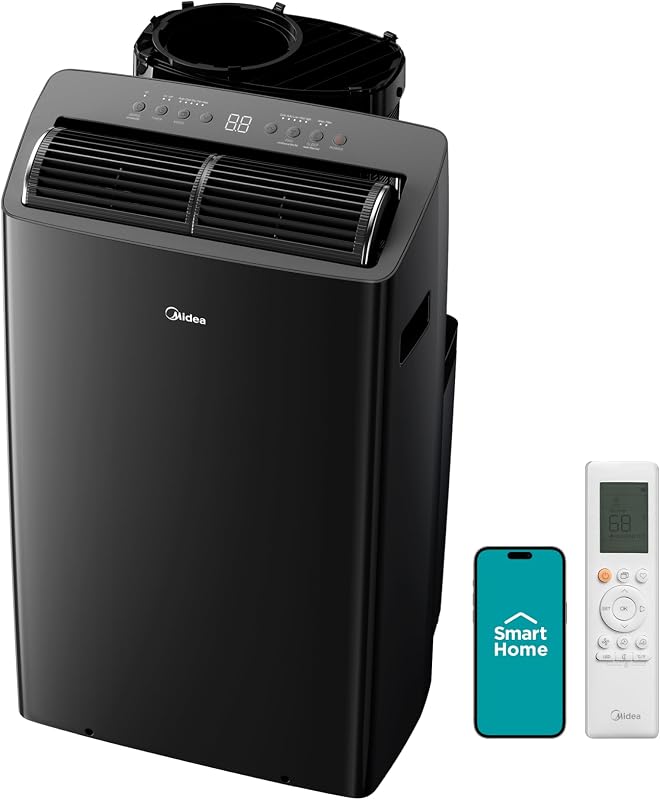
Midea Duo 14,000 BTU Smart Inverter Portable Air Conditioner (MAP14S1TBL)
One of the quietest, most efficient portable ACs you can buy: the inverter compressor holds a steady temperature at around 42 dB instead of cycling loudly, and it both cools and heats, so it earns its place year-round.
Never get caught here twice
The households that shrug off an AC failure are the ones who owned a backup before summer started. A battery-capable portable AC keeps cooling even if the outage that killed your central air also cut the power, so a breakdown becomes an inconvenience instead of an emergency. Pair it with a strong tower fan for the milder days, and a single hot afternoon never catches you flat again.

EcoFlow WAVE 3 Portable Air Conditioner (Cooling + Heating, Battery-Capable)
The rare portable AC that runs off a battery with no permanent window vent, so it can actually cool a tent, van, or off-grid room. It cools and heats, but at 6,100 BTU it's built for small spaces, not a living room.

Dreo Cruiser Pro T1 Oscillating Tower Fan
A quiet, well-priced oscillating tower with a genuinely wide speed range and useful modes, pushing air about 26 ft. A strong value pick for everyday room cooling.
Questions people ask
Can I just use a fan instead of buying a portable AC?
Below about 95°F, a good fan genuinely helps by speeding evaporation off your skin. But once the room passes ~95°F, moving hot air does little to cool you and can accelerate dehydration, especially for older adults. A fan buys comfort in a warm room; only a portable AC (or your repaired central system) actually lowers the temperature in serious heat.
Will a portable AC cool my whole house?
No — and you shouldn't expect it to. A single portable unit is sized to cool one room, which is exactly why the smart move is to seal off one bedroom and concentrate the cooling there. Trying to cool an open floor plan with one portable AC just leaves everything lukewarm. Match the BTUs to that one room's square footage and it'll perform well.
Is it worth buying a portable AC or should I just wait for the HVAC repair?
If the tech is coming tomorrow, a fan and the cool-corner steps above may be enough. But in a multi-day heatwave with repair queues stretching a week, a portable AC pays for itself in safe sleep alone — and it stays useful afterward as a backup or a spot-cooler for a garage or office. It's a hedge, not a throwaway.
Would a swamp (evaporative) cooler work instead?
It depends entirely on your humidity. Evaporative coolers cool by evaporating water into the air, so they work well in dry, desert-style heat but do almost nothing — and add clamminess — in humid climates. If you're in the arid Southwest they're an efficient, low-power option; anywhere humid, a compressor-based portable AC is the reliable choice.