

Power & Charging
Anker SOLIX C300 Portable Power Station
$179-330
288Wh LiFePO4 compact power station with 300W AC output.
Affiliate linkThe load math most guides skip: your humidifier setting, not the machine, decides how big a battery you need to run a CPAP overnight while camping — plus the pure-sine-wave and near-silent specs that protect a sensitive machine next to your head.
For one or two car-camping nights with the humidifier off, a 288Wh station like the Anker SOLIX C300 is enough and runs near-silent beside your head. Turn the heated humidifier and tube on and draw jumps to roughly 40-60W — enough to drain 288Wh before morning — so multi-night trips or humidifier-on sleepers want the 768Wh EcoFlow RIVER 2 Pro, and week-long stays the 1070Wh Jackery 1000 v2. All three output pure sine wave, the waveform CPAP makers call for.
Disclosure · As an Amazon Associate, BlackBox Supplies earns from qualifying purchases — at no extra cost to you. See our full disclosure.
Almost every 'best power station for CPAP' page quotes one wattage and calls it done. That number is close to meaningless, because a CPAP is really two devices in one box: the blower motor, which sips power, and the heated humidifier plus heated hose, which are resistive heaters that gulp it. Which of those you run overnight changes the battery you need by a factor of three or four.
The blower alone — humidifier off, no heated tube — typically draws only about 8-15W on continuous positive airway pressure, and a bit more if your therapy uses higher pressures or auto-adjusting (APAP) modes. Switch the heated humidifier and heated tube on and the same machine can pull 40-60W or more, because you're now warming water and a hose all night. Those are typical ranges across common travel machines, not a spec for any one model — check your own machine's power label or manual for its rated watts and DC voltage, because a few draw noticeably more.
So the real question isn't 'how many watts is a CPAP.' It's 'am I sleeping with the humidifier on?' Answer that first, then size the battery to the honest overnight energy it implies.
| How you run it | Typical draw | Energy over an 8-hour night |
|---|---|---|
| Blower only, humidifier OFF, no heated tube | ~8-15W | ~65-120Wh |
| Humidifier ON, low heat, no heated tube | ~20-35W | ~160-280Wh |
| Humidifier ON + heated tube, cold night | ~40-60W | ~320-480Wh |
Once you know your overnight energy, sizing is arithmetic. A power station never delivers its full printed watt-hours to a device — the AC inverter and voltage conversion lose some, so plan on roughly 85% of the rated capacity actually reaching your machine. That means a 288Wh unit gives you about 245Wh of usable energy, a 768Wh unit about 650Wh, and a 1070Wh unit about 910Wh.
Divide usable Wh by your CPAP's watts to get runtime. Two honest wrinkles push the real number lower than the tidy math, and both matter most on the humidifier-off (low-draw) end: an AC inverter burns a few watts just being on, which is a large slice of a 12W load, and cold nights sap lithium output. The fix for the first is the single most useful trick in this guide — many travel CPAPs can run from the station's DC output or a USB-C/12V converter instead of the AC outlet, skipping the inverter's idle draw and stretching a night meaningfully. If your machine offers a DC cable, use it.
The table below applies the ~85% factor to the three stations we researched, at the low (humidifier-off) and high (humidifier-on, heated tube) ends. Treat the humidifier-off column as slightly optimistic for AC use and the humidifier-on column as the safer planning number.
| Power station | Usable Wh (~85%) | Humidifier OFF (~12W) | Humidifier ON + tube (~50W) |
|---|---|---|---|
| Anker SOLIX C300 (288Wh)Check price on Amazon → | ~245Wh | ~20 hrs (about 2 nights) | ~5 hrs (under one full night) |
| EcoFlow RIVER 2 Pro (768Wh)Check price on Amazon → | ~650Wh | ~54 hrs (6-7 nights) | ~13 hrs (about 1.5 nights) |
| Jackery Explorer 1000 v2 (1070Wh)Check price on Amazon → | ~910Wh | ~75 hrs (8-9 nights) | ~18 hrs (about 2 nights) |
Capacity gets you through the night; two other specs decide whether you'd actually want the thing running beside your pillow — and whether it's safe for a medical device.
Pure sine wave is the non-negotiable one. CPAP power supplies, especially with a humidifier, expect the clean AC waveform your wall outlet delivers. A cheap 'modified sine wave' inverter can make a sensitive supply run hot, buzz, or throw an error. All three stations here output pure sine wave AC, which is the manufacturer-standard waveform for these LiFePO4 units and the one CPAP makers ask for — but if you shop elsewhere, confirm 'pure sine wave' in writing before trusting your machine to it.
Near-silent operation is the spec owners actually complain about. The gripe is rarely the fan at full tilt — it's a station that pulses its fan on and off under a light load, exactly the small steady draw a CPAP represents, so it cycles audibly all night a foot from your ear. A unit that stays passively cool or fanless at low loads is worth more here than one extra outlet. Anker rates the SOLIX C300 at around 25 dB, which is quiet-library territory and the reason it's our pick for the tent; larger inverters like the RIVER 2 Pro and Jackery 1000 v2 can run their fans more under load, so if silence matters most and one night is enough, the smaller unit wins on comfort.
Specs below are pulled from each maker's published figures and our catalog records, not a lab bench — we research from manufacturer data and long-term owner reviews and don't claim to have tested these units. Prices are approximate ranges that move with sales. Each card links through to our product page, which carries the full spec and the current listing.
Anker SOLIX C300 (288Wh, ~$179-330) — the near-silent single-night pick. Around 25 dB, 300W pure sine AC (600W surge), 8 ports including two 140W USB-C, and it refills 0-80% in about 50 minutes off a wall or car socket before you leave. The catch: 288Wh is genuinely a humidifier-off, one-to-two-night battery — run a heated humidifier and tube and it won't clear a full 8-hour night, so honest buyers with the humidifier on should size up. One buying trap from the listing: get the AC model shown here, not the cheaper C300 DC (USB-only) version, or you'll have no wall outlet for the machine.
EcoFlow RIVER 2 Pro (768Wh, ~$369-399) — the multi-night sweet spot. 768Wh LiFePO4 covers roughly 6-7 humidifier-off nights or about 1.5 humidifier-on nights, 800W pure sine AC handles the machine with enormous headroom, and it recharges 0-100% in about 70 minutes so a short generator or vehicle top-up between sites keeps you covered. The catch: at ~17 lb it's a real carry, and its fan will work harder than the C300's, so it's the trip battery, not the quietest bedside option.
Jackery Explorer 1000 v2 (1070Wh, ~$449-799) — the extended-stay and outage pick. 1070Wh runs a humidifier-off machine 8-9 nights or a humidifier-on one about two nights, with a 1500W pure sine inverter and a roughly one-hour recharge; the LiFePO4 pack is rated for 4,000 cycles. The catch: 23.8 lb is a two-hand lift, MSRP is high (buy it on one of its frequent discounts), and it's overkill for a single overnight — you're paying for days, not hours.
$179-330
288Wh LiFePO4 compact power station with 300W AC output.
Affiliate link
$369-399
768Wh LiFePO4 portable power station with a fast ~70-minute recharge.
Affiliate link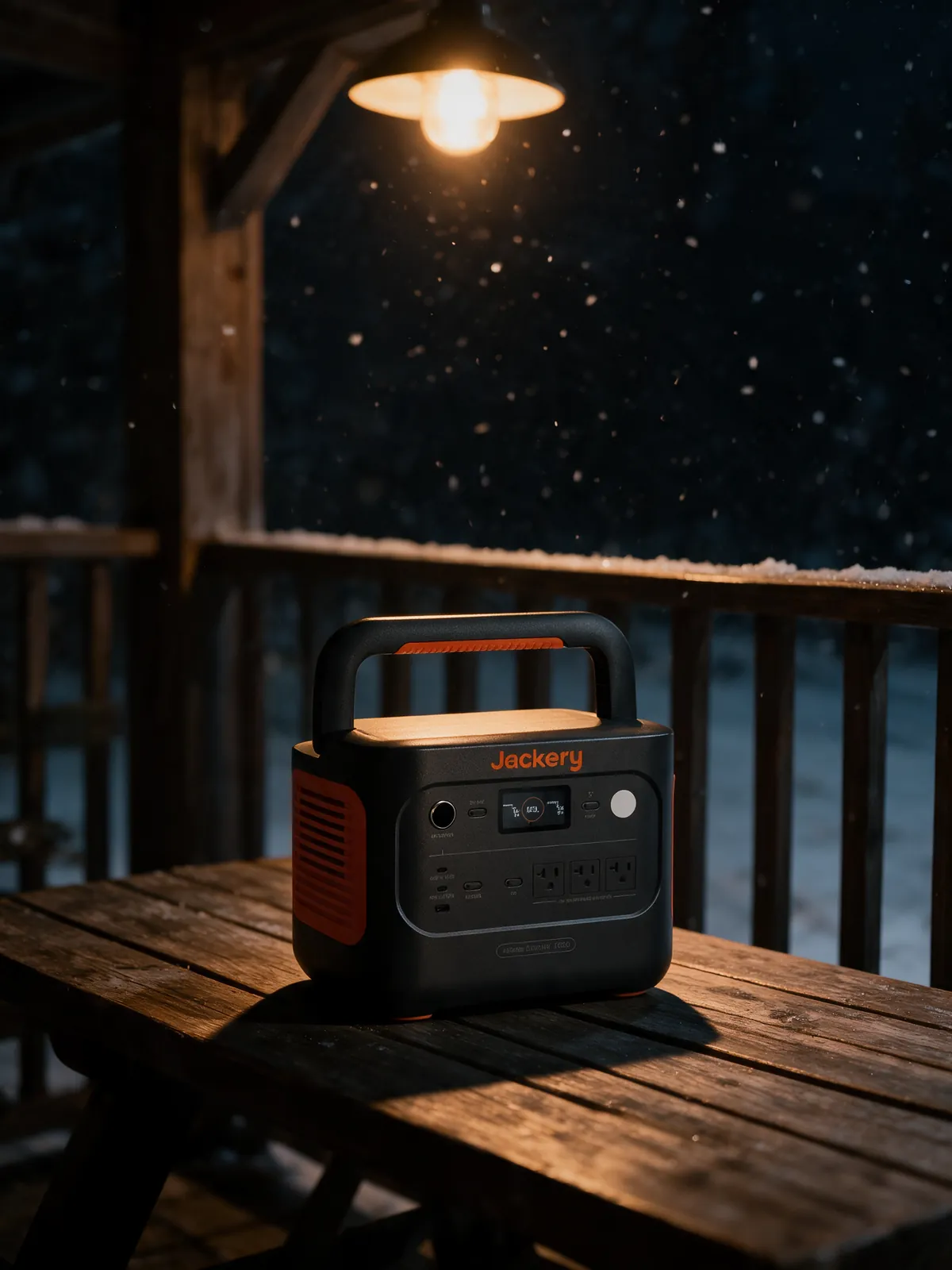
$449-799
1070Wh LiFePO4 portable power station with 1500W AC output.
Affiliate linkWe compared each station's published capacity, inverter type and wattage, port layout, recharge time, and noise rating against patterns in long-term owner reviews. We did not lab-test these units or measure any CPAP on a bench — the runtime figures are transparent arithmetic (usable watt-hours at a stated ~85% efficiency factor, divided by typical CPAP draw), shown so you can redo them with your own machine's rated watts.
CPAP draw ranges are typical figures across common travel machines, not a claim about any specific model; your machine's label is the authority. Prices are approximate and drift with sales — check the live listing on each product page before buying.
It depends almost entirely on your humidifier. Blower-only (humidifier off) an 8-hour night uses roughly 65-120Wh, so a 288Wh station like the Anker SOLIX C300 covers one or two nights. Run the heated humidifier and tube and a night can hit 320-480Wh, so you'll want a 768Wh EcoFlow RIVER 2 Pro or larger to clear the night with margin.
Yes — especially with a humidifier. CPAP power supplies expect the clean AC waveform a wall outlet delivers, and a cheap modified-sine inverter can make a sensitive supply run hot, buzz, or error out. The Anker SOLIX C300, EcoFlow RIVER 2 Pro, and Jackery 1000 v2 all output pure sine wave. If you shop elsewhere, confirm 'pure sine wave' before trusting your machine to it.
Turn the humidifier and heated tube off if you can tolerate it — that alone can triple your runtime. Where your machine supports it, run from the station's DC or USB-C output instead of the AC outlet to skip the inverter's idle draw. Start every trip topped to full, and keep the battery out of overnight cold, which saps lithium output.
With the humidifier off, comfortably — its ~245Wh of usable energy covers roughly two blower-only nights, and at around 25 dB it's quiet enough to sit beside your pillow. With the heated humidifier and tube on, a night can pull 320-480Wh, which its 288Wh can't clear, so humidifier-on sleepers should step up to the EcoFlow RIVER 2 Pro.
No. Airlines cap spare lithium batteries at 100Wh in carry-on without approval, and all three of these (288Wh, 768Wh, 1070Wh) are far over that limit, so they can't fly. For air travel you need a CPAP-specific travel battery rated under 100Wh — a different product from the camping stations here.
Research-driven: our picks come from verified manufacturer specs and long-term owner feedback. How we work: our methodology.
The car, power, cooling, and work-utility gear worth owning — with the honest catch on each. One genuinely useful email a week. No spam, no fake reviews, unsubscribe anytime.