

Portable AC
EcoFlow WAVE 3 Portable Air Conditioner (Cooling + Heating, Battery-Capable)
$899-$1,499
It cools and heats, but at 6,100 BTU it's built for small spaces, not a living room.
Affiliate linkThe best battery powered portable AC for tent camping off-grid has to run on a battery and vent without a fixed window — which is why almost nothing qualifies. The EcoFlow WAVE 3 does, but the catch is real: it's expensive, the battery is often a separate add-on, and 6,100 BTU cools a tent or van, not a room. Honest specs, tradeoffs, and who should skip it.
The best battery-powered portable AC for tent camping and off-grid use is the EcoFlow WAVE 3 — it's one of the few that runs cordless off a battery with no permanent window vent, cooling a 1-2 person tent or van. The catch: it's expensive, the battery is usually a separate add-on, its 6,100 BTU only cools a small space, and runtime drops hard at full power. If you have a window and grid power, a normal portable AC cools far more for far less.
Disclosure · As an Amazon Associate, BlackBox Supplies earns from qualifying purchases — at no extra cost to you. See our full disclosure.
Almost every 'portable' air conditioner isn't portable in the way a camper means it. A normal portable AC still needs two things a tent or a van off a dirt road simply doesn't have: a wall outlet to plug into, and a window to lock its exhaust hose into. Take either one away and it's a heavy box that does nothing.
Off-grid cooling has to clear two bars at once. First, it has to run on a battery — its own, or a portable power station — because there's no outlet. Second, it has to vent its exhaust heat without a permanent window installation, because a tent flap or a cracked van window is all you've got. An air conditioner is a heat pump: it doesn't create cold, it moves heat from inside to outside, and that hot air has to physically leave the space. A unit that can't dump its heat somewhere just heats the room it sits in.
That double requirement — battery-capable AND no fixed window vent — is why the honest shortlist for true off-grid cooling is tiny. Most of what shows up when you search 'portable AC for camping' is either a normal window-dependent unit or an evaporative 'swamp' cooler, which is a different machine entirely (more on that below). A real battery-powered air conditioner is a small, expensive category with essentially one mainstream answer.
The EcoFlow WAVE 3 is the pick because it's built specifically for the two constraints above. By EcoFlow's rating it delivers 6,100 BTU of cooling (and 6,800 BTU of heating, so it works in cold weather too), runs cordless for up to about 8 hours on the add-on battery, and needs no permanent window installation — you route its exhaust through a tent flap, a van window, or the included ducting. App control adds Sleep, Auto, and Pet modes, and it runs at around 44 dB.
In plain terms: it's the rare air conditioner that will actually cool the inside of a tent or a van with no outlet and no window to bolt into. That's the entire reason it exists and the reason it earns the slot. Nothing in the mainstream market does that job as cleanly.
It is not a room air conditioner, and EcoFlow doesn't pretend it is. 6,100 BTU is sized for a small, enclosed, insulated space — a 1-2 person tent, a van build, a pop-up camper, a tiny off-grid cabin room. Point it at a bedroom or a living room and it will lose to the heat load. Match it to the space it's built for and it's genuinely capable.
$899-$1,499
It cools and heats, but at 6,100 BTU it's built for small spaces, not a living room.
Affiliate linkThis is the section most 'best battery AC' pages bury. Here it is up front, because if any of these are dealbreakers for you, it's better to know now than after spending four figures.
Here's the part the product page won't stress: unless you buy EcoFlow's own add-on battery, the WAVE 3 needs a power source, and for extended off-grid use that means a portable power station. This is a real second purchase, and sizing it is where people overspend or under-plan.
The math is watt-hours. An air conditioner is one of the most demanding things you can plug into a power station — it pulls hundreds of watts continuously, not the trickle a phone or a fan draws. That's why a station that runs a fan all night might give you only a couple of hours of hard cooling. A ~1,000Wh-class station like the Jackery Explorer 1000 v2 (1,070Wh) or the BLUETTI AC180 (1,152Wh) is a sensible pairing for a night of intermittent cooling; the smaller EcoFlow RIVER 2 Pro (768Wh) works for shorter sessions; and a compact 288Wh unit like the Anker SOLIX C300 is really only enough for a brief top-off, not a night.
One honest planning note: at full cooling draw, even a 1,000Wh battery is measured in a few hours, not a full 8-hour night — the same reason EcoFlow's own ~1kWh add-on battery is rated 'up to 8 hours' only at lower settings. If you want to cool through a hot night off-grid, plan to either run at a modest setting, pair the station with a solar panel to recharge by day, or accept that the battery is for the hours that matter most, not dusk-to-dawn at full blast.
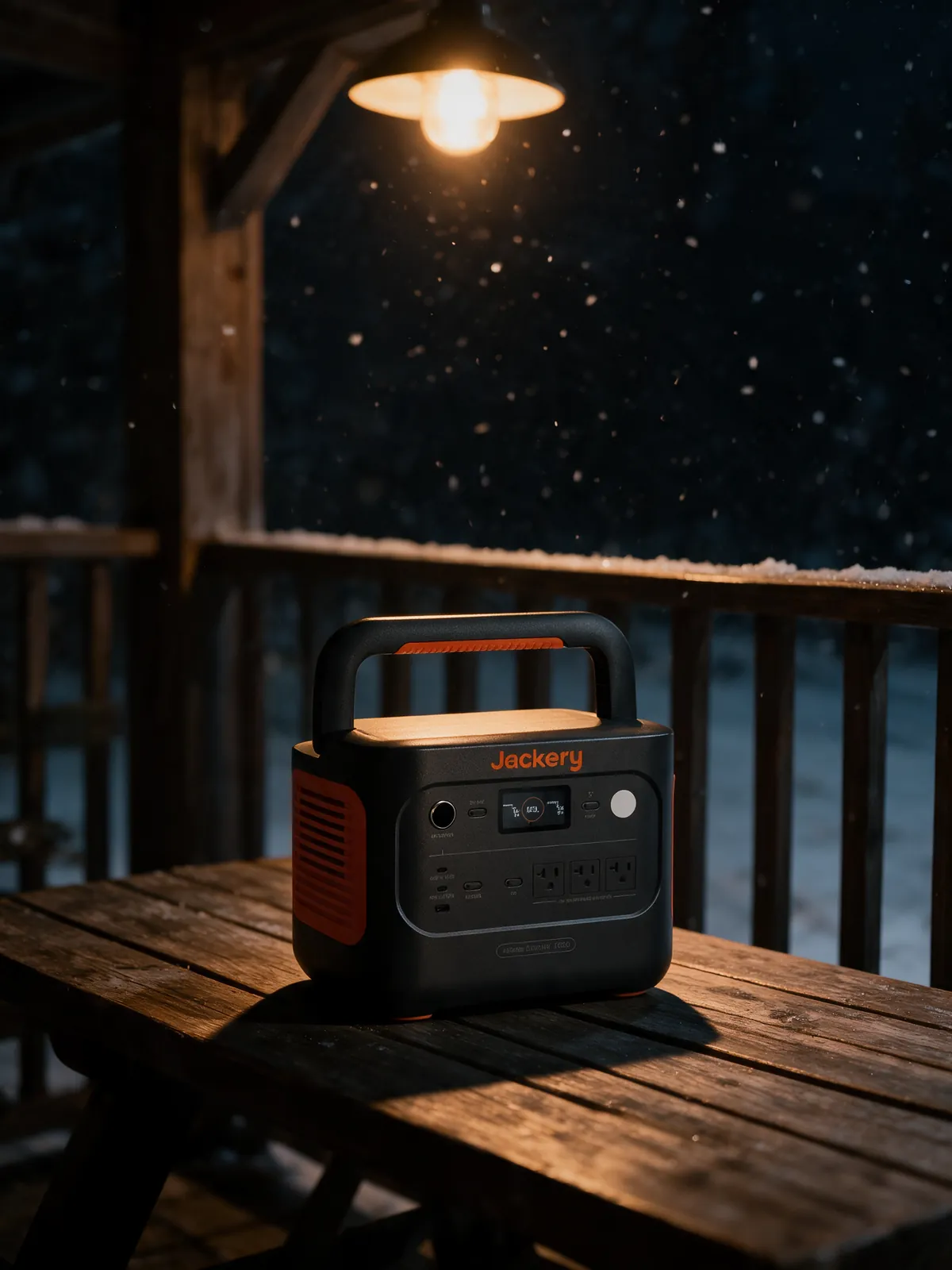
$449-799
1070Wh LiFePO4 portable power station with 1500W AC output.
Affiliate link
$399-699
1152Wh LiFePO4 portable power station with an 1800W inverter and UPS backup.
Affiliate link
$369-399
768Wh LiFePO4 portable power station with a fast ~70-minute recharge.
Affiliate linkApproximate figures to set expectations, not bench measurements. Real runtime swings with the temperature, how well the space is sealed and insulated, and the cooling mode you choose. The pattern is what matters: lower settings stretch the battery a long way; full-power cooling in real heat burns it fast.
| Power source | Rated capacity | Realistic cooling window | Best for |
|---|---|---|---|
| EcoFlow add-on battery | ~1kWh (per EcoFlow) | Up to ~8 hrs at low; far less at full | The cleanest cordless setup — but it's an added cost |
| Jackery Explorer 1000 v2 | 1,070Wh | A night of intermittent cooling; a few hrs at full | Van / base-camp use with room to carry it |
| BLUETTI AC180 | 1,152Wh | Similar — slightly more headroom | Same, with a bit more margin |
| EcoFlow RIVER 2 Pro | 768Wh | Shorter sessions; evening cool-down | Lighter kit, shorter runs |
| Anker SOLIX C300 | 288Wh | A brief top-off, not a night | Emergencies / paired with solar, not primary |
This is a narrow-audience product, and that's fine. Being honest about who shouldn't buy it is how you avoid an expensive mistake.
The most useful thing an honest guide can tell most readers is that they don't need the expensive answer. If you have a standard window and an outlet — even in a cabin, a rental, or a room with no central air — a conventional portable AC is dramatically more cooling per dollar. It plugs into the wall and vents through the window, so the battery premium disappears entirely.
For a quiet, efficient room unit, the Midea Duo (14,000 BTU / ~12,000 SACC) cools spaces up to about 550 sq ft at a near-silent ~42 dB thanks to its inverter compressor, and it heats too — roughly the price of the WAVE 3's battery add-on alone, for many times the cooling. On a tighter budget, the BLACK+DECKER BPACT10WT (10,000 BTU / 5,500 DOE) cools up to ~450 sq ft and rolls room to room for well under half the WAVE 3's price. Both need a window; neither runs off a battery. That's the whole trade: window + outlet buys you far more cooling; battery + no-fixed-window is what you pay a steep premium for when you genuinely can't have the window.
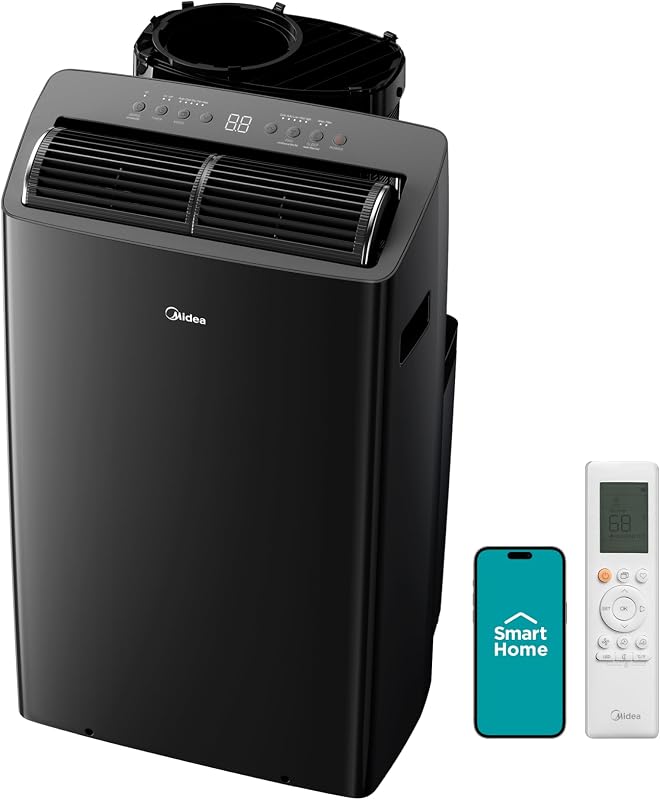
$500-$650
One of the quietest, most efficient portable ACs you can buy.
Affiliate link
$280-$360
A 10,000 BTU 3-in-1 AC, dehumidifier, and fan for rooms up to 450 sq ft.
Affiliate link| EcoFlow WAVE 3 | Midea Duo | BLACK+DECKER BPACT10WT | |
|---|---|---|---|
| Runs on a battery | Yes (add-on battery / power station) | No — wall power only | No — wall power only |
| Needs a fixed window vent | No — vents through a flap or duct | Yes | Yes |
| Cooling (rated) | 6,100 BTU | 14,000 BTU (~12,000 SACC) | 10,000 BTU (5,500 DOE) |
| Space it suits | 1-2 person tent, van, small cabin | Room up to ~550 sq ft | Room up to ~450 sq ft |
| Also heats | Yes (6,800 BTU) | Yes | No |
| Approx. price range | ~$899-$1,499 | ~$500-$650 | ~$280-$360 |
| The point of it | Cooling where there's NO outlet and NO window | Quiet, efficient room cooling | Budget room cooling that rolls anywhere |
These picks are researched from published manufacturer specifications and patterns in long-term owner reviews — not personally lab-tested, and we don't claim to have run a battery down on a bench. Every BTU, watt-hour, and decibel figure here traces to the manufacturer's own rating or our product catalog; where a number is a manufacturer claim ('EcoFlow rates…'), we say so.
Prices are approximate ranges that move with sales and configuration — always confirm what's included (especially whether a WAVE 3 listing bundles the battery) on the live product page before you buy. Full reasoning and the current buy links live on each product's page below.
The EcoFlow WAVE 3 is the standout, because it's one of the few air conditioners that runs cordless off a battery with no permanent window vent — the two things off-grid cooling actually requires. At 6,100 BTU it's sized for a 1-2 person tent, a van, or a small cabin room, not a full-size bedroom. The catch is cost: it's a premium unit and the usable battery is usually a separate add-on.
Yes, but only a few are designed for it, and it's demanding. An air conditioner pulls hundreds of watts continuously, so even a ~1,000Wh power station like the Jackery Explorer 1000 v2 or BLUETTI AC180 gives you only a few hours at full cooling. Plan on running at a lower setting, recharging with solar by day, or treating the battery as coverage for the hours that matter most rather than a full night at full blast.
EcoFlow rates its add-on battery for up to about 8 hours, but that figure is at lower settings. Run it at full cooling power in real heat and the battery drains considerably faster, so plan for a meaningfully shorter real-world window if you're cooling hard.
Only a very small one. At 6,100 BTU the WAVE 3 is built for a tent, van, or compact off-grid space. A standard bedroom or living room needs a 10,000+ BTU unit vented through a window — for that, a normal portable AC like the Midea Duo or BLACK+DECKER cools far more room for far less money.
No permanent window installation, which is the whole point — but it still has an exhaust duct, because the heat has to leave the space somehow. You vent it through a tent flap, a cracked van window, or the included ducting rather than a bolted-in window kit. In a fully sealed space with nowhere for the exhaust to escape, it can't do its job.
Only in dry heat. An evaporative (swamp) cooler moves a lot of air for far less money, but it works by adding moisture to the air, so it cools well in low humidity and does almost nothing in humid conditions — and the added dampness isn't ideal in a small sealed tent. It's a different tool, not a budget version of a real battery AC.
Research-driven: our picks come from verified manufacturer specs and long-term owner feedback. How we work: our methodology.
The car, power, cooling, and work-utility gear worth owning — with the honest catch on each. One genuinely useful email a week. No spam, no fake reviews, unsubscribe anytime.