
Travel & EDC
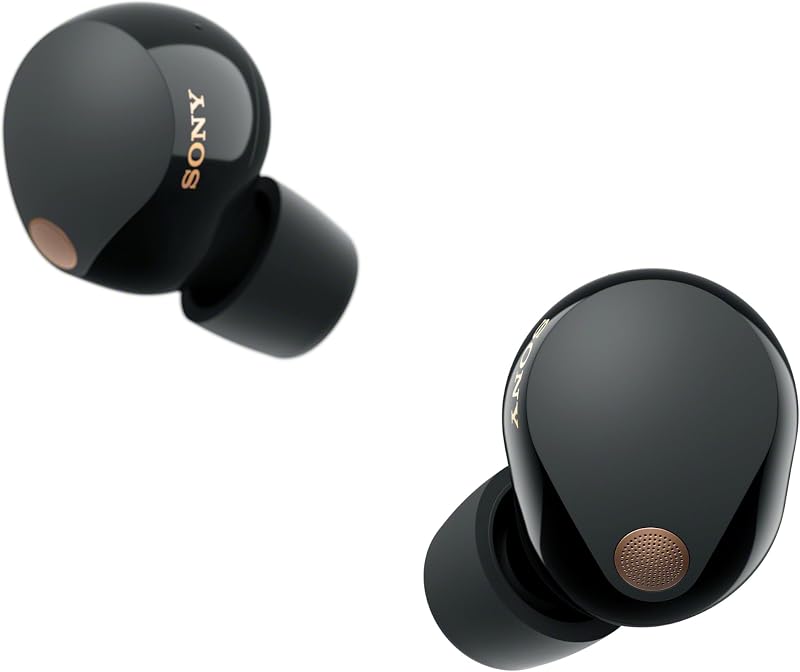
Sony WF-1000XM5 Wireless Noise Cancelling Earbuds (Black)
$250-$300
Wireless earbuds with best-in-class noise cancellation that make flights, offices, and commutes quiet.
Affiliate linkAt around $250, ANC earbuds are worth it if your noise is an engine, a cabin, or an HVAC system — the low, continuous stuff the technology is genuinely good at. If your noise is people talking, you are about to spend $250 on the wrong solution. Here is the physics that decides which one you are.
Premium noise cancelling earbuds are worth roughly $250 if you regularly sit inside low-frequency continuous noise — planes, trains, buses, HVAC drone. That is what active cancellation is genuinely good at. Against speech, keyboards and sudden sounds it barely helps, so open-plan office buyers are usually disappointed. Fit decides more of the result than the chip does.
Disclosure · As an Amazon Associate, BlackBox Supplies earns from qualifying purchases — at no extra cost to you. See our full disclosure.
The mistake that turns this purchase into a regret is an easy one to make and a hard one to see coming: assuming the technology cancels noise, full stop, and paying a premium for more of it. It cancels a specific kind of noise very well and other kinds almost not at all, and once you understand why, you can predict from your own commute whether $250 buys you silence or buys you a slightly quieter version of the same problem.
Sound is a pressure wave. Active noise cancellation puts microphones on the outside of the earbud, samples that incoming wave, and asks a processor to compute its mirror image — the same wave flipped upside down, so every peak is matched by a trough. The driver inside the bud plays that inverted copy into your ear canal. Where the two waves meet they sum, and a peak plus an equal trough sums to nothing. That is destructive interference, and it is the whole trick.
The catch is timing, and the timing budget is set by frequency. A 100 Hz engine rumble has a period of about ten milliseconds — the wave takes a full hundredth of a second to complete one cycle. For the earbud, that is an enormous target. It has time to hear the wave, compute the inverse, and play it back while the cycle is still happening, and if the phase is slightly off, ten milliseconds of cycle length means a small error is a small fraction of the wave. Now take a 4 kHz sound. Its period is a quarter of a millisecond, and at roughly 343 metres per second the wavelength is about 8.5 centimetres. Now a centimetre of position error inside your ear canal, or a few tens of microseconds of processing delay, is a meaningful slice of the wave — and a correction that arrives out of phase does not cancel anything. Push higher still and the anti-noise can start adding to the sound rather than removing it.
That single fact sets the shape of ANC performance in general, whatever the brand or the price. Cancellation is easy at the bottom of the frequency range and gets progressively harder as frequency climbs, until it stops being useful at all.
There is a second axis, and it is about predictability rather than pitch. A steady drone is easy to cancel because the next cycle looks exactly like the last one — the processor is essentially continuing a pattern. A door slamming, a laugh, a dog barking, a keyboard clacking: these have no previous cycle to learn from. By the time the outside microphone has registered the transient, the sound has already reached your eardrum. Sudden noise is largely uncancellable in principle, not because the chip is cheap.
| Noise | Character | What active cancellation does |
|---|---|---|
| Jet engine / aircraft cabin | Low frequency, continuous, broadband | Very effective — this is the case the technology was invented for |
| Bus, train, road roar | Low frequency, continuous | Very effective; the drone drops away and the ride stops being tiring |
| HVAC, fans, fridge compressor, server hum | Low frequency, continuous | Very effective — often disappears entirely |
| Traffic outside a window | Mixed, mostly low, semi-continuous | Good on the rumble, weaker on horns and brakes |
| Speech and conversation | Mid-to-high, constantly changing | Weak. Voices get quieter but stay intelligible — this is the disappointment case |
| Keyboards, cutlery, doors, dogs | High frequency, sudden transients | Almost nothing. There is no pattern to predict |
| A baby crying, a smoke alarm | High frequency, deliberately piercing | Almost nothing. These sounds are engineered to defeat masking |
This deserves its own section, because the open-plan office is the one environment where good active cancellation can leave the exact noise you bought it for sounding *more* prominent rather than less — and that outcome falls straight out of the physics above, not out of a faulty product.
Human speech carries its meaning in the consonants, and consonant energy sits well up in the kilohertz range — roughly the 1–4 kHz band, exactly where the timing budget described above collapses. Worse, speech is non-stationary by nature: it starts, stops, changes pitch and changes talker several times a second. It is the precise opposite of the steady low drone that active cancellation handles well.
So here is what actually happens when you wear excellent ANC earbuds in an open-plan office. The building's air handling disappears. The server fan disappears. The general low-frequency hum of the room drops away, and the room genuinely becomes quieter. And then the voices — which barely moved — are now sitting on top of a much lower noise floor, with nothing left to bury them. They can end up more noticeable with the ANC on than with it off. That is not imagination and it is not a defect in the earbud: removing the masking noise unmasks the speech.
If speech is your problem, the tools that work are different ones. Passive isolation — a physical seal that blocks mid and high frequencies before they reach your ear — does more against voices than any processor. So does masking: playing music, or steady broadband noise, so that the speech is no longer the loudest thing in your ear canal. Premium earbuds can do both of those, but so can much cheaper ones, and you would be buying them for the seal and the music, not for the ANC. That changes the budget conversation completely.
If there is one thing to take from this page before you spend anything, it is this: the seal, not the price tag, decides most of what you will actually hear. Passive isolation owns the entire mid and high range that active cancellation cannot reach, so a bud that does not seal gives that whole range away no matter what it cost.
Two separate mechanisms depend on it. The first is passive isolation. The eartip is a physical plug, and a plug blocks mid and high frequencies — the exact range active cancellation cannot reach. Everything good that happens to speech, clatter and sharp sounds happens because of the seal, not because of the electronics. A bud that does not seal has no defence at all in that range.
The second is that the active system itself depends on the seal. Cancellation is computed for a sealed cavity between the driver and your eardrum. Open a leak path and outside sound arrives by a route the system did not model and cannot correct, while the bass in your music escapes the same way. This is why a poorly fitted premium earbud can sound thin *and* cancel badly at the same time, and why people conclude the product is overrated when the product is fine and the tip is the wrong size.
Ear canals vary more than people expect — in diameter, in angle, and between your own left and right ears. Using different tip sizes on each side is normal, not a defect. Work through every size in the box rather than assuming the pre-fitted medium is right, and judge the seal by whether the bass suddenly gets fuller and the room suddenly gets quieter when you seat the bud properly. That change is unmistakable once you have felt it.
$250-$300
Wireless earbuds with best-in-class noise cancellation that make flights, offices, and commutes quiet.
Affiliate linkThe WF-1000XM5 is the premium ANC pick in our catalog and it sits at exactly the price this question gets asked about, so it is worth being specific about what is actually in it rather than repeating the marketing.
Sony's published specification lists a two-chip noise cancelling system — an Integrated Processor V2 working alongside the HD Noise Cancelling Processor QN2e — reading six microphones across both earbuds, three on each side. Alongside that: an 8.4mm Dynamic Driver X, LDAC support for hi-res audio, up to 8 hours of playback per charge with about 16 more in the case, IPX4 water resistance, and Bluetooth multipoint. In its launch announcement Sony gives the design goal as reducing external noise over a wide bandwidth, from low to high frequencies, and says the buds are approximately 25% smaller and 20% lighter than the WF-1000XM4 they replaced. Nothing in that microphone array repeals the physics in the section above — more microphones and a faster processor buy you a better estimate of the incoming wave and a bit more usable range, which is a real improvement at the margins and not a different category of result.
Now the honest other half, taken from our catalog's own list of drawbacks rather than invented for balance.
| Specification | Sony's figure | What it means for you |
|---|---|---|
| Noise cancelling | Two processors (Integrated V2 + QN2e), six mics across both buds | A lot of sensing hardware for a bud this size, which buys a better estimate of the incoming wave — the result is still bounded by frequency and predictability |
| Driver | 8.4mm Dynamic Driver X | Full-range single dynamic driver; no crossover to go wrong |
| Battery, buds | Up to 8 hours per charge | Enough for a transatlantic leg with ANC running the whole time |
| Battery, case | About 16 additional hours | Roughly 24 hours total before the case itself needs a wall |
| Water resistance | IPX4 | Sweat and light rain only. Not a gym-and-downpour rating |
| Hi-res audio | LDAC | Android only, and it cannot run at the same time as multipoint |
| Multi-device | Bluetooth multipoint | Laptop and phone connected at once — the more practical half of the trade if you move between devices during the day |
Active cancellation is not free. Running it means the microphones and the signal processor are working continuously for as long as the bud is in your ear, on top of the Bluetooth radio and the driver. That is why every manufacturer quotes a lower battery figure with cancellation switched on than with it off, and why the number worth reading on a spec sheet is always the ANC-on one. Sony's published figure for the WF-1000XM5 is up to 8 hours per charge, plus roughly 16 more in the case — call it a full long-haul flying day, with the case doing the topping up between legs.
Then there is the fact the category does not advertise, and it matters more to the value question than any spec: wireless earbuds are consumables.
Each bud contains a lithium cell small enough to sit inside your ear. It is charged and discharged close to a full cycle almost every day you use it, and lithium cells lose capacity with cycles — that is chemistry, not a defect. Because the buds are sealed, water-resistant assemblies built to fit inside an ear, that cell is not user-replaceable in any practical sense, and the case has its own cell ageing on the same clock. The realistic outcome is that runtime only ever moves in one direction: the figure on the box is the best the pair will ever do, and after a couple of years of daily use both the buds and the case hold noticeably less than that. Nothing has broken. The product has simply reached the end of its life.
So the honest way to price this is per year rather than per purchase, using your own numbers rather than ours. $250 across three years of daily use is a little under $7 a month. Across two years it is closer to $10. Whether that is worth it depends entirely on how many hours a week you actually spend inside the kind of noise ANC can remove — and the arithmetic is brutal for someone who flies twice a year and generous for someone who commutes ninety minutes a day.
It also explains a structural point people miss when comparing earbuds to over-ear headphones at the same price. Over-ear ANC headphones are larger, so they hold a much bigger battery, they have room for replaceable earpads and detachable cables, and their cups provide passive isolation that no in-ear tip can match. They last longer and cancel harder. What they do not do is disappear into a pocket. That is the trade, and it is a genuine one — but if raw quiet is your only goal, over-ear is the better buy and earbuds are the compromise you make for portability.
It is worth being direct about this, because several very common situations are better served by something other than premium ANC earbuds, and no amount of processing changes that.

$45-$55
Two speed and tone settings let you dial in the sound.
Affiliate linkAssume you are the traveller or the commuter, the noise is a cabin or an engine, and the money is spent. Getting full value out of that spend is mostly about four unglamorous habits.

$45-$55
A small travel gadget that solves a problem people don't notice until they're stuck with it.
Affiliate linkThey are worth it if you spend real time inside low-frequency continuous noise — aircraft cabins, trains, buses, HVAC drone — because that is what active cancellation genuinely removes. They are not worth it if your problem is people talking, sudden sounds, or a generally busy environment, because ANC barely touches those. Work out which kind of noise you actually sit in before spending, and price the purchase per year rather than per unit, since earbuds have sealed batteries and a finite life.
Two reasons, both physics rather than product quality. Speech carries its intelligibility in consonant energy roughly in the 1–4 kHz range, where the wavelength is short enough that tiny timing or positioning errors put the anti-noise out of phase, so it stops cancelling. And speech is unpredictable — it starts, stops and changes several times a second — while cancellation works best on a steady wave whose next cycle resembles the last. Against voices, the physical seal of the eartip does far more than the electronics.
Up to a point, and less than the price gap suggests. A better processor and more microphones give a more accurate estimate of the incoming wave and extend the usable range somewhat, which is a real improvement but a marginal one. Fit matters more: a mid-range earbud that seals properly will outperform a flagship that doesn't, because the seal handles the entire mid and high range that active cancellation cannot reach.
Sony's published figure for the WF-1000XM5 is up to 8 hours per charge with about 16 more in the case. Cancellation costs battery because the microphones and the processor run continuously, which is why manufacturers always quote a higher number with ANC off — when you compare products, make sure you are comparing the ANC-on figures.
Not practically. The cells are tiny, sealed inside water-resistant assemblies shaped to fit an ear, and there is no user-serviceable path to them. Because a bud goes through close to a full charge cycle most days, capacity fades over a couple of years of heavy use and eventually the case does too. This is the honest reason to treat premium earbuds as a recurring cost rather than a one-off purchase, and it is the strongest argument for over-ear headphones if portability is not your constraint.
If maximum quiet is the goal and pocketability isn't, yes. A cup that surrounds the ear provides passive attenuation an in-ear tip cannot match, and there is room inside for a larger battery, more microphones and replaceable pads and cables — so they cancel harder and last longer at the same price. Earbuds win on exactly one axis: they disappear into a pocket. That axis is worth a lot to some people and nothing to others.
Research-driven: our picks come from verified manufacturer specs and long-term owner feedback. How we work: our methodology.
The car, power, cooling, and work-utility gear worth owning — with the honest catch on each. One genuinely useful email a week. No spam, no fake reviews, unsubscribe anytime.