What Size Portable AC Do I Need? BTUs by Room Size (2026)
Size a portable AC the honest way: read the SACC rating, match it to your room's square footage, then adjust for sun, ceilings, and kitchens. Plus the real units that fit each room.
The short answer
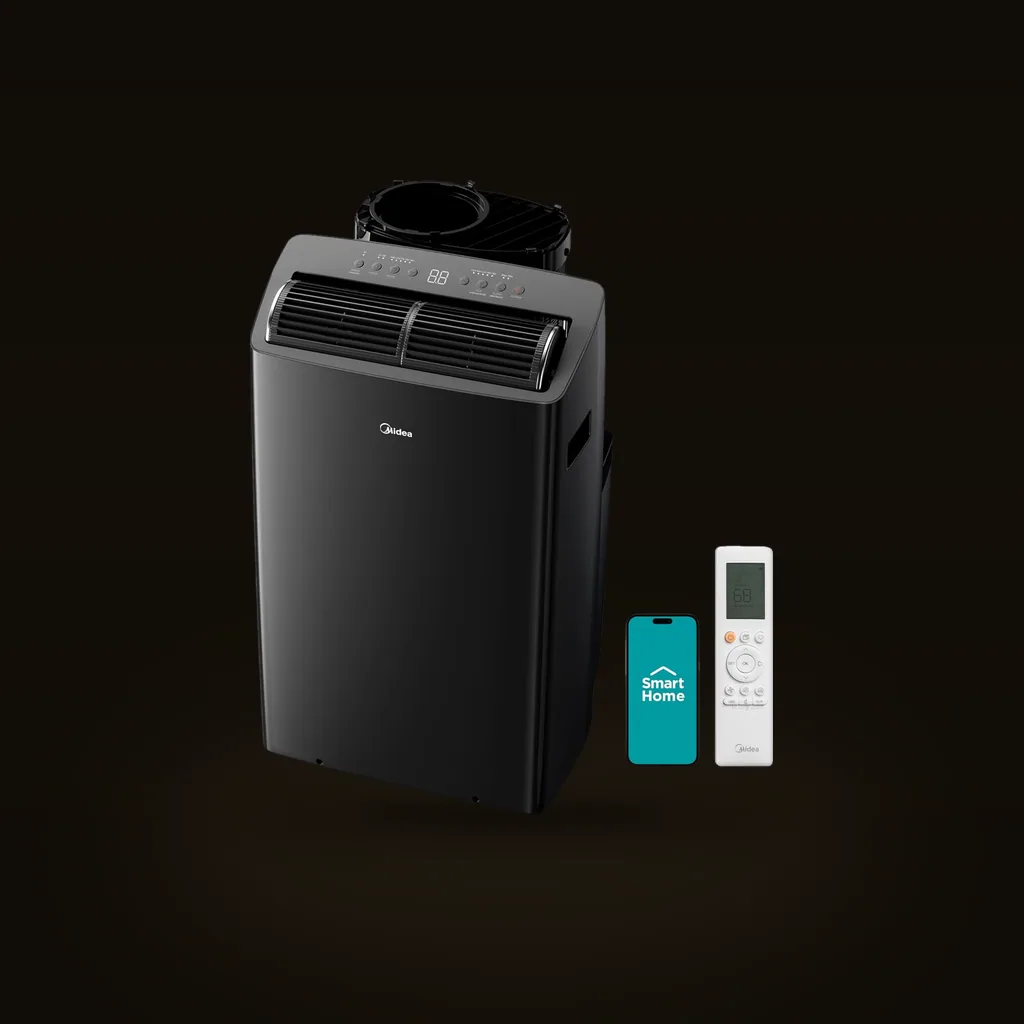
Match a portable AC's SACC rating — the smaller, honest DOE number on the box — to your room, not the inflated headline BTU. Most rooms up to 550 sq ft need about 12,000 SACC. Our top all-round pick is the Midea Duo 14,000 BTU Smart Inverter (12,000 SACC), quiet and app-controlled.
Disclosure · As an Amazon Associate, BlackBox Supplies earns from qualifying purchases — at no extra cost to you. See our full disclosure.
At a glance: our top portable AC picks
Sizing a portable AC comes down to one honest number and one simple rule. The number is SACC; the rule is about 20 BTU per square foot of room. Everything below builds on those two things.
We cross-checked verified-buyer reviews and published spec sheets to choose these four units — we don't run a lab.
| Pick | Best for | Price | Key spec |
|---|---|---|---|
| Midea Duo 14,000 BTU Smart Inverter (top pick)Check price on Amazon → | Most bedrooms & living rooms up to 550 sq ft | $500-$650 | 12,000 SACC, inverter, ~42 dB, cools + heats |
| Whynter NEX ARC-1230WN 14,000 BTU Dual-HoseCheck price on Amazon → | Large or hot rooms up to 600 sq ft | $550-$720 | 12,000 SACC, true dual-hose, Wi-Fi |
| BLACK+DECKER 10,000 BTU 3-in-1 (BPACT10WT)Check price on Amazon → | A single bedroom or office up to ~250 sq ft | $280-$360 | 5,500 SACC, single-hose, 47.3 lb, rolls room to room |
| EcoFlow WAVE 3Check price on Amazon → | No-window, off-grid, vans & tents | $899-$1,499 | 6,100 BTU, battery-capable, no window vent |
SACC vs. marketing BTU: always read the smaller number
Every portable AC now shows two cooling numbers, and they can differ by 40% or more. The big one — often labeled 'ASHRAE' or just 'BTU' on the front of the box — is the legacy marketing figure. The smaller one is SACC (Seasonally Adjusted Cooling Capacity), the rating the U.S. Department of Energy has required since 2017.
SACC is the honest number. It's measured after accounting for the heat a portable unit leaks back into the room through its exhaust hose, plus the outside air a single-hose model pulls in as it runs. That's real, delivered cooling — so size your room by SACC, not the headline.
The gap tells you a lot. The BLACK+DECKER's box reads 10,000 BTU, but its DOE/SACC rating is 5,500 — barely more than half. The Midea Duo reads 14,000 BTU and holds a 12,000 SACC, because its inverter, dual-hose-capable design loses far less. Same-looking headline, very different real-world cooling.
Room size to BTU: the sizing chart
The baseline the EPA and DOE both use is roughly 20 BTU per square foot for a room with 8-foot ceilings and average sun. Applied to SACC — the number that reflects what the unit truly delivers — that gives you this chart.
Find your room, then shop for a unit whose SACC meets that figure. The box's headline BTU will read higher; ignore it and compare SACC to SACC.
| Room size | Recommended SACC (BTU) | Typical space |
|---|---|---|
| Up to 150 sq ft | 5,000-6,000 | Small office, nursery, dorm room |
| 150-250 sq ft | 6,000-7,000 | Standard bedroom |
| 250-350 sq ft | 7,000-9,000 | Large bedroom, small studio |
| 350-450 sq ft | 9,000-11,000 | Living room |
| 450-550 sq ft | 11,000-12,000 | Open living/kitchen, one-bedroom |
| 550-700 sq ft | 12,000-14,000 | Studio apartment, great room |
Adjust for sun, ceilings, kitchens, and people
The chart assumes an average room. Adjust the target up or down for the things that actually change a cooling load:
- Very sunny or west-facing room: add about 10%.
- Heavily shaded room: subtract about 10%.
- Ceilings above 8 feet: add 10-20% — cooling load follows room volume, not just floor area.
- Open kitchen: add about 4,000 BTU for the heat a stove and appliances throw off.
- More than two people in the room regularly: add about 600 BTU per extra person.
- Top floor, poor insulation, or lots of glass: bump up one bracket.
- Single-hose unit in a hot climate: size up — it loses capacity to warm-air infiltration (next section).
Single-hose vs. dual-hose (and why it changes your size)
Hose count is the spec buyers skip and regret. A single-hose AC blows room air out through its exhaust; that creates slight negative pressure, so warm, unconditioned air gets pulled back in through every gap in the room. It still works — it's just fighting itself, and the effect grows in bigger, hotter rooms.
A dual-hose unit draws separate outside air to cool its compressor, so it isn't dumping your cold air outside. It cools larger rooms faster and more efficiently. For a small bedroom the difference is minor; for a 500 sq ft living room in a hot climate, it's the whole ballgame — which is why the dual-hose Whynter NEX suits big spaces the single-hose Black+Decker can't.
What to check before you buy
Before you buy, run down this list:
- SACC first: compare units by the DOE/SACC BTU, never the headline ASHRAE number.
- Hose count: dual-hose for large or hot rooms; single-hose is fine and cheaper for a small bedroom.
- Noise: aim for ~40-45 dB or lower in a bedroom; inverter compressors (like the Midea Duo) run the quietest.
- Window fit: measure the opening — most kits fit 20-48 in sliders; crank/casement windows need a special kit, or a no-vent unit like the EcoFlow WAVE 3.
- Drainage: self-evaporating units need less babysitting; humid climates produce more condensate to drain.
- Heat mode: the Midea Duo and EcoFlow WAVE 3 also heat, which earns them shoulder-season use.
- Weight and casters: a 60-80 lb unit is a two-person lift; if you'll move it between rooms, check the wheels and grab handles.
Which of our ACs fits your room
Midea Duo 14,000 BTU Smart Inverter Portable Air Conditioner (MAP14S1TBL) — Midea, $500-$650. Best for: the default pick for most bedrooms and living rooms up to 550 sq ft. Its 12,000 SACC is among the highest real-capacity ratings in a consumer portable, the inverter compressor holds it near ~42 dB, and it flips to heat off-season. The catch: it's heavy and premium-priced — overkill for a sub-200 sq ft bedroom, where you'd pay for capacity you can't use.
Whynter NEX ARC-1230WN 14,000 BTU Dual-Hose Inverter — Whynter, $550-$720. Best for: large or west-facing rooms up to 600 sq ft, and hot-climate cooling where a single-hose unit stalls. The true dual-hose design sidesteps the negative-pressure problem, and RTINGS rates it their top portable. The catch: two hoses and a larger bracket make install fiddlier, and it's the priciest vented unit here.
BLACK+DECKER 10,000 BTU 3-in-1 Portable Air Conditioner (BPACT10WT) — BLACK+DECKER, $280-$360. Best for: one bedroom, a home office, or a nursery up to ~250 sq ft on a budget; at 47.3 lb it rolls room to room on casters, but it is not a carry-it-upstairs unit. The catch: the box says 10,000 BTU and '450 sq ft,' but the DOE/SACC rating is 5,500 — size by that honest number and keep it to smaller rooms, or it will run non-stop and still lose ground.
EcoFlow WAVE 3 Portable Air Conditioner — EcoFlow, $899-$1,499. Best for: spaces with no window at all — vans, tents, garages, sunrooms — and off-grid use, since it runs up to ~8 hours on an add-on battery with no permanent vent. 6,100 BTU of cooling plus a heat mode. The catch: it's a spot cooler for roughly 100-160 sq ft, not a whole-apartment AC, and the battery that makes it special is a pricey add-on.
Still deciding between a full AC, an evaporative cooler, or just a stronger fan? See all our cooling picks at /heat.
Common questions
What does SACC mean on a portable AC?
SACC (Seasonally Adjusted Cooling Capacity) is the BTU rating the U.S. Department of Energy has required since 2017. It measures real-world cooling after accounting for the heat a portable unit pulls back in through its hose and room infiltration, so it reads lower — and more honest — than the older 'ASHRAE' headline number. Always compare units by SACC.
How many BTUs do I need for a 300 sq ft room?
Roughly 7,000-9,000 SACC BTU, using the ~20 BTU-per-square-foot baseline. Add about 10% if the room is very sunny, add roughly 4,000 BTU if it's an open kitchen, and add 10-20% for ceilings over 8 feet.
Is a single-hose or dual-hose portable AC better?
Dual-hose is more efficient in large or hot rooms because it uses outside air to cool the compressor instead of pulling already-cooled room air out and drawing warm air back in. For a small bedroom, a single-hose unit like the BLACK+DECKER 10,000 BTU 3-in-1 is fine and costs less.
Can I use a fan instead of a portable AC?
Only for comfort, not temperature. Fans create wind-chill — moving air feels cooler on skin — but they don't lower the room's actual air temperature. If the room itself is hot, you need an AC's refrigeration, or in a dry climate an evaporative 'swamp' cooler like the Hessaire MC18M (1,300 CFM) or Dreo 43" cooler, which are rated in airflow (CFM), not BTU, and only cool when the air is dry.
Do bigger BTUs always cool better?
No. An oversized AC cools the air fast but shuts off before it removes humidity, leaving the room cold and clammy and cycling on and off — which wears the compressor. Match the SACC to your room rather than just buying the biggest unit.
What size portable AC cools an apartment?
A typical one-bedroom's open living area (450-600 sq ft) needs about 11,000-14,000 SACC — a unit like the Midea Duo (12,000 SACC) or the dual-hose Whynter NEX ARC-1230WN (12,000 SACC). Cool bedrooms separately with a smaller unit rather than trying to push cold air down a hallway.
Sources & further reading
- ENERGY STAR — Room Air Conditioners (certified-model program and efficiency criteria)
- RTINGS — The Best Portable Air Conditioners (SACC, single vs. dual hose)
- Forbes Vetted — The Best Portable Air Conditioners
Research-driven — our picks come from verified manufacturer specs and long-term owner feedback. How we work: our methodology.
The gear actually worth buying — one email a week.
The car, power, cooling, and work-utility gear worth owning — with the honest catch on each. One genuinely useful email a week. No spam, no fake reviews, unsubscribe anytime.
- No spam
- One email a week
- Unsubscribe anytime