What Size Jump Starter Do I Need?
Peak amps, cranking amps, and engine-size ratings, decoded — plus a sizing chart that tells you the number to look for before you buy.
The short answer
Most gasoline cars — anything up to about a 6.0L engine — are covered by a 1000A-peak lithium jump starter like the NOCO GB40. Diesels need roughly twice the cranking power of a same-size gas engine, so trucks and diesels should step up to a 2000A-class pack. Cold climates: size up one tier.
Disclosure · As an Amazon Associate, BlackBox Supplies earns from qualifying purchases — at no extra cost to you. See our full disclosure.
The number that matters (and the one that doesn't)
Jump starter listings throw three numbers at you: peak amps, cranking amps, and milliamp-hours (mAh). Only the first two are about starting your car.
Peak amps is the burst the pack can deliver for a moment when the starter first engages — it's the headline number on the box. Cranking amps (sometimes "start current") is what it can sustain for the few seconds the engine actually turns over, and it's always much lower than peak. mAh is just battery capacity — it tells you how many phone charges the pack holds, not whether it can start your engine. A 20,000mAh pack with weak output electronics will lose to a smaller pack built to dump current fast.
The most reliable number of all isn't amps at all — it's the manufacturer's engine-size rating. When NOCO rates the GB40 for gas engines up to 6.0L and diesels up to 3.0L, that rating bakes in real cranking behavior. Trust the engine-size rating over raw amp claims, especially on brands you've never heard of — peak-amp numbers on no-name packs are routinely inflated.
The sizing chart
Rules of thumb, cross-checked against how the major manufacturers rate their own packs. When in doubt, buy the next tier up — an oversized jump starter starts your car with margin to spare; an undersized one just clicks.
| Your engine | Peak amps to look for | Rated example |
|---|---|---|
| Compact 4-cylinder gas (≤2.0L) | 600–1000A | NOCO GB40 (1000A, rated to 6.0L gas) |
| V6 / mid-size gas (2.0–4.0L) | 1000A | NOCO GB40 — still inside its rating |
| V8 / large gas (4.0–6.0L) | 1000–1500A | GB40 at its ceiling — more margin never hurts |
| Small diesel (≤3.0L) | 1000–1500A | GB40 (rated to 3.0L diesel) at its limit |
| Large gas (6.0L+) / mid diesel (3.0–6.0L) | 2000A | HULKMAN Alpha85 (2000A, rated 8.5L gas / 6.0L diesel) |
| Heavy diesel trucks (6.7L Cummins, Power Stroke) | 2000A+ | NOCO GB70-class and up |
Why diesels need double
Diesel engines have no spark plugs — they ignite fuel with compression alone, which means compression ratios nearly double those of gas engines. Turning one over takes correspondingly more torque from the starter motor, which draws correspondingly more current. That's why the same GB40 that's rated for a 6.0L gas V8 is only rated for a 3.0L diesel.
If you drive a diesel pickup, skip the compact tier entirely. The 2000A-class packs cost $20–50 more and remove the guesswork.
The cold-weather multiplier
Cold hits from both sides at once: your car's battery loses output as temperature drops, while thickened oil makes the engine physically harder to turn. The mornings you're most likely to need a jump are exactly the mornings that demand the most from the pack.
If your winters regularly go below freezing, treat the chart above as one tier optimistic — a V6 owner in Minnesota should shop like a V8 owner in Florida. Lithium packs also crank weaker when the pack itself is frozen; keeping it in the cabin (or warming it inside your jacket for a few minutes) before use makes a real difference.
Mistakes people make buying by the numbers
- Buying by mAh — Capacity is for charging phones. Output electronics decide whether your engine turns over.
- Ignoring the diesel factor — A pack rated for your engine size *in gas terms* can be undersized by half for a diesel.
- Assuming one charge = one jump — A charged GB40 is good for roughly 20 starts by NOCO's rating — but only if it's actually charged (see below).
- Letting it sit for a year — Lithium packs self-discharge slowly. Top it up every 3–6 months, and before winter — a dead rescue battery is a paperweight in a nice case.
- Skipping clamp protection — Spark-proof, reverse-polarity-protected clamps are non-negotiable. Every pack we shortlist has them; plenty of bargain packs don't.
Our researched picks by tier
Both picks below follow our research standard: manufacturer-verified specs, protection features confirmed, long-term owner reviews weighed. We haven't personally tested them — we don't pretend to. Full reasoning is in the jump starter guide.
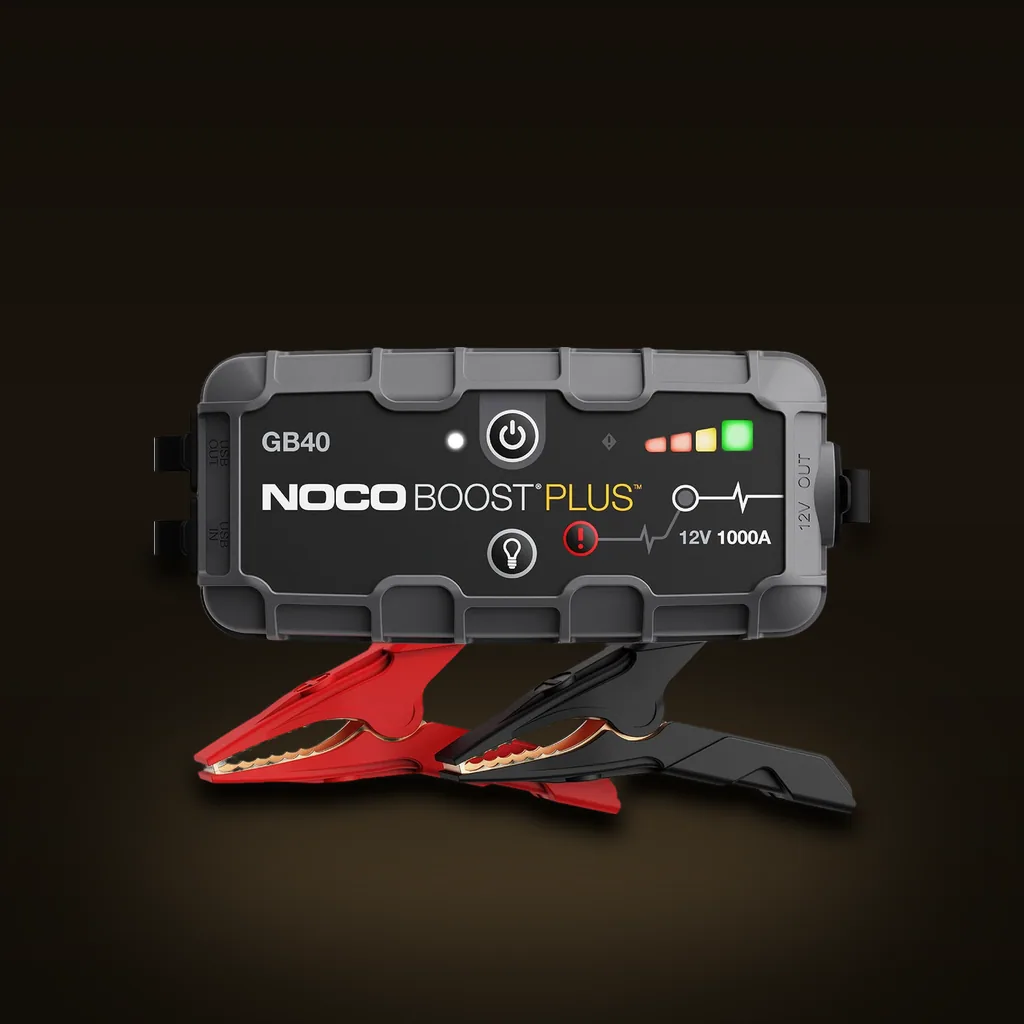
NOCO Boost GB40 1000A UltraSafe Lithium Jump Starter
The default best-overall. Trusted for honest (not inflated) amp ratings, UltraSafe spark-proof + reverse-polarity protection, and a genuinely pocketable size — the unit everything else is compared against.
Affiliate link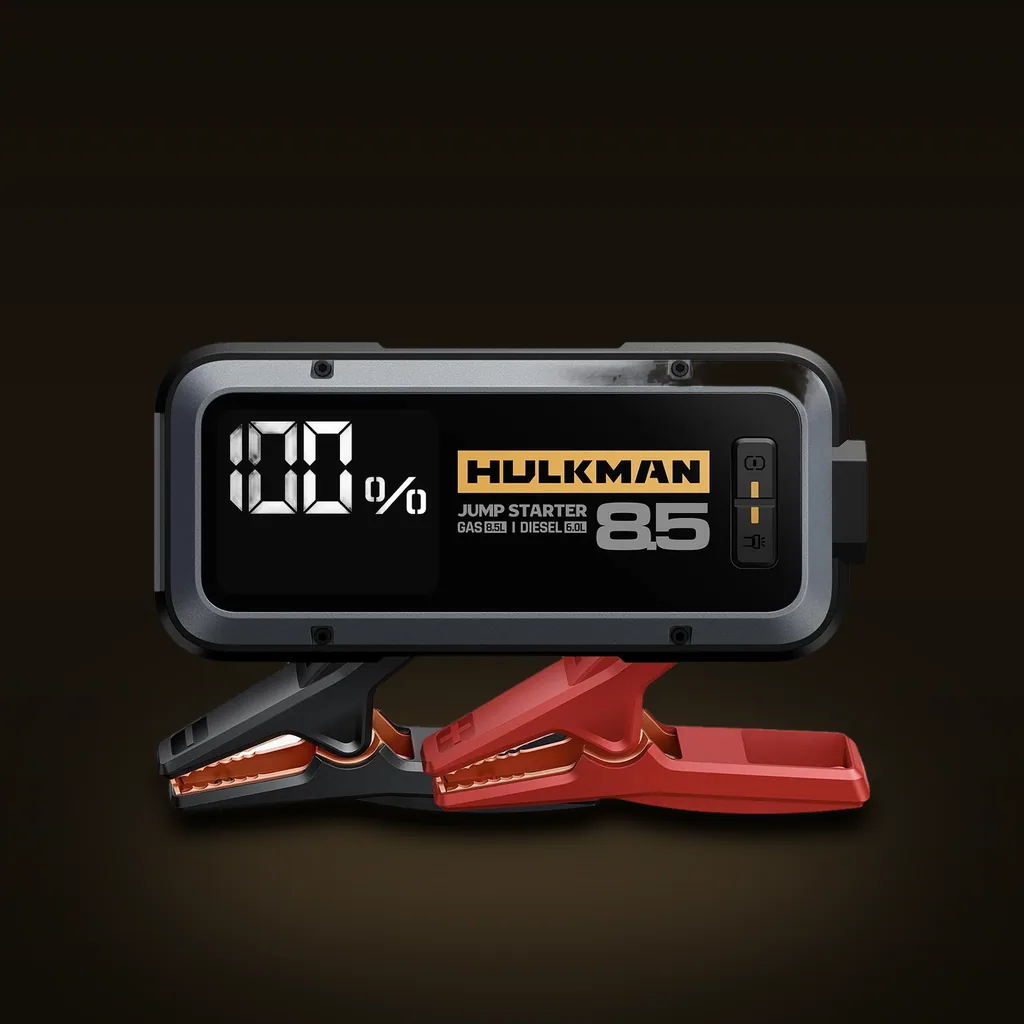
Hulkman Alpha85 2000A Smart Jump Starter with LCD Display
The premium smart pick — the LCD shows exact battery %, voltage and jump readiness (no guessing at LED dots), plus fast 65W USB-C recharge and a strong review record.
Affiliate linkCommon questions
How many amps do I need to jump start a V8?
For a gasoline V8 up to about 6.0L, look for 1000–1500 amps peak — a 1000A pack like the GB40 sits at the edge of its rating, so stepping up to a 1500–2000A pack buys comfortable margin, especially in cold climates. Diesel V8s should go straight to 2000A-class.
Can a jump starter damage my car's electronics?
Quality packs with reverse-polarity and spark protection are designed to make the risky mistakes (backwards clamps, touching clamps) safe. That protection is exactly why we don't shortlist unprotected bargain packs.
Will a jump starter start a completely dead battery?
Usually, but not always. Some packs need to detect a small voltage from the car battery before they'll deliver current; if the battery is deeply discharged, look for a pack with a manual-override (force) mode — and expect that battery to need replacement soon anyway.
How often should I recharge a jump starter I never use?
Follow your pack's own interval, and always charge it before winter. GOOLOO's FAQ says every 3 months, Fanttik's support says every 90 days in the trunk for the T8 APEX, NOCO says at least every 4–6 months for its Boost packs, and DeWalt's manual asks for at least every 30 days on its lead-acid DXAEPS14. Lithium packs hold charge for months, not forever, and a pack left to drain too far can refuse to recharge.
Sources & further reading
Research-driven — our picks come from verified manufacturer specs and long-term owner feedback. How we work: our methodology.
Keep reading
The Best Portable Jump Starters, Compared
Peak-amp numbers are marketing — what actually starts your car is whether the unit is rated for your engine. Here's every pick compared by the specs that decide it: engine size, cranking power, and what else it does.
Read moreRoadside SafetyThe Roadside Emergency Kit: What Belongs in Your Trunk
You don't need a hundred-piece kit where ninety pieces are filler. You need the specific gear that covers the failures that actually happen. Here's the list.
Read moreThe gear actually worth buying — one email a week.
The car, power, cooling, and work-utility gear worth owning — with the honest catch on each. One genuinely useful email a week. No spam, no fake reviews, unsubscribe anytime.
- No spam
- One email a week
- Unsubscribe anytime