Can a Portable Power Station Jump Start a Car?
No — and the reason is the difference between steady watts and a cranking burst. Here's what each box actually does, and when you need both.
The short answer
No — a portable power station cannot jump start a car. Starting an engine takes a burst of hundreds of amps at 12V for a few seconds; power stations are built to deliver steady household power for hours, typically limited to 10A on their 12V ports. They solve different problems, and a prepared trunk eventually carries both.
Disclosure · As an Amazon Associate, BlackBox Supplies earns from qualifying purchases — at no extra cost to you. See our full disclosure.
Why the big battery can't do the small battery's job
It feels backwards: a Jackery Explorer 1000 v2 holds 1,070 watt-hours — dozens of times the energy inside a pocket jump starter — yet the little pack starts your car and the big one can't.
The difference is delivery, not storage. Cranking an engine demands an enormous burst: hundreds of amps at 12 volts, sustained for two or three seconds. Jump starters are built around high-discharge lithium cells and heavy-gauge clamps that exist purely to dump that burst. A power station's 12V output is a regulated accessory port — usually capped around 10 amps, roughly a hundredth of what a starter motor draws. Ask it to crank an engine and its protection circuitry simply shuts the port down.
Marketing sometimes blurs this line. Unless a unit explicitly lists jump-starting with dedicated jumper clamps and a peak-amp rating, it cannot do it — wattage has nothing to do with it.
What each one is actually for
| Jump starter | Power station | |
|---|---|---|
| The job | Restart a dead 12V car battery | Run devices and appliances off-grid |
| Output shape | Massive burst, seconds long (e.g. 1000A peak) | Steady AC/DC power, hours long (e.g. 1500W) |
| Size / weight | Fits in a glovebox, ~2 lb | Small duffel, 20–30+ lb |
| Typical price | $70–130 | $400–800 |
| Lives in | The trunk, year-round | The house — travels for trips and outages |
The overlap that confuses people
Both will charge your phone, and that's about where the overlap ends. A jump starter's USB ports are a bonus feature on a rescue tool; a power station is the real mobile outlet — laptops, a car fridge, CPAP machines, power tools, the router during an outage.
One honest caveat in the other direction: a power station can slow-charge a dead car battery through a 12V maintainer over the course of hours. If you're stranded on a schedule, that's not a rescue — it's a science project. The $80 pack in your glovebox is the rescue.
What a prepared trunk actually carries
These aren't competing purchases — they're different layers of the same kit. The jump starter is layer one: cheap, permanent trunk residency, solves the most common roadside failure there is. The power station is a later layer for road trips, camping, and outages — bought by watt-hours, not amps.
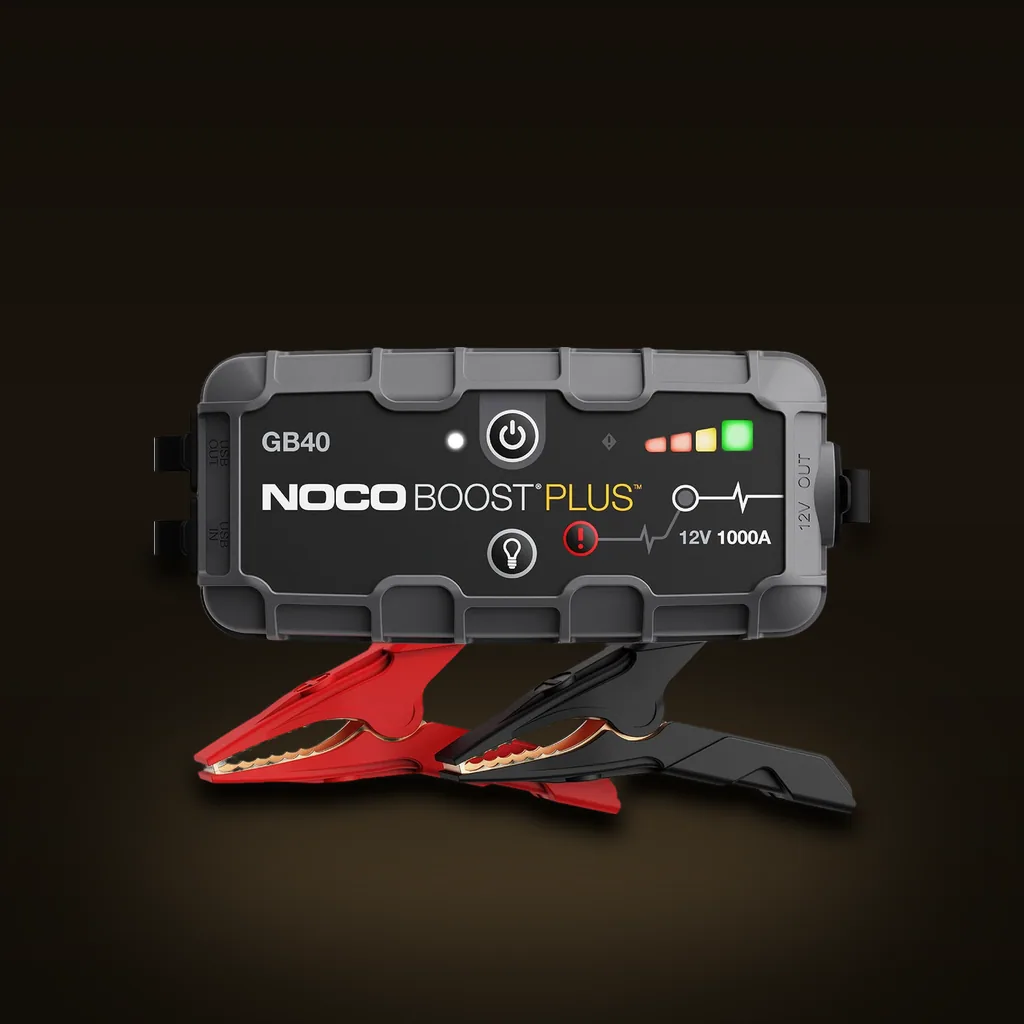
NOCO Boost GB40 1000A UltraSafe Lithium Jump Starter
The default best-overall. Trusted for honest (not inflated) amp ratings, UltraSafe spark-proof + reverse-polarity protection, and a genuinely pocketable size — the unit everything else is compared against.
Affiliate link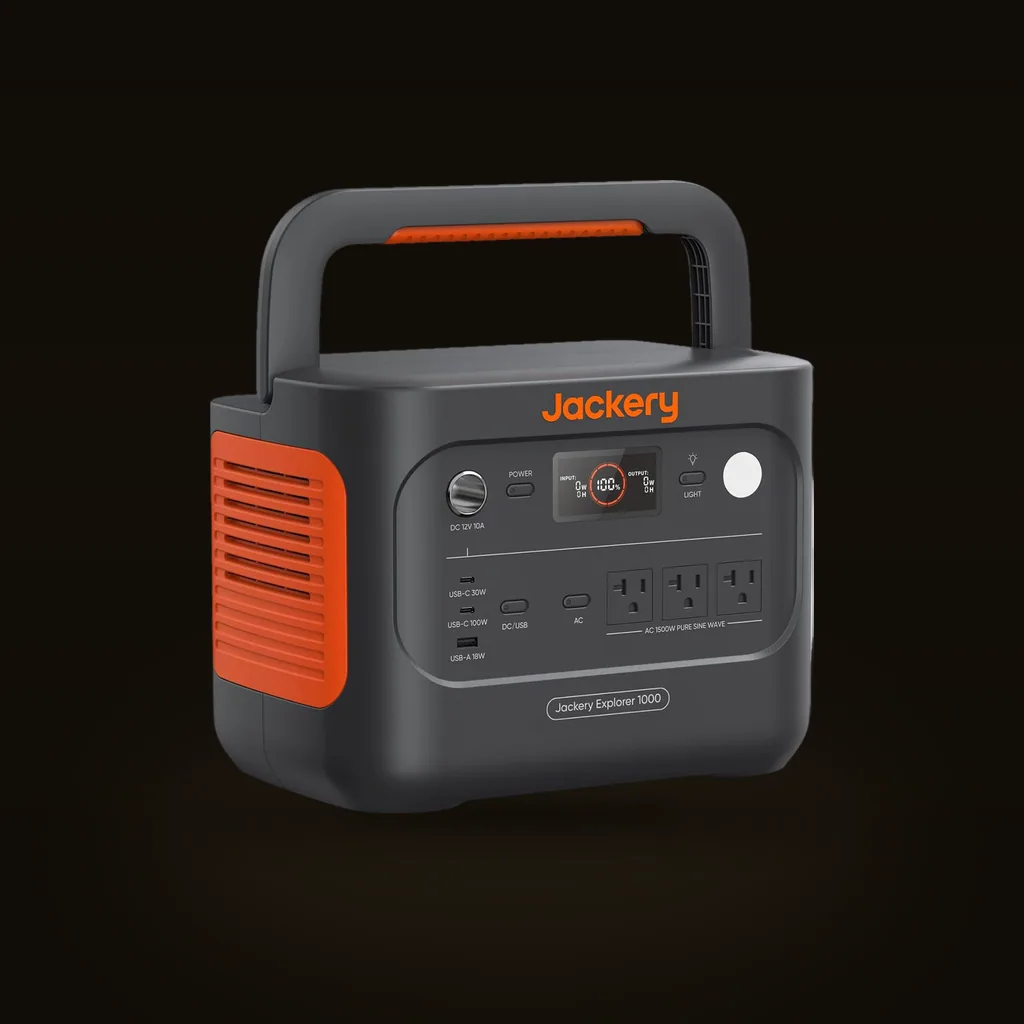
Jackery Explorer 1000 v2 Portable Power Station
The definitive road-trip/outage hero: 1kWh+, a real 1500W AC inverter that runs most car-camp gear, ~1-hour recharge, and Jackery is the brand people actually search. LiFePO4 rated for 4,000 cycles.
Affiliate linkCommon questions
Can I jump start a car from a power station's 12V port?
No. The 12V accessory port is typically limited to around 10 amps; a starter motor draws hundreds. The port's protection circuit will cut out long before the engine turns.
Is there any device that does both?
A few hybrid units exist, but they compromise both jobs — modest cranking power and small capacity. For trunk-kit purposes, a dedicated $80–100 jump starter beats every hybrid we've researched.
Can a power station recharge my jump starter?
Yes — over USB, and that's a genuinely useful pairing on long trips: the station keeps the rescue pack topped up.
Sources & further reading
Research-driven — our picks come from verified manufacturer specs and long-term owner feedback. How we work: our methodology.
Keep reading
The Best Portable Power Stations, Compared
The two numbers that matter are watt-hours (how long it runs) and watts (what it can run at once) — and a cheap battery quietly oversells both. Here's every station compared by the specs that actually decide it, side by side.
Read moreJump StartersThe Best Portable Jump Starters, Compared
Peak-amp numbers are marketing — what actually starts your car is whether the unit is rated for your engine. Here's every pick compared by the specs that decide it: engine size, cranking power, and what else it does.
Read moreThe gear actually worth buying — one email a week.
The car, power, cooling, and work-utility gear worth owning — with the honest catch on each. One genuinely useful email a week. No spam, no fake reviews, unsubscribe anytime.
- No spam
- One email a week
- Unsubscribe anytime