Portable AC vs Tower Fan: Which Actually Cools You Down? (2026)
The physics settles it: one lowers the room temperature, the other only cools your skin. Here is when each is the right buy in 2026.
The short answer
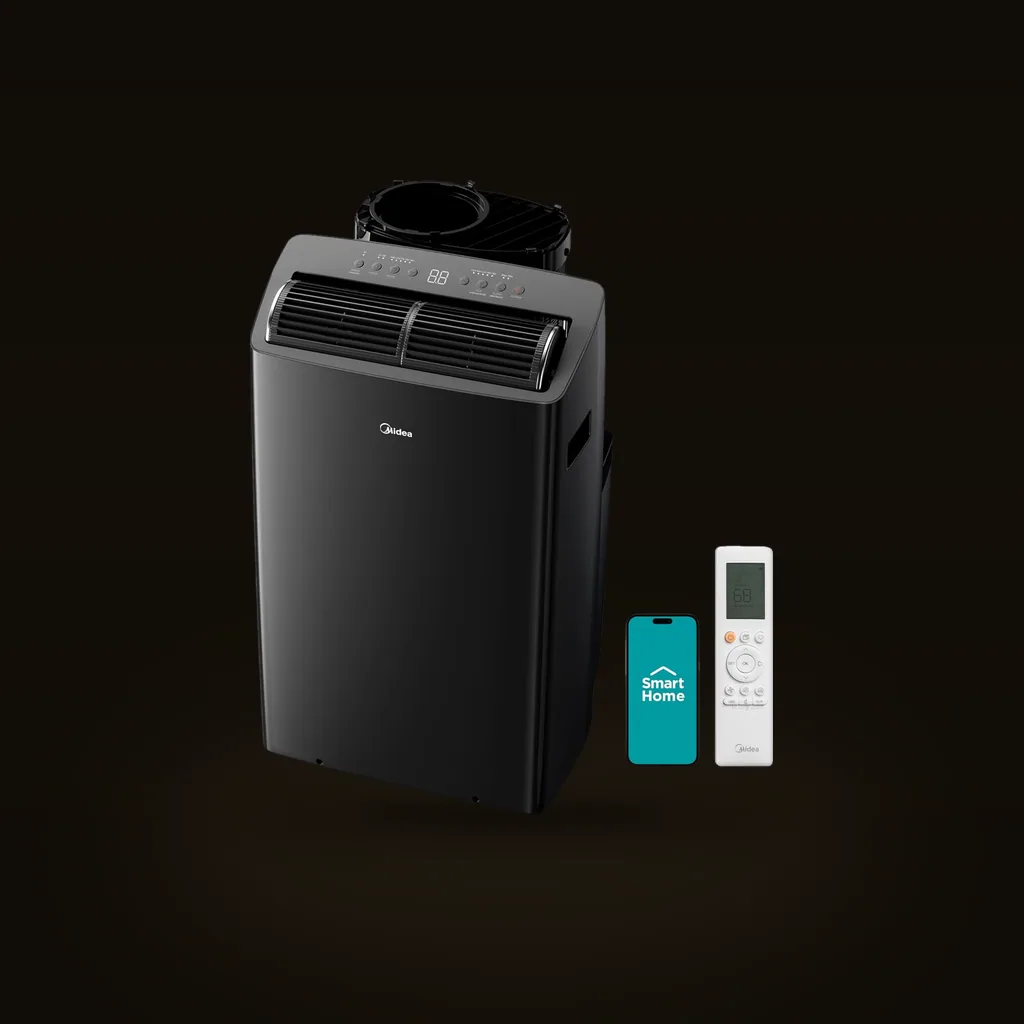
If you want the room actually colder, buy a portable AC. Only refrigerant moves heat outside and lowers air temperature; a tower fan just creates wind-chill on your skin. Our top pick is the Midea Duo 14,000 BTU Smart Inverter (MAP14S1TBL): quietest-in-class at about 42 dB, with the lowest running cost.
Disclosure · As an Amazon Associate, BlackBox Supplies earns from qualifying purchases — at no extra cost to you. See our full disclosure.
At a glance: AC vs tower fan
A portable AC and a tower fan are not two versions of the same thing. One is a heat pump that removes warmth from the room; the other is an air mover that makes you feel cooler without changing the temperature. That single difference decides which one you should buy.
Here are the picks we would actually reach for, spanning both categories. We cross-checked verified-buyer reviews and published spec sheets to choose them.
| Pick | Best for | Price | Key spec |
|---|---|---|---|
| Midea Duo 14,000 BTU Smart Inverter (MAP14S1TBL)Check price on Amazon → | Best overall — actually cooling a room | $500–$650 | 12,000 SACC, up to 550 sq ft, ~42 dB inverter |
| EcoFlow WAVE 3Check price on Amazon → | Cooling with no window / off-grid | $899–$1,499 | 6,100 BTU, cordless-capable, no fixed vent |
| BLACK+DECKER 10,000 BTU 3-in-1 (BPACT10WT)Check price on Amazon → | Budget apartment AC | $280–$360 | 5,500 BTU DOE, up to 450 sq ft, rolls room-to-room |
| Shark TurboBlade Bladeless (TF202S)Check price on Amazon → | Best tower fan — targeted airflow | $279–$300 | Bladeless, pivots vertical-to-horizontal, 180° oscillation |
| Dreo 42-Inch Bladeless (Quiet DC Motor)Check price on Amazon → | Quietest fan for sleeping | $80–$100 | 20 dB DC motor, 120° oscillation, ~$2/month to run |
The physics: why only one lowers the temperature
A portable air conditioner is a heat pump. Its compressor pushes refrigerant through a cycle that absorbs heat from the room air and dumps it outside through the exhaust hose. Heat physically leaves the room, so the thermometer actually falls. That is why an AC must vent to a window: without somewhere to send the heat, it cannot cool anything.
A tower fan moves air. It has no refrigerant and no way to remove heat, so it cannot lower the air temperature at all. What it does is speed evaporation of sweat off your skin and strip away the thin warm layer your body radiates — the wind-chill effect. You feel roughly 3–4°F cooler standing in the breeze, but the room is exactly as warm as before. Point a fan at an empty room and nothing changes; a running motor even adds a trace of heat.
This is also why the CDC warns that in extreme heat — air temperatures around 95°F and above — an electric fan can stop helping and may even push hot air at you faster than your sweat can cool you. A fan is a comfort tool for a warm room, not a rescue tool for a dangerously hot one. When the air itself needs to be colder, only an AC does the job.
Running cost: the number that surprises people
The cooling gap comes with a cost gap. A portable AC like the Midea Duo pulls roughly 1,200 watts when it is working; a tower fan pulls a tiny fraction of that. Every number below uses the same formula — watts ÷ 1,000 × hours × your electricity rate — at the U.S. average residential price of about $0.17 per kWh.
In round terms, a portable AC costs 20 to 40 times more per hour to run than a tower fan. That does not make the AC a bad buy — it is doing far more work — but it is why a fan wins outright when you only need a breeze.
| Device | Typical power draw | Cost per 8-hr night | Cost per month (8h/day) |
|---|---|---|---|
| Portable AC (e.g., Midea Duo)Check price on Amazon → | ~1,200 W | ~$1.60 | ~$49 |
| Tower fan, AC motor (e.g., Lasko Wind Curve) | ~50 W | ~$0.07 | ~$2 |
| Tower fan, DC motor (e.g., Dreo 42-inch)Check price on Amazon → | ~5–25 W | ~$0.02 | ~$0.60 |
The portable ACs worth buying
Midea Duo 14,000 BTU Smart Inverter (MAP14S1TBL), $500–$650. Rated 12,000 SACC and good for up to 550 sq ft. Its inverter compressor modulates instead of slamming fully on and off, which is what makes it both the quietest here (~42 dB) and the cheapest to run. Best for: making a bedroom or living room genuinely cold and holding it there. The catch: like every portable AC, it needs a window for the exhaust kit.
Whynter NEX ARC-1230WN 14,000 BTU Dual-Hose Inverter, $550–$720. Also 12,000 SACC (up to 600 sq ft), but the dual-hose layout is the real upgrade. A single-hose AC creates slight negative pressure that pulls warm outside air back into the room to replace what it blows out — it quietly fights itself. Two hoses fix that. Best for: larger or hard-to-cool rooms where efficiency matters. The catch: two hoses are bulkier to set up, and it costs more.
EcoFlow WAVE 3, $899–$1,499. 6,100 BTU of cooling with no permanent window vent and up to about 8 hours cordless on its add-on battery. Best for: renters, vans, tents, and garages — anywhere you cannot cut in a window kit. The catch: it is the priciest option here, the battery is a separate purchase, and 6,100 BTU suits a small space, not a great room.
BLACK+DECKER 10,000 BTU 3-in-1 (BPACT10WT), $280–$360. 5,500 BTU DOE, up to 450 sq ft, on casters so it rolls room to room. Best for: a first apartment AC on a budget from a name you trust. The catch: it is a single-hose, non-inverter unit, so it is louder and thirstier than the Midea — and it still needs a window.
The tower fans worth buying
Shark TurboBlade Bladeless (TF202S), $279–$300. The breakout 2026 fan: bladeless, and it pivots from a vertical tower to a horizontal 'air blanket,' with twisting vents that aim airflow and 180° oscillation. Best for: precise, powerful airflow across a room or a bed. The catch: it is the most expensive tower fan here, and — like every fan — it cools you, not the room.
Dyson Purifier Cool TP07, $430–$550. The iconic bladeless ring, plus fully sealed HEPA H13 and activated-carbon filtration and 350° oscillation. Best for: anyone who wants a fan and a real air purifier in one. The catch: you are paying a heavy premium for the design and filtration; as a pure fan, cheaper models move similar air.
Dreo 42-Inch Bladeless, Quiet DC Motor, $80–$100. A 20 dB brushless DC motor makes it a Forbes Vetted quiet pick, with 120° oscillation and 12 speeds. Best for: light sleepers — it is near-silent and costs roughly $2 a month to run. The catch: airflow is gentler than the Shark, and it is a fan, so it will not drop the temperature.
Two more if you want range: the Dreo Cruiser Pro T1 ($90–$110) is the reviewer-favorite best-value tower, and the Lasko T42951 ($55–$80) is the evergreen best-seller if you just want a reliable breeze.
How to choose: what to check before you buy
Whichever way you lean, a few specs separate a good buy from a frustrating one.
- Match BTU to the room. The DOE rule of thumb is about 20 BTU per sq ft, so a ~300 sq ft room wants ~6,000 BTU and a ~500 sq ft room wants ~10,000+. Undersize it and the AC runs nonstop without ever catching up.
- Read SACC, not the headline BTU. Portable ACs now carry a Seasonally Adjusted Cooling Capacity (SACC) rating that is more honest than the marketed number — a '14,000 BTU' unit is often ~12,000 SACC.
- Single vs dual hose. Single-hose ACs pull warm air back into the room as they run; dual-hose units are more efficient in bigger or hotter spaces.
- Check the dB rating. Under ~50 dB is bedroom-friendly. Inverter ACs (~42 dB) and DC-motor fans (~20 dB) are the quiet ones.
- For a fan, motor type and oscillation matter most. DC motors are quieter and far cheaper to run than older AC-motor fans.
- Confirm you have a window (for an AC) or accept that you are only cooling skin (for a fan). If you have neither and cannot vent, look at the vent-free EcoFlow WAVE 3 or an evaporative cooler for dry climates.
The verdict: which one for your situation
There is no single winner — there is a right tool for each situation. Use the table to match your case, then pick from the models above.
Short version: buy the AC when the air itself has to be colder or the room is humid; buy the fan when you just want a cheaper, quieter breeze on your skin. See all our cooling picks at /heat.
| Situation | Better choice | Why |
|---|---|---|
| Heat wave — the room won't drop below 85°F | Portable AC | Only refrigerant removes heat; the CDC warns fans stop preventing heat illness above ~95°F |
| You rent and can't or won't vent a window | Tower fan, or EcoFlow WAVE 3 | Standard portable ACs need a window vent; a fan or the vent-free WAVE 3 sidesteps that |
| You just want a cooler breeze at a desk or bed | Tower fan | Wind-chill makes you feel ~3–4°F cooler for pennies a night |
| Keeping the power bill down | Tower fan | Roughly 20–40x cheaper per hour to run than a portable AC |
| Bedroom — you need silence to sleep | Dreo 42-inch (~20 dB) or Midea inverter (~42 dB) | DC-motor fans are near-silent; inverter ACs are the quietest ACs |
| Humid climate, sticky air | Portable AC | ACs dehumidify as they cool; a fan removes zero moisture |
| Hot AND dry climate, garage or patio | Neither — an evaporative cooler | Swamp coolers add cool moisture cheaply in dry air, but do nothing in humidity |
Common questions
Does a tower fan actually lower the room temperature?
No. A fan has no refrigerant and cannot remove heat, so the air temperature stays the same. It speeds sweat evaporation and moves the warm layer off your skin, so you feel about 3–4°F cooler — but a thermometer in the room will not move. Only an AC lowers the actual temperature.
How much more does a portable AC cost to run than a tower fan?
Roughly 20 to 40 times more per hour. A portable AC draws around 1,200 watts (about $1.60 for an 8-hour night at $0.17/kWh), while a tower fan draws 5–50 watts (a few cents a night). The AC does far more work, but the fan wins on cost when you only need a breeze.
Do I really need a window for a portable AC?
Almost always, yes. A standard portable AC must vent its exhaust heat outside through a window kit, or it cannot cool the room. The main exception is a vent-free, battery-capable unit like the EcoFlow WAVE 3, which is built for spaces without a usable window.
What does SACC mean, and why is it lower than the BTU number?
SACC (Seasonally Adjusted Cooling Capacity) is a newer, more realistic rating for portable ACs that accounts for real-world conditions like heat leaking back through the hose. It runs lower than the marketed BTU — a '14,000 BTU' unit is often about 12,000 SACC — so use SACC to size the room.
Single-hose or dual-hose portable AC — does it matter?
It matters in bigger or hotter rooms. A single-hose AC creates slight negative pressure that pulls warm outside air back in, so it partly fights itself. A dual-hose unit like the Whynter NEX draws and exhausts separately, cooling faster and more efficiently.
Is it safe to rely on just a fan in a heat wave?
Not in extreme heat. The CDC notes that once air temperatures reach about 95°F and above, a fan may stop preventing heat-related illness and can blow hot air at you. In a real heat wave, an AC that lowers the air temperature is the safer tool.
Sources & further reading
- U.S. Energy Information Administration — Electricity prices (average residential rate)
- ENERGY STAR — Room Air Conditioners (certified-model program and efficiency criteria)
- CDC — Heat and Your Health: staying cool and fan guidance
- U.S. Department of Energy — Portable Air Conditioners: current standard & test procedure (10 CFR 430, Appendix CC)
Research-driven — our picks come from verified manufacturer specs and long-term owner feedback. How we work: our methodology.
The gear actually worth buying — one email a week.
The car, power, cooling, and work-utility gear worth owning — with the honest catch on each. One genuinely useful email a week. No spam, no fake reviews, unsubscribe anytime.
- No spam
- One email a week
- Unsubscribe anytime