How to Cool a Room With No AC: What Actually Works
The free tricks, their honest limits, and the gear that genuinely drops the temperature.
The short answer
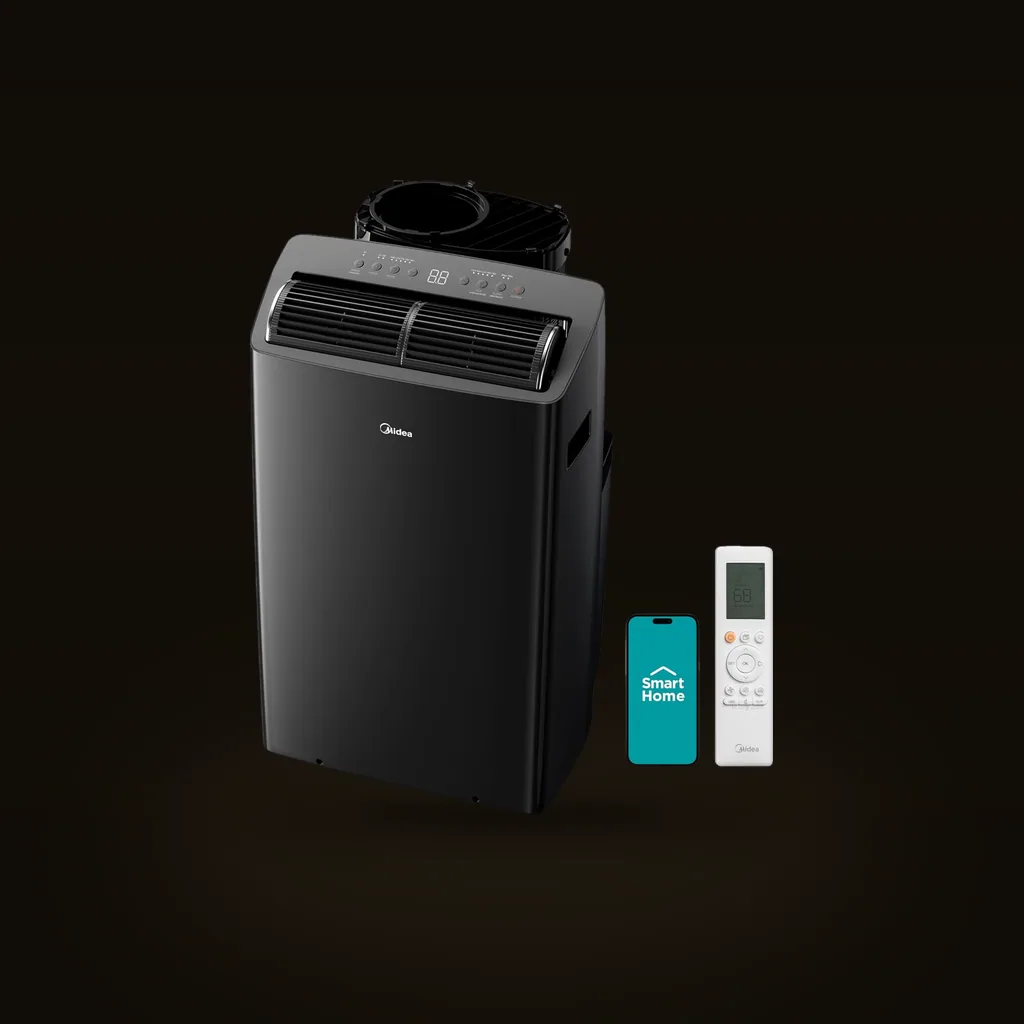
Fans and free tricks make you feel cooler; only a vented portable air conditioner actually lowers a room's temperature. Our top pick is the Midea Duo 14,000 BTU inverter, Forbes Vetted's 2026 Best Overall. In dry heat, an evaporative cooler works; in humid heat, it won't. Here's how to combine them.
Disclosure · As an Amazon Associate, BlackBox Supplies earns from qualifying purchases — at no extra cost to you. See our full disclosure.
First, the free tricks — and their honest limits
Before you spend a dollar, get the free wins. They will not refrigerate the air, but on a moderately hot day they meaningfully slow how fast a room heats up and move air over your skin so you feel cooler. The U.S. Department of Energy's Energy Saver guidance is blunt about the biggest lever: stop the sun from getting in during the day, and flush the heat out at night once outdoor air finally drops below your indoor temperature.
The ceiling on all of this: none of it removes heat the way a refrigeration cycle does. If your nights stay warm, or the room bakes in afternoon sun no matter what you close, the free tricks top out and you need a machine.
- Block the sun — Close blackout curtains or blinds on any sun-facing window during the day. The Department of Energy notes window coverings can cut a large share of the heat that comes in through glass. This is the single highest-value free move.
- Night flush with a box fan — Once it's cooler outside than in, put a box fan in a window facing OUT to push hot air out, and crack a window on the opposite side to pull cool air in. Reverse nothing in the morning — just seal the house back up before the day heats.
- Build a cross-breeze — Open two windows on opposite sides of the room and let a fan pull air through. Moving air evaporates sweat, which is what actually makes you feel cooler.
- Ice in front of a fan — The DIY 'swamp cooler': a bowl of ice in front of a fan gives a brief, local cool breeze. Be honest about it — it cools the few feet in front of the fan for as long as the ice lasts and does nothing to a room's overall temperature.
- Kill the heat sources — Incandescent bulbs, the oven, and a hard-working PC all dump heat into the room. Cook late, switch to LED, and shut down what you don't need.
What actually lowers the temperature: three kinds of machine
There are only three categories of gear here, and they are not interchangeable. Buy the wrong one for your climate and you'll be disappointed.
We cross-checked verified-buyer reviews and manufacturer spec sheets across the units below. Prices are typical street ranges and move around; specs are the manufacturer's unless we credit a reviewer.
| Pick | Best for | Price | Key spec |
|---|---|---|---|
| Midea Duo 14,000 BTU Smart Inverter (MAP14S1TBL) — TOP PICKCheck price on Amazon → | Truly cooling a whole room, any climate | $500-$650 | 14,000 BTU / 12,000 SACC inverter cool+heat, up to 550 sq ft, ~42 dB |
| BLACK+DECKER 10,000 BTU 3-in-1 (BPACT10WT) — Budget pickCheck price on Amazon → | A cheap real AC for one bedroom | $280-$360 | 10,000 BTU (5,500 DOE), up to 450 sq ft, 47.3 lb, window kit |
| Whynter NEX ARC-1230WN Dual-Hose Inverter — Upgrade pickCheck price on Amazon → | Cooling a large room fastest | $550-$720 | 14,000 BTU dual-hose inverter, up to 600 sq ft, Wi-Fi |
| EcoFlow WAVE 3 — No-window pickCheck price on Amazon → | Rooms and vans you can't vent out a window | $899-$1,499 | 6,100 BTU cool, up to 8 hrs on add-on battery, no permanent vent |
| Hessaire MC18M Evaporative Swamp Cooler — Dry-climate pickCheck price on Amazon → | Garages, patios, and hot-dry air | $150-$220 | Evaporative, 1,300 CFM, up to 500 sq ft, ~53 dB |
| Dreo Cruiser Pro T1 Oscillating Tower Fan — Best-value fanCheck price on Amazon → | Moving air over people, cheaply and quietly | $90-$110 | 90-degree oscillation, up to 12 speeds, ~26 ft airflow |
- Portable air conditioner (the only true room-cooler) — Uses a refrigerant cycle and vents hot air out a window through a hose. It genuinely drops air temperature in any climate, humid or dry. Downsides: it's the priciest, heaviest, and loudest option, and it needs a window to vent.
- Evaporative 'swamp' cooler — Blows air across a wet pad; evaporation cools the air and adds moisture. It works, but only in hot, DRY air. In a humid climate it barely cools and just leaves the room clammy. No window venting required, and it sips electricity.
- Tower and bladeless fans — These do not lower air temperature at all. They cool your body by moving air over your skin. They're the cheapest, quietest, and lowest-energy option, and on a mild night they're all many people need.
The catch on every pick
No cooling machine is free of trade-offs. Here's the honest downside of each, so you buy with eyes open.
- Midea Duo 14,000 BTU — the catch: — At $500-$650, and cooling or heating up to 550 sq ft, it's an investment, it's heavy to move between rooms, and like every portable AC it still needs a window for the vent hose. Forbes Vetted named it their 2026 Best Overall, which is why it's our pick despite the price.
- BLACK+DECKER 10,000 BTU — the catch: — It's a single-hose unit, so its true cooling output (about 5,500 BTU DOE) is lower than the 10,000 headline number, and it pulls in some warm air as it runs. Fine for a bedroom up to ~450 sq ft; underpowered for a big open space.
- Whynter NEX ARC-1230WN — the catch: — The dual-hose design that makes it fast and efficient also makes it bulkier and generally louder than a single-hose unit, and it costs more. RTINGS calls it the best portable air conditioner they've tested, so you're paying for performance.
- EcoFlow WAVE 3 — the catch: — At 6,100 BTU it only handles a small space, the battery that makes it cordless is a pricey add-on, and the whole system runs $899-$1,499. You're paying a steep premium for the no-window, off-grid freedom — worth it only if you genuinely need it.
- Hessaire MC18M — the catch: — It's evaporative, so it only cools in dry heat and adds humidity, which makes it useless in a muggy climate. At ~53 dB it isn't quiet. But for a garage or covered patio in the dry Southwest, little else this cheap moves this much cool air (1,300 CFM).
- Dreo Cruiser Pro T1 — the catch: — It does not lower the room's temperature — it only makes you feel cooler by moving air. That's the honest ceiling of every fan. But it's quiet, sips power, and reviewers at Reviewed, TechGearLab, and HGTV have called it a best-value tower fan.
Other fans worth knowing
If a fan is all you need, a few others stand out. The Dreo 42-Inch Bladeless Tower Fan runs a ~20 dB DC motor and is Forbes Vetted's pick for sleeping. The Shark TurboBlade Bladeless Tower Fan (TF202S) is the viral 2026 bladeless model that pivots from a tall tower to a horizontal 'air blanket' and oscillates 180 degrees. The Dyson Purifier Cool TP07 doubles as a sealed HEPA H13 air purifier with 350-degree oscillation. And the Lasko T42951 42-Inch is the long-running budget best-seller at $55-$80, a repeat Forbes and HGTV value pick.
For dry-heat renters who can't install an AC, the Dreo 43-inch Evaporative Swamp Cooler (~33 dB on low, ice-pack cooling) is a quieter indoor alternative to the Hessaire. And the Shark FlexBreeze Pro Mist Fan (FA302) adds an ice-fillable mister that Shark rates at air up to ~12 degrees cooler, corded or cordless up to 24 hours, indoor or outdoor.
How to match the machine to your room
- Match capacity to square footage — Read the SACC or DOE rating, not just the big BTU number on the box — that's the honest cooling figure. A rough guide is about 20 BTU (SACC) per square foot; a sun-drenched or top-floor room needs more.
- Single-hose vs dual-hose — Single-hose is cheaper but pulls warm room air in as it runs, so it cools slower. Dual-hose (like the Whynter NEX) is faster and more efficient but bulkier and louder.
- Check your window — Every real portable AC needs to vent out a window with the included kit. Measure your window first and note whether it's sliding, casement, or crank style. If you truly cannot vent, that's the EcoFlow WAVE 3's whole reason to exist.
- Know your climate — Humid climate means a compressor AC. Hot and dry (the Southwest) means an evaporative cooler is far cheaper to buy and run — and it'll actually work.
- Mind the noise — A bedroom unit around ~42 dB (the Midea Duo) is a whisper next to a ~53 dB evaporative cooler. If it's for sleep, prioritize the dB number.
- Plan for drainage — Portable ACs pull water out of the air. Look for self-evaporating or self-drain designs — the Midea Duo ships with a self-drain window kit — so you aren't emptying a tank every day.
The bottom line
Stack the free tricks first: block the sun by day, flush heat by night with a box fan, and put a fan where the air moves over you. They'll carry a mild day. When the heat is real and the nights stay warm, only a vented portable air conditioner truly lowers the temperature — the Midea Duo 14,000 BTU is our top pick, the BLACK+DECKER 10,000 BTU is the budget way in, and the EcoFlow WAVE 3 is the answer when you can't vent a window. In hot, dry air, an evaporative cooler like the Hessaire MC18M does the job for a fraction of the price. See all our cooling picks at /heat.
Common questions
Can a fan actually cool a room?
No. A fan doesn't lower air temperature — it moves air over your skin so sweat evaporates and you feel cooler. In a room that's already hot, a fan just circulates warm air. To lower the actual temperature you need a vented portable AC, or in dry heat an evaporative cooler.
Do evaporative 'swamp' coolers really work?
Only in dry heat. They cool by evaporating water into the air, which also raises humidity. In the dry Southwest, a unit like the Hessaire MC18M (1,300 CFM) works well and costs a fraction of an AC. In a humid climate it barely cools and leaves the room clammy — get a compressor AC instead.
What size portable AC do I need?
Match the cooling rating to the room, using the SACC or DOE figure rather than the inflated headline BTU. A rough rule is about 20 BTU per square foot. The BLACK+DECKER (up to ~450 sq ft) suits a bedroom; the Midea Duo and Whynter NEX (550-600 sq ft) handle a living room. Add capacity for sun-facing or top-floor rooms.
Is there a portable AC that doesn't need a window?
Almost every real AC must vent hot air somewhere, and a window is the normal path. The EcoFlow WAVE 3 is the rare unit built to run without a permanent window vent and can go cordless on an add-on battery — but it's small (6,100 BTU) and expensive ($899-$1,499). Everything else needs the window kit.
What's the cheapest way to cool a room with no AC?
Free first: close blackout curtains against the sun, run a box fan out the window at night to flush heat, and set up a cross-breeze. If you need to buy something, a tower fan like the Dreo Cruiser Pro T1 ($90-$110) moves air cheaply and quietly — just remember it makes you feel cooler rather than lowering the temperature.
Sources & further reading
- Forbes Vetted — The Best Portable Air Conditioners (Midea Duo, Best Overall)
- RTINGS — The Best Portable Air Conditioners We've Tested
- Wirecutter (The New York Times) — The Best Fans (measured airflow, noise and power use)
- Reviewed (USA Today) — The Best Tower Fans
Research-driven — our picks come from verified manufacturer specs and long-term owner feedback. How we work: our methodology.
The gear actually worth buying — one email a week.
The car, power, cooling, and work-utility gear worth owning — with the honest catch on each. One genuinely useful email a week. No spam, no fake reviews, unsubscribe anytime.
- No spam
- One email a week
- Unsubscribe anytime