Cordless vs 12V Tire Inflators: Which Should Live in Your Trunk?
Battery packs won the convenience war, but the cigarette-lighter models still win two scenarios that matter. Here's the honest breakdown — and the one unit that does both.
The short answer
For most drivers, cordless wins: a battery inflator like the Fanttik X8 tops off a tire in about a minute with no cables and no engine running. Choose a 12V plug-in model if you regularly fill many or large tires — corded units never run out of battery mid-job. Can't decide? One unit genuinely does both.
Disclosure · As an Amazon Associate, BlackBox Supplies earns from qualifying purchases — at no extra cost to you. See our full disclosure.
The difference that actually matters
Every tire inflator is the same machine at heart — a small compressor pushing air through a hose. The split is where the power comes from, and that changes when the tool works.
A 12V model plugs into your car's accessory socket, which means it has power for as long as your car does — but it also means digging out the cable, running it to the tire, and keeping the car on while it works. A cordless model carries its own battery: grab it, clip it on, done — but the battery is the ceiling. Most cordless units handle roughly 4–8 car tires per charge, and like every lithium tool, one that's been ignored in a trunk for a year may greet you at 20%.
There's a quieter difference people miss: a 12V inflator depends on your car having power. If you're dealing with a flat AND a weak battery on the same bad night — it happens more than you'd think — the cordless unit doesn't care.
Head to head
| Cordless (battery) | 12V plug-in (corded) | |
|---|---|---|
| Setup | Grab and go — nothing to plug in | Uncoil cable, plug into socket, engine on |
| Runtime | ~4–8 car tires per charge | Unlimited — runs off the car |
| Works when the car is dead | Yes | No |
| Big tires / many tires | Battery and heat become the limit | The stronger choice |
| Maintenance | Recharge every few months | None |
| Typical price | $50–90 | $25–40 |
When the cheap 12V model is genuinely the right call
Corded models get dismissed as the budget option, but two kinds of drivers should actively choose one. First: anyone maintaining a fleet of tires — a family with three cars, a trailer, a ride-on mower — where a battery would tap out mid-session. Second: anyone who wants zero maintenance. A corded unit that sits untouched for three years works exactly as well on day 1,000 as day one; no lithium pack to keep topped up.
The honest trade: you'll always need the car running, the cable is always slightly too short, and roadside use in the rain is more miserable. For a garage tool, none of that matters.
The one that refuses to choose
DEWALT's 20V MAX inflator runs three ways — its own 20V battery, the car's 12V socket, or a wall outlet at home. It's bulkier and needs the battery sold separately, but it's the one unit in our catalog that covers the trunk emergency, the garage session, and the basement bike-tire job without compromise.
Our researched picks
Specs verified against manufacturer documentation; long-term owner feedback weighed. Here's exactly how we work: see our methodology.
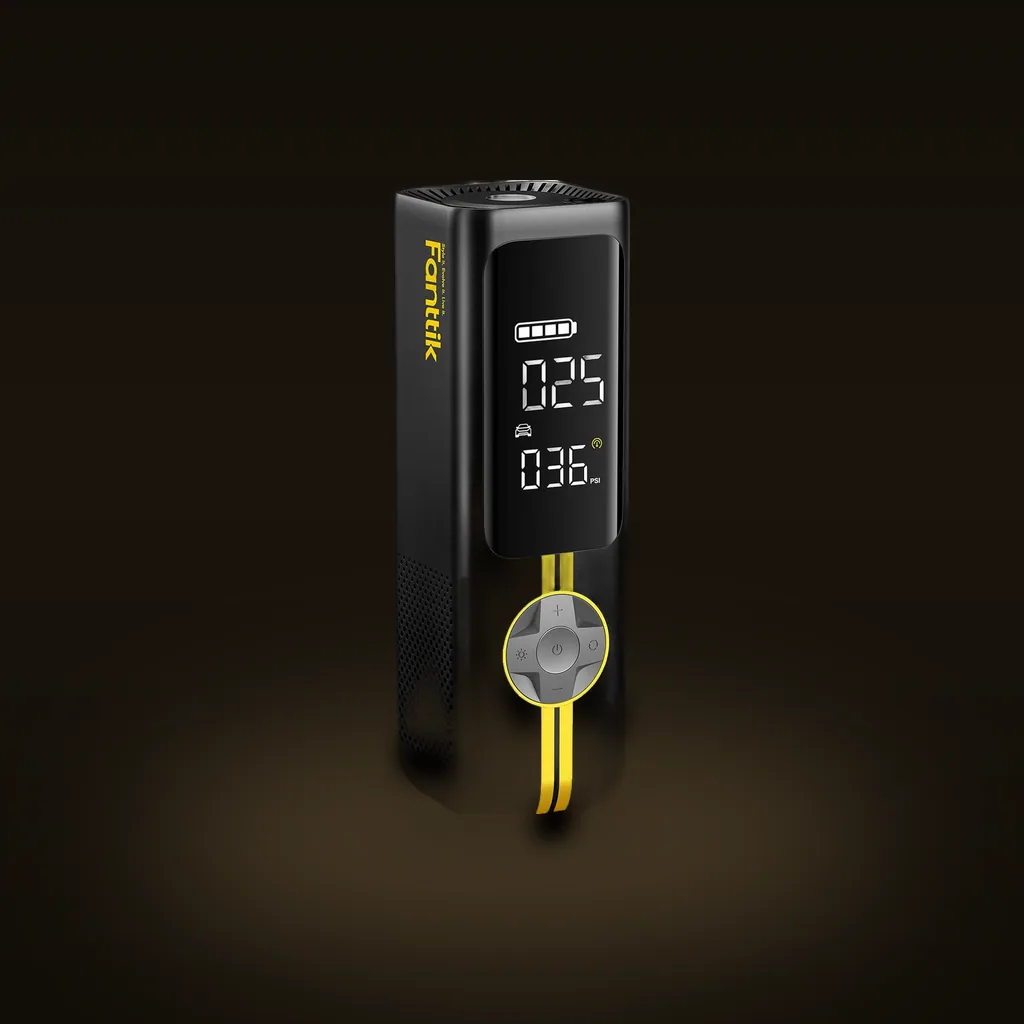
Fanttik X8 APEX Portable Tire Inflator (150 PSI Cordless)
Reviewers repeatedly name it the best overall cordless — fastest inflation, longest runtime, best build in the pocket-inflator class, ~±1 PSI accuracy.
Affiliate link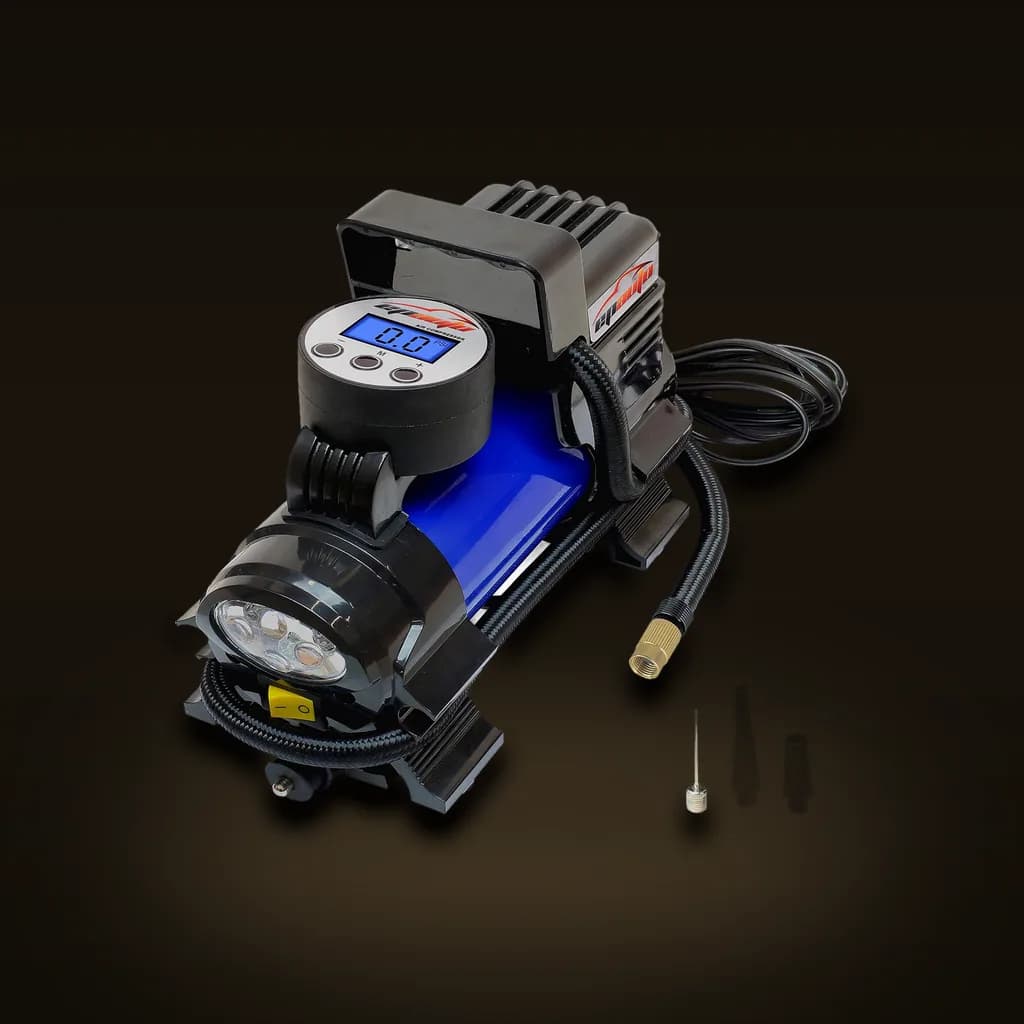
EPAuto 12V DC Portable Air Compressor Pump (Corded Value Pick)
Cheapest reliable pick and always ready off the car's battery (never needs charging).
Affiliate link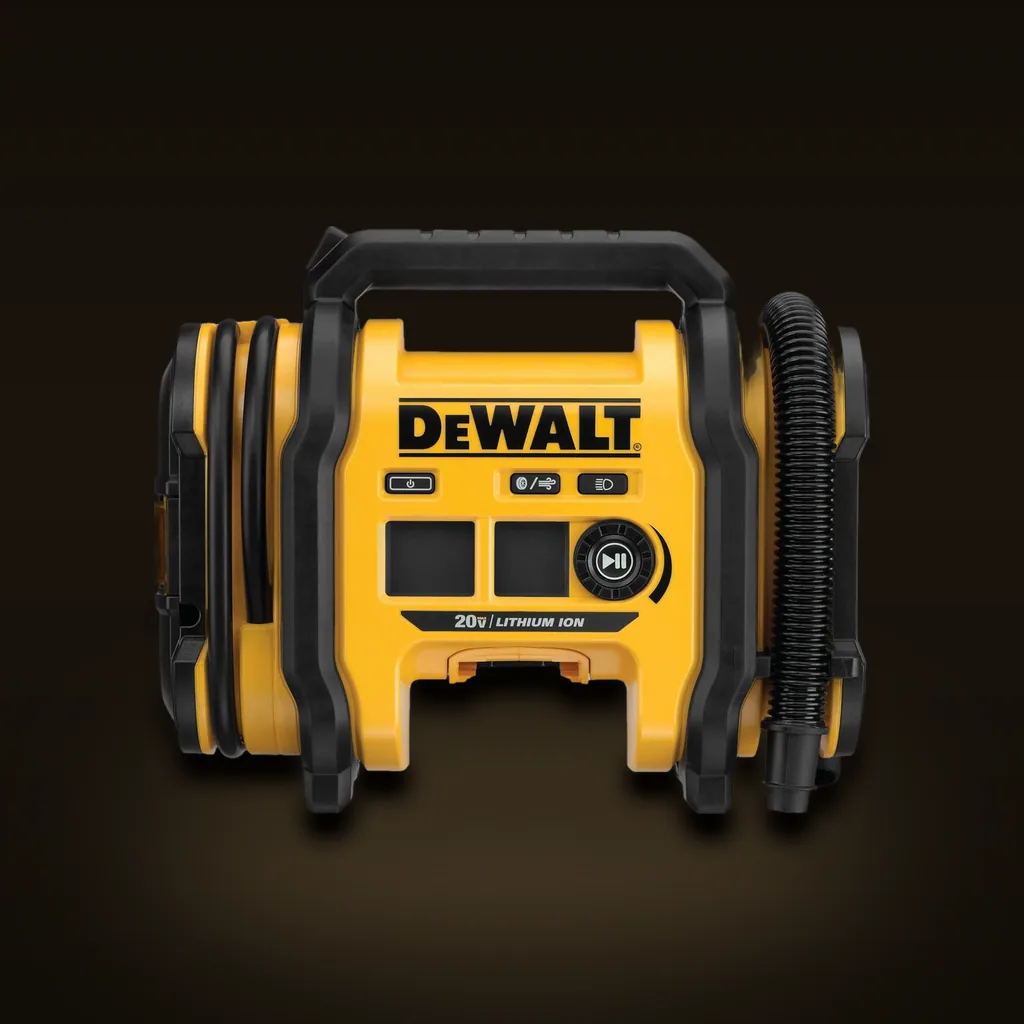
DeWalt 20V MAX Corded/Cordless Inflator DCC020IB (Bare Tool)
Unmatched versatility — three power sources mean it never leaves you stranded, in DeWalt build quality for garage and roadside.
Affiliate linkMistakes people make buying inflators
- Shopping by max PSI alone — Every unit on our list exceeds car-tire pressure (32–36 PSI). Fill *speed* (liters per minute) and duty cycle separate the good from the frustrating.
- Ignoring auto-stop — Set 36 PSI, walk away, it stops itself. Skipping this feature means babysitting a gauge in the dark.
- Assuming the battery is charged — A cordless inflator is only as ready as its last top-up. Charge it when you charge your jump starter — every few months.
- Running cheap units too long — Small compressors overheat. If a unit needs a cooldown after one tire, that's a duty-cycle limit the listing didn't mention.
Common questions
Can a cordless tire inflator fill a completely flat tire?
Yes — from flat (0 PSI) to drivable takes more battery and time than a top-off, but current units like the Fanttik X8 handle a full car tire in a few minutes. Expect a flat fill to use a meaningful chunk of one charge.
Do 12V inflators drain the car battery?
Run one with the engine on (or at least running periodically) and it's a non-issue. With the engine fully off, a long fill session pulls from the same battery that starts your car — another reason the pairing of a weak battery and a flat is worse with a corded unit.
Are gas-station air pumps good enough to skip owning one?
Until the night the flat happens twenty minutes from the nearest working pump. An inflator in the trunk turns a slow leak from a crisis into an errand.
Sources & further reading
Research-driven — our picks come from verified manufacturer specs and long-term owner feedback. How we work: our methodology.
Keep reading
The Best Cordless Tire Inflators, Compared
A dead tire in a dark parking lot is not the moment to discover your pump is junk. We compared the real cordless inflators worth keeping in the trunk — by max pressure, power source, and the features that actually matter.
Read moreRoadside SafetyThe Roadside Emergency Kit: What Belongs in Your Trunk
You don't need a hundred-piece kit where ninety pieces are filler. You need the specific gear that covers the failures that actually happen. Here's the list.
Read moreThe gear actually worth buying — one email a week.
The car, power, cooling, and work-utility gear worth owning — with the honest catch on each. One genuinely useful email a week. No spam, no fake reviews, unsubscribe anytime.
- No spam
- One email a week
- Unsubscribe anytime