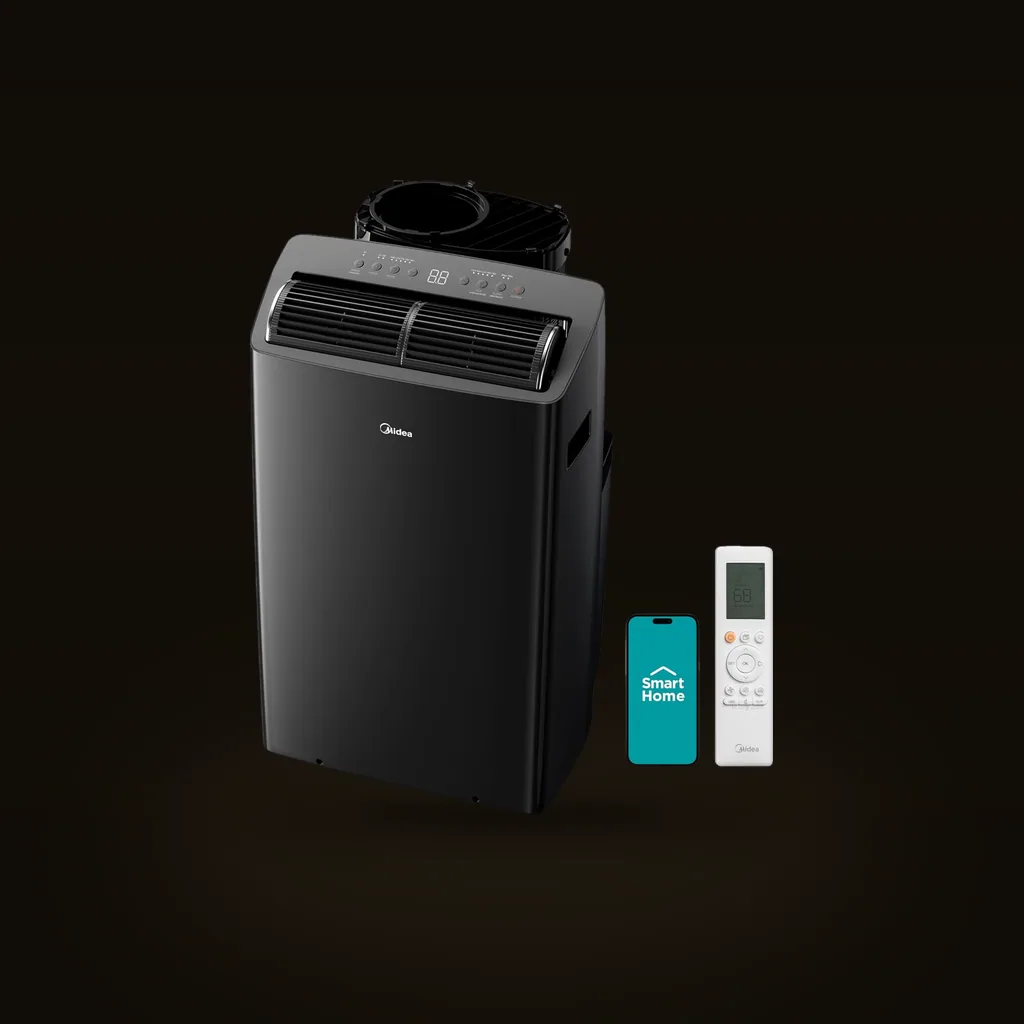
The Best Portable AC for an Apartment With No Central Air (2026)
An honest buyer's guide to cooling a rental — inverter portables, a budget pick, and the true no-window options.
The short answer
For most apartments without central air, the Midea Duo 14,000 BTU is the portable AC to buy — Forbes Vetted's 2026 "Best Overall," with an inverter compressor that runs quieter (~42 dB) and cheaper than standard units. Want no window vent at all? Only the EcoFlow WAVE 3 or an evaporative cooler skips it.
Disclosure · As an Amazon Associate, BlackBox Supplies earns from qualifying purchases — at no extra cost to you. See our full disclosure.
The short version
If you rent and there's no central air, a portable AC is usually your most realistic option. A window unit needs a window that opens the right way and a sill that can hold the weight, and plenty of leases ban them outright. A portable rolls on casters, vents through a slim hose, and comes out at the end of summer.
For this guide we cross-checked verified-buyer reviews, editorial roundups and manufacturer spec sheets across the units below. Our top pick is the Midea Duo 14,000 BTU, which Forbes Vetted named its 2026 'Best Overall' portable AC. It uses an inverter compressor, so it ramps up and down instead of slamming fully on and off — that's why Midea rates it around 42 dB and why inverter portables generally cost less to run than standard single-speed models.
| Pick | Best for | Price | Key spec |
|---|---|---|---|
| Midea Duo 14,000 BTU — TOP PICKCheck price on Amazon → | Best overall for most apartments | $500–$650 | 14,000 BTU (12,000 SACC) inverter, cools up to 550 sq ft, ~42 dB |
| BLACK+DECKER 10,000 BTU — Budget pickCheck price on Amazon → | A small bedroom on a tight budget | $280–$360 | 10,000 BTU (5,500 DOE), up to 450 sq ft, single-hose 3-in-1 |
| Whynter NEX ARC-1230WN — Upgrade pickCheck price on Amazon → | Faster, more efficient cooling | $550–$720 | 14,000 BTU (12,000 SACC) dual-hose inverter, up to 600 sq ft |
| EcoFlow WAVE 3 — No-window / off-gridCheck price on Amazon → | Vanlife, tents, a room with no usable window | $899–$1,499 | 6,100 BTU cool, up to 8 hr cordless on add-on battery |
| Dreo 43" Evaporative Cooler — Cheapest no-ventCheck price on Amazon → | Dry-climate renters who can't install AC | $150–$200 | 43" evaporative tower, ice-pack cooling, ~33 dB on low |
| Hessaire MC18M — Best for garages/patiosCheck price on Amazon → | Open-air, hot-dry outdoor spots | $150–$220 | 1,300 CFM swamp cooler, up to 500 sq ft, water hookup |
- Midea Duo (top pick) — The catch: it still needs a window for the exhaust hose, and it's a heavy unit to move up stairs on your own.
- BLACK+DECKER (budget) — The catch: single-hose and only 5,500 BTU on the DOE rating — fine for a small bedroom, underpowered for an open living room.
- Whynter NEX (upgrade) — The catch: the priciest true portable here, and the dual-hose kit takes up more window real estate to seal.
- EcoFlow WAVE 3 (no-window) — The catch: only 6,100 BTU, so one small room, and the battery that makes it cordless is a pricey separate add-on.
- Dreo 43" evaporative — The catch: it's a swamp cooler, not an AC — it only cools dry air and adds humidity, so it does little in muggy heat.
- Hessaire MC18M — The catch: built for open garages and patios; run it in a sealed room and it mostly just makes the air damp.
'No central air' doesn't mean 'no window'
This trips up a lot of first-time buyers, so it's worth saying plainly: nearly every portable AC still needs a window. It works by pulling heat out of your room and pushing it outside through an exhaust hose, and that hose has to vent somewhere. 'Portable' means it rolls around and installs in minutes — not that it runs with the window shut.
There are really three routes when you have no central air, and they're not interchangeable:
- Vented portable AC — Real refrigerant cooling (Midea, Whynter, BLACK+DECKER). Needs a window for the hose, but drops the actual temperature and works in humid heat. This is what most people should buy.
- Battery / no-permanent-install AC — The EcoFlow WAVE 3 still exhausts heat, but it's built for spot cooling a tent, van, or a room with no standard window, and can run cordless on a battery. It's the closest thing to a true 'no-window' AC.
- Evaporative cooler (swamp cooler) — No exhaust hose at all (Dreo, Hessaire). It cools by evaporating water, so it only helps in dry climates and it adds humidity to the room. Cheap, but not a real substitute for AC in muggy weather.
What to check before you buy
A portable AC is a several-hundred-dollar purchase you'll live with all summer, so a few minutes of matching specs to your space saves a return.
- Match BTU to the room (use SACC) — The honest number is SACC (Seasonally Adjusted Cooling Capacity), the DOE-standardized rating, not the big marketing BTU. Midea and Whynter both list 12,000 SACC and rate up to 550–600 sq ft; the BLACK+DECKER's DOE figure is 5,500, which is why it's a small-bedroom unit.
- Single-hose vs. dual-hose — Single-hose units (BLACK+DECKER) are cheaper but create negative pressure, pulling warm air back in through gaps. Dual-hose (Whynter NEX) cools faster and more efficiently. Most inverter picks like the Midea Duo split the difference on real-world efficiency.
- Check your window fit — Measure the opening. Most kits fit standard sliding and double-hung windows, but casement (crank-out) and very narrow windows often need a DIY panel. This is the single most common reason people can't install the unit they bought.
- Plan for drainage — In humid climates the unit collects water. Look for self-evaporating or a self-drain design (Midea includes a self-drain kit) so you're not emptying a tank constantly.
- Noise, if it's a bedroom — Compressor units are louder than fans. Inverter models are the quiet ones — Midea rates the Duo near 42 dB and EcoFlow rates the WAVE 3 around 44 dB, both manufacturer figures.
- Inverter vs. standard — An inverter compressor costs more up front but modulates output, which cuts running cost and noise. If you'll run it daily for months, it usually pays back.
Top pick: Midea Duo 14,000 BTU Smart Inverter
The Midea Duo (model MAP14S1TBL) is the unit we'd point most renters to first, and it's Forbes Vetted's 2026 'Best Overall' portable AC. It's rated at 14,000 BTU (12,000 SACC) and Midea lists coverage up to 550 sq ft — enough for a studio or a good-sized bedroom-plus-living combo.
The reason to pay a bit more than a basic unit is the inverter compressor. Instead of blasting at full power then shutting off, it modulates to hold your set temperature, which is what gets Midea's ~42 dB quiet rating and lower running costs. It also does double duty as a heater, adds Alexa/Google and app control, and ships with a self-drain window kit so you're not babysitting a water tank in humid weather.
- The catch — It still vents through a window like almost every portable, and it's a heavy, bulky unit — plan for that if you're carrying it up a flight of stairs alone.
Best value: BLACK+DECKER 10,000 BTU 3-in-1
If your budget is firm and the room is small, the BLACK+DECKER BPACT10WT is the safe, trusted-brand entry. It's a 10,000 BTU (5,500 DOE) 3-in-1 that also works as a dehumidifier and fan, Midea-style casters and a window kit included, at roughly 26 lb it's one of the easier units to wheel between rooms. The 'Follow Me' remote doubles as a thermostat so it reads the temperature where you actually are.
It has the huge review base and name recognition that make it an easy, low-risk buy. Just be realistic about the size: the DOE figure of 5,500 BTU is honest small-space cooling.
- The catch — It's single-hose and modest in output — great for a small bedroom or office, but it'll struggle in an open-plan living room or against serious heat, and it runs louder than the inverter picks.
Upgrade pick: Whynter NEX ARC-1230WN dual-hose
Want the fastest, most efficient cool-down of a true portable? The Whynter NEX ARC-1230WN is the step up. RTINGS calls it 'the best portable air conditioner we've tested,' and its edge is the dual-hose design: one hose pulls in outside air to cool the compressor and one exhausts, so it doesn't create the negative pressure that makes single-hose units fight themselves.
It shares the 14,000 BTU / 12,000 SACC class with the Midea and adds Wi-Fi smart control, with Whynter rating coverage up to 600 sq ft — the largest of our indoor picks. If you have a bigger or sun-baked room, this is the one worth the premium.
- The catch — It's the most expensive true portable here, and the dual-hose kit takes up more window space and a few more minutes to seal properly.
No window? The EcoFlow WAVE 3 (and true off-grid)
This is the pick for the situation the others can't handle: a room with no usable window, a tent, a van, or a spot with no wall outlet nearby. The EcoFlow WAVE 3 is 6,100 BTU of cooling (6,800 BTU heat) that EcoFlow rates to run up to 8 hours cordless on its add-on battery, with app control and Sleep/Auto/Pet modes at around 44 dB. There's no permanent window vent to install.
It's the honest answer to 'portable AC with no window / off-grid,' which is exactly why it's a category of its own. Just size your expectations to 6,100 BTU — this is spot cooling for one small space, not a whole apartment.
- The catch — At 6,100 BTU it only cools one small room, it still exhausts heat (aim it out a door or opening), and the battery that makes it cordless is a separate purchase that can cost as much as the unit.
The cheapest no-vent route: evaporative coolers
If you live somewhere dry and just can't install a real AC, an evaporative (swamp) cooler is the sub-$200 fallback. The Dreo 43" Evaporative Cooler is an oscillating tower that cools using water and ice packs, runs around 33 dB on low, and adds app plus Alexa/Google control — a quiet, low-energy way to take the edge off in a rental. The Hessaire MC18M is the tougher, outdoor-focused option: a 1,300 CFM swamp cooler Hessaire rates up to 500 sq ft, with a water hookup and rugged wheeled housing for a garage, workshop, or patio.
Be clear-eyed about the physics, though. These cool by evaporating water into the air, which means they only work well in dry heat and they raise indoor humidity. In a muggy climate they do very little, and Hessaire's ~53 dB high setting is genuinely loud for a bedroom.
Whichever route fits your place — a real inverter portable, a no-window WAVE 3, or a dry-climate swamp cooler — match the unit to your room and your weather before you buy. See all our cooling picks at /heat.
- The catch (Dreo 43") — It's a swamp cooler, not an AC — great in dry air, close to useless in humid heat, and it only cools the space right around it.
- The catch (Hessaire MC18M) — Designed for open garages and patios with airflow; run it in a sealed room and it mostly just makes the air damp, and it's loud on high.
Common questions
Do portable air conditioners need a window?
Almost all of them, yes. A portable AC vents its heat outside through an exhaust hose, and that hose has to reach a window or opening. The only real exceptions are evaporative (swamp) coolers, which use no exhaust hose but only work in dry climates, and battery units like the EcoFlow WAVE 3, which are built for spot cooling without a permanent window install.
What size portable AC do I need?
Match the room to the SACC rating (the DOE-standardized capacity), not the headline BTU. As a rough guide from manufacturer coverage figures: the Midea Duo and Whynter NEX (12,000 SACC) are rated for roughly 550–600 sq ft, while the BLACK+DECKER (5,500 BTU DOE) is a small-bedroom unit up to about 450 sq ft. Sun exposure, ceiling height, and kitchens push you toward more capacity.
Single-hose or dual-hose — does it matter?
For faster, more efficient cooling, dual-hose (like the Whynter NEX) is better. A single-hose unit exhausts room air outside, which creates negative pressure that pulls warm, unconditioned air back in through gaps. Single-hose units like the BLACK+DECKER are cheaper and fine for small rooms; dual-hose earns its keep in larger or hotter spaces.
Are portable ACs cheaper to run than window units?
Not inherently — window units are usually more efficient watt-for-watt. But an inverter portable narrows the gap a lot: because it modulates instead of cycling fully on and off, an inverter model like the Midea Duo runs quieter and draws less power over a day than a standard single-speed portable. If you'll run it daily all summer, the inverter premium tends to pay back.
Do evaporative (swamp) coolers actually work?
Only in dry climates. They cool by evaporating water into the air, so they can drop the temperature noticeably in a place like Arizona or Nevada — but they also add humidity, which means they do very little in muggy Southern or coastal summers. Treat the Dreo and Hessaire as cheap dry-air spot coolers, not a replacement for a refrigerant AC.
Sources & further reading
- EcoFlow WAVE 3 - official product page (6100 BTU cooling / 6800 BTU heating)
- Forbes Vetted — The Best Portable Air Conditioners (Midea Duo named Best Overall)
- RTINGS — The Best Portable Air Conditioners (Whynter NEX top-tested)
- Wirecutter (The New York Times) — The Best Portable Air Conditioner
- ENERGY STAR — Room Air Conditioners Key Product Criteria (CEER efficiency criteria by BTU capacity)
Research-driven — our picks come from verified manufacturer specs and long-term owner feedback. How we work: our methodology.
The gear actually worth buying — one email a week.
The car, power, cooling, and work-utility gear worth owning — with the honest catch on each. One genuinely useful email a week. No spam, no fake reviews, unsubscribe anytime.
- No spam
- One email a week
- Unsubscribe anytime